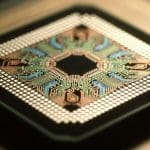
Researchers at the University of Turku in Finland have developed an innovative method for fabricating optical microcavities using polaritons, hybrid particles of light and matter. This approach is more eco-friendly, cost-effective, and energy-efficient than traditional vacuum-based techniques, making research on light-matter interactions more accessible. The development could significantly impact the future of technologies such as ultra-efficient lasers, quantum devices, and high-tech displays by simplifying the study of polariton dynamics and enhancing device performance.
Researchers Develop Eco-Friendly Method for Studying Light-Matter Interaction
Researchers at the University of Turku in Finland have developed an innovative method to study light-matter interaction, offering a more eco-friendly approach compared to traditional techniques. Their work focuses on creating optical microcavities using solution-processed methods, specifically dip coating and spin coating, which eliminate the need for energy-intensive vacuum-based fabrication processes such as sputtering and evaporation.
This new approach significantly simplifies the creation of polariton microcavities, structures essential for understanding interactions between light and matter. Polaritons, hybrid particles formed from light and matter, are central to this research. The researchers have successfully measured emitted light from these polaritons, providing critical insights into their dynamics and behavior.
A key finding is the ability to observe how polaritons suppress bimolecular annihilation in organic emitters. This suppression reduces emission bleaching, enhancing the efficiency of light-emitting technologies and offering potential improvements for devices like ultra-efficient lasers and next-generation displays.
This method makes the fabrication process more accessible and energy-efficient, opening new avenues for studying sensitive organic materials and developing stable, efficient light-emitting technologies. The research has been published in Advanced Optical Materials, highlighting its contribution to advancing eco-friendly approaches in quantum science.
Implications for Future Technologies Highlighted
Developing a low-cost, energy-efficient method for fabricating polariton microcavities has significant implications for advancing eco-friendly light-matter interaction research. By eliminating the need for vacuum-based fabrication techniques, this approach reduces both financial and environmental costs associated with quantum science experiments.
This suppression mechanism is pivotal for improving the efficiency and longevity of light-emitting devices, such as ultra-efficient lasers and next-generation displays. The simplified fabrication process also enables broader access to quantum research, fostering innovation across various fields. These advancements underscore the potential for sustainable progress in technologies reliant on precise control of light-matter interactions.
The implications extend beyond immediate applications, offering a pathway for studying sensitive organic materials with greater ease and precision. This methodological breakthrough not only supports the development of more efficient devices but also aligns with global efforts to reduce energy consumption in scientific research. By making quantum science more accessible and environmentally friendly, this work paves the way for future innovations in optics and related disciplines.
More information
External Link: Click Here For More