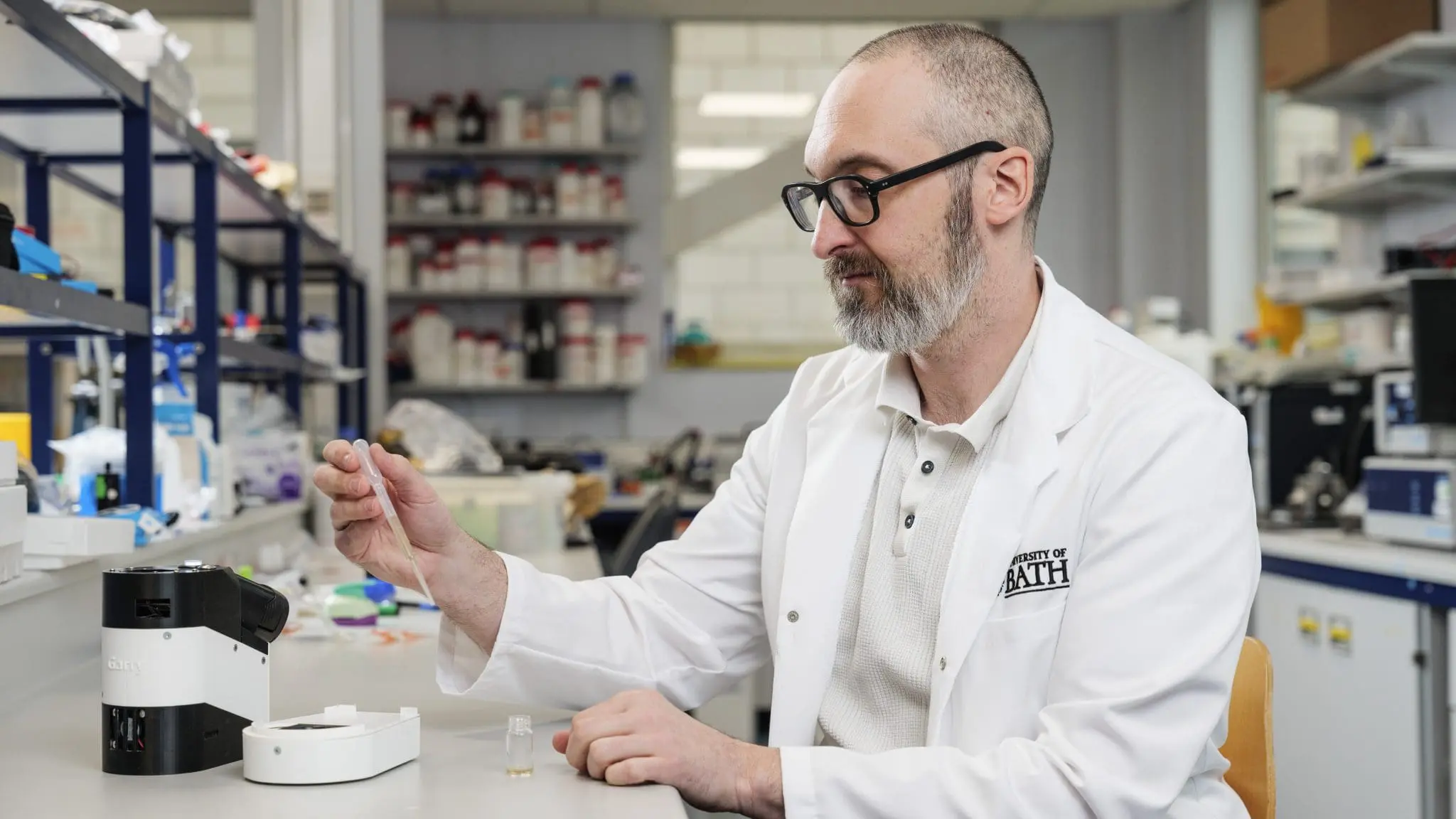
The University of Bath has developed an innovative drug detection device that employs fluorescence and reflectance spectroscopy alongside deep learning algorithms, designed to identify substances at low concentrations, a capability lacking in previous technologies. Currently being tested in the UK, New Zealand, and Norway, this device is particularly effective in detecting benzodiazepines and potent opioids, which are often present in minute quantities in drug samples. The research team, led by Professor Pudney, includes experts from various departments at the University of Bath and collaborating institutions, aiming to support global harm reduction efforts through enhanced drug analysis capabilities.
New Technology for Drug Checking
The University of Bath has developed a novel drug detection device designed to enhance the capabilities of drug-checking services. This technology employs fluorescence and reflectance spectroscopies to identify substances by analyzing their light emission and reflection patterns. A deep-learning algorithm trained on nanoparticle spectroscopy (NPS) light patterns enables accurate identification, particularly for low-concentration compounds such as benzodiazepines and potent opioids.
The device is currently being tested in several countries. In the UK, The Loop Drug Checking Service in Bristol is using it alongside other technologies to reduce drug-related harms. In New Zealand, where drug-checking services are explicitly legal, front-line services including the Needle Exchange Programme and KnowYourStuffNZ have conducted trials. These efforts aim to improve the speed and accuracy of drug analysis for harm reduction.
In Norway, the Association for Safer Drug Policies (ASDP) is evaluating the device to address gaps in detecting low-concentration substances. The trials contribute to broader initiatives to enhance the precision of drug analysis across diverse settings.
Contributors to this research include experts from multiple institutions, such as Dr. Alexander Power and Dr. Tom Haines from the University of Bath’s Department of Computer Science, along with collaborators from other universities and organizations. Their work focuses on creating a tool that effectively detects low-concentration substances, supporting drug-checking services in reducing associated harms.
Devon & Cornwall Police
The University of Bath has developed a drug detection device designed to enhance the capabilities of drug-checking services. This technology employs fluorescence and reflectance spectroscopy to identify substances by analyzing their light emission and reflection patterns. A deep-learning algorithm trained on nanoparticle spectroscopy (NPS) light patterns enables accurate identification, particularly for low-concentration compounds such as benzodiazepines and potent opioids.
The device is currently being tested in several countries. In the UK, The Loop Drug Checking Service in Bristol is using it alongside other technologies to reduce drug-related harms. In New Zealand, where drug-checking services are explicitly legal, front-line services including the Needle Exchange Programme and KnowYourStuffNZ have conducted trials. These efforts aim to improve the speed and accuracy of drug analysis for harm reduction.
In Norway, the Association for Safer Drug Policies (ASDP) is evaluating the device to address gaps in detecting low-concentration substances. The trials contribute to broader initiatives aimed at enhancing the precision of drug analysis across diverse settings.
Contributors to this research include experts from multiple institutions, such as Dr. Alexander Power and Dr. Tom Haines from the University of Bath’s Department of Computer Science, along with collaborators from other universities and organizations. Their work focuses on creating a tool that effectively detects low-concentration substances, supporting drug-checking services in reducing associated harms.
More information
External Link: Click Here For More



See today’s quantum computing news on Quantum Zeitgeist for the latest breakthroughs in qubits, hardware, algorithms, and industry deals.