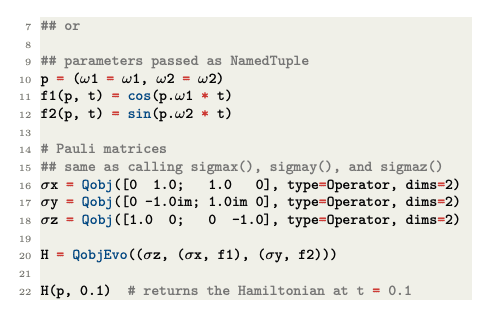
Researchers including Alberto Mercurio and Franco Nori introduced QuantumToolbox.jl, an efficient Julia framework for simulating open quantum systems, showcasing significant performance gains through advanced features like GPU acceleration.

QuantumToolbox.jl is an open-source Julia package designed for simulating quantum systems, offering high-performance capabilities through Julia’s ecosystem. It features time-evolution solvers supporting distributed and GPU acceleration, enabling efficient large-scale simulations. The package integrates with automatic differentiation tools, making it suitable for gradient-based optimization tasks like optimal control. Benchmark tests show significant performance improvements over existing frameworks, positioning QuantumToolbox.jl as a versatile tool for both theoretical research and practical applications in quantum science.
The fusion of quantum computing and deep learning
The fusion of quantum computing and deep learning is poised to transform the landscape of artificial intelligence, offering unprecedented capabilities that could redefine how we solve complex problems. This innovative approach integrates principles from quantum mechanics with advanced machine learning models, promising significant enhancements in computational efficiency and problem-solving across various industries.
At the forefront of this innovation is the integration of quantum computing with deep neural networks, particularly in image classification tasks. By leveraging the unique properties of quantum systems, researchers are exploring how these systems can process information differently than classical computers, potentially offering advantages in handling large datasets and intricate computations. This approach could lead to more efficient processing of information, enabling AI models to tackle complex tasks with greater precision.
Quantum simulation plays a pivotal role in this fusion, allowing researchers to model complex systems that are challenging for classical computers to handle. This capability is particularly valuable in fields like drug discovery and materials science, where understanding atomic or molecular-level phenomena is crucial. By simulating these systems, quantum computing can provide insights that could accelerate scientific advancements and innovations.
Initial research indicates promising computational efficiency results when integrating quantum principles with deep learning. Quantum-enhanced neural networks might process information faster or handle larger datasets without a proportional increase in computational resources. These findings suggest potential enhancements in the efficiency and accuracy of AI models, paving the way for more sophisticated applications across industries.
The implications of this fusion are vast, with
The implications of this fusion are vast, with future applications potentially including more accurate predictive models, enhanced cybersecurity measures, and advancements in personalized medicine. As research progresses, the potential for quantum computing to transform machine learning continues to expand, promising a new era of computational power and problem-solving capabilities.
The integration of quantum computing with deep learning represents a significant leap forward in artificial intelligence, opening new possibilities for tackling complex challenges across industries. By harnessing the unique properties of quantum systems, researchers are paving the way for transformative advancements that could shape the future of technology and science.
🗞 QuantumToolbox.jl: An efficient Julia framework for simulating open quantum systems
🧠 DOI: https://doi.org/10.48550/arXiv.2504.21440




See today’s quantum computing news on Quantum Zeitgeist for the latest breakthroughs in qubits, hardware, algorithms, and industry deals.