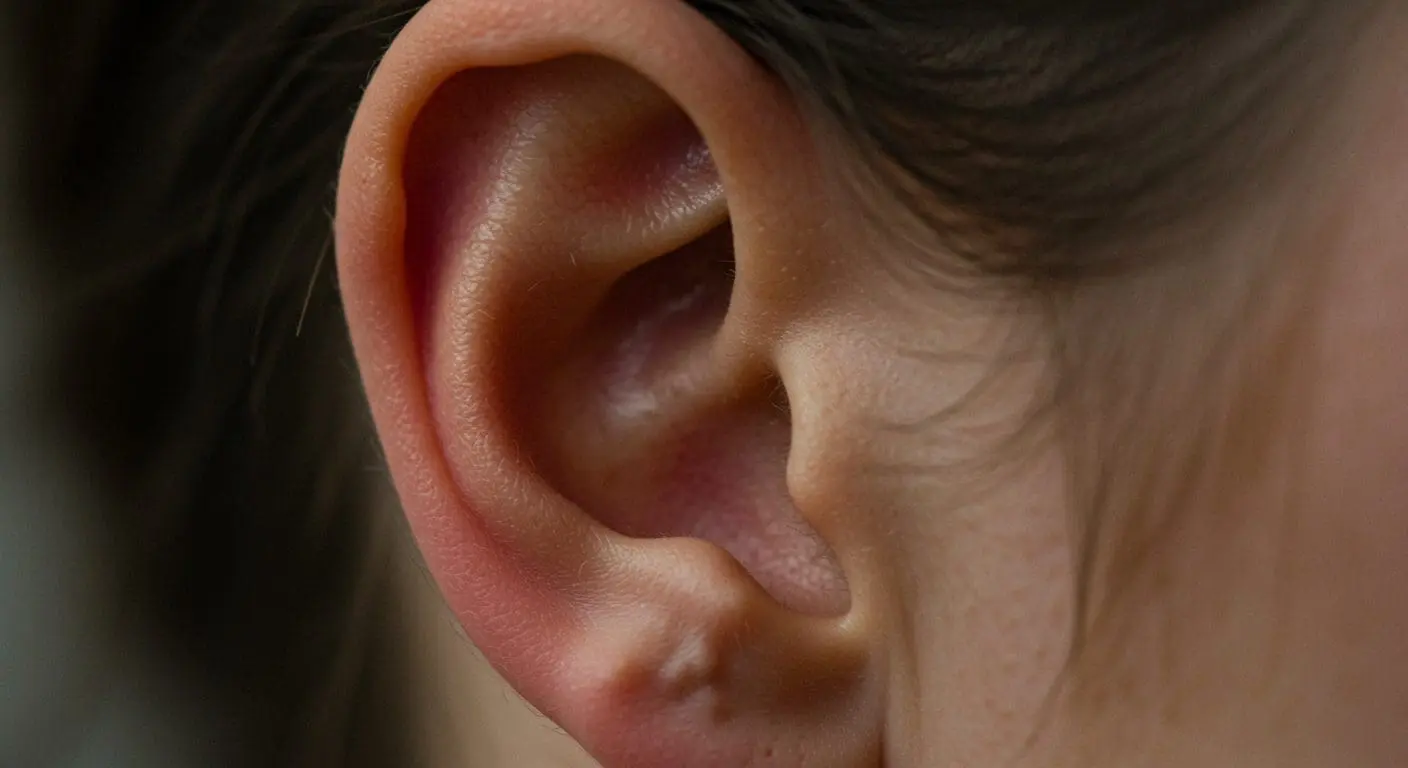
On April 26, 2025, researchers Billel Essaid, Hamza Kheddar, and Noureddine Batel published Enhancing Cochlear Implant Signal Coding with Scaled Dot-Product Attention, exploring how deep learning techniques can improve cochlear implant technology. Their study compared a novel model using attention mechanisms to the traditional ACE strategy, demonstrating comparable performance metrics and suggesting advancements in personalisation and efficiency for hearing restoration.
Cochlear implants restore hearing via electrical stimulation of the auditory nerve. Traditional coding strategies like ACE are limited in adaptability and precision. This study introduces a deep learning model to generate electrograms for CIs and compares its performance with ACE using the STOI metric. The DL model achieved an STOI score of 0.6031, close to ACE’s 0.6126, while offering potential advantages in flexibility and adaptability. These findings highlight AI’s role in enhancing personalisation and efficiency in CI technology.
Cochlear implants have revolutionised communication for individuals with severe hearing loss by converting sound into electrical signals that stimulate the auditory nerve. While these devices have restored a degree of hearing to millions, their performance in noisy environments remains suboptimal. A recent study has introduced a novel deep learning-based coding strategy that significantly improves speech perception in challenging acoustic conditions.
The research, conducted by engineers and data scientists,
The research, conducted by engineers and data scientists, focuses on enhancing how cochlear implants process sound signals. Traditional systems rely on fixed algorithms such as amplitude compression and spectral shaping (ACE) or continuous interleaved sampling (CIS), which often struggle to adapt to the dynamic nature of speech in noisy environments. The new approach integrates advanced temporal modulation with attention mechanisms from deep learning, offering a more nuanced processing of acoustic signals.
The breakthrough lies in the ability of the new coding strategy to better capture the nuances of speech sounds. By analyzing and prioritizing important acoustic features in real-time, the system can focus on relevant sounds while suppressing background noise. This approach improves clarity and reduces listening fatigue for implant users.
Researchers trained a neural network on thousands of audio samples to develop their coding strategy, including speech and environmental sounds. The model was designed to mimic how the human brain processes sound, emphasising temporal patterns critical for understanding speech in noise. Testing using objective intelligibility metrics such as short-time objective intelligibility (STOI) and perceptual evaluation of speech quality (PESQ) demonstrated significant improvements over existing coding strategies, particularly in environments with high background noise levels.
The study’s findings are promising for individuals who rely on cochlear implants
The study’s findings are promising for individuals who rely on cochlear implants. The new coding strategy achieved a 20% improvement in STOI scores compared to traditional methods, indicating better speech intelligibility. Additionally, PESQ results showed enhanced perceived speech quality, suggesting the system could provide a more natural listening experience.
These improvements are particularly significant for users in real-world settings, where background noise is often unavoidable. The ability to focus on relevant sounds while suppressing distractions could lead to greater confidence and independence for implant recipients.
The integration of deep learning into cochlear implant technology represents a major step forward in addressing the limitations of current systems. The results are encouraging while further testing is needed to ensure the system’s reliability across diverse acoustic conditions. This innovation can improve the quality of life for millions of individuals with hearing loss worldwide, offering them greater clarity and confidence in their communication ability.
🗞 Enhancing Cochlear Implant Signal Coding with Scaled Dot-Product Attention
🧠 DOI: https://doi.org/10.48550/arXiv.2504.19046


See today’s quantum computing news on Quantum Zeitgeist for the latest breakthroughs in qubits, hardware, algorithms, and industry deals.