
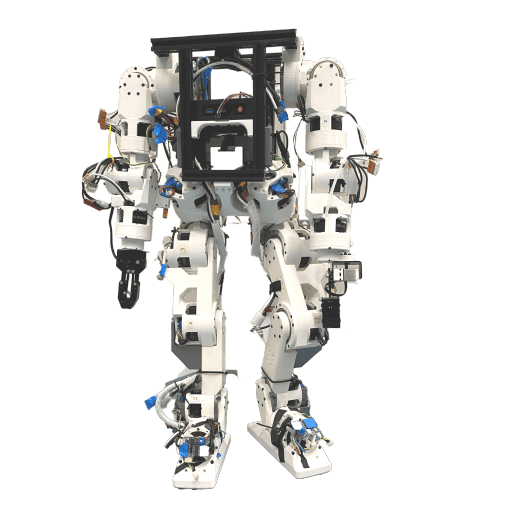
In a windowless laboratory at the University of California, Berkeley, a bipedal robot stands 80cm tall. It walks, balances, and responds to commands—unremarkable capabilities for today’s advanced humanoids. What is remarkable, however, is that this robot costs less than $5,000 and can be built using components sourced entirely from common e-commerce platforms and fabricated on desktop 3D printers.
Named “Berkeley Humanoid Lite,” this open-source project represents an economic disruption in a field dominated by proprietary, high-cost systems. While commercial humanoid robots from firms like Boston Dynamics and Agility Robotics command six-figure price tags, Berkeley’s design slashes costs by more than 95% while delivering impressive performance metrics.
Breaking the Cost Barrier
“The economics of robotics development have historically favored large corporations and well-funded institutions,” explains Dr. Koushil Sreenath, one of the project’s leaders. “By democratizing access to advanced robotics platforms, we’re expanding the innovation ecosystem to include researchers, educators, and entrepreneurs who were previously priced out of the market.”
The project’s key innovation lies in its modular actuator design—effectively the robot’s muscles—which utilizes 3D-printed cycloidal gearboxes rather than expensive proprietary components. This approach reduces cost while maintaining sufficient mechanical robustness for dynamic movements like walking and balancing.
When benchmarked against competitors using a normalized performance metric (average peak torque divided by height and weight), the Berkeley design achieves respectable results at a fraction of the cost. Its “performance-per-dollar” ratio exceeds most commercial offerings by a substantial margin.
Open Innovation Model
The project follows an open-source model popularized in software development but still relatively uncommon in advanced robotics hardware. All designs, code, and documentation are freely available online—a stark contrast to the traditionally secretive robotics industry.
“What Linux did for operating systems, we’re attempting to do for humanoid robotics,” says Yufeng Chi, lead author of the research paper. “When you lower barriers to entry, you multiply the number of minds working on solutions.”
This approach challenges the conventional wisdom that high-performance robotics requires proprietary technology and specialized manufacturing. By leveraging widely available components and desktop 3D printing technology, Berkeley’s team has created a platform accessible to researchers worldwide, regardless of institutional resources.
Market Implications
The commercial implications extend beyond academia. Venture capital has poured billions into robotics startups over the past decade, with humanoid robots receiving particular attention for their potential applications in logistics, healthcare, and household assistance. The field has been characterized by high capital requirements and substantial technical barriers.
“The economics simply haven’t worked for smaller players,” notes a robotics industry analyst who requested anonymity. “What Berkeley has done is potentially create a robotics equivalent of the personal computer—a platform that enables innovation at a dramatically reduced price point.”
For established robotics companies, this development presents both challenges and opportunities. While it may put pressure on premium pricing models, it also expands the potential talent pool and accelerates the development of applications and use cases—potentially growing the overall market.
Adaptable Design
The Berkeley platform’s modular nature allows for significant customization. The robot can be reconfigured into various morphologies, including quadrupeds, centaur-like arrangements, and mobile bases. This flexibility makes it particularly useful for prototyping and experimentation.
“A form factor that would previously require $100,000 in custom engineering can now be tested for a few thousand dollars,” Chi explains. “This fundamentally changes the risk calculation for robotics innovation.”
The design also incorporates reinforcement learning capabilities, demonstrating successful zero-shot policy transfer from simulation to hardware—a feature particularly valuable for researchers exploring artificial intelligence applications in robotics.
Future Outlook
While the Berkeley Humanoid Lite represents a significant step toward democratizing advanced robotics, challenges remain. The use of 3D-printed components introduces durability concerns, and the platform lacks some of the sophisticated sensors found in premium commercial systems.
Nevertheless, the project signals a shift in robotics economics that could accelerate innovation through broader participation. As one robotics researcher not affiliated with the project noted, “This is the beginning of robotics’ transition from an exclusive club to a mass-participation field.”
For industry observers, the key question is whether this democratization will lead to faster advancement of practical applications or simply create a larger pool of experimental platforms. Either way, Berkeley’s open-source approach challenges the conventional economics of robotics development and may force established players to reconsider their business models.
As the technology matures and the community around it grows, Berkeley Humanoid Lite could become the foundation for a new generation of affordable, customizable robotics platforms—potentially bringing the long-promised robotics revolution within reach of far more innovators than ever before.
👉 More information
🗞 Demonstrating Berkeley Humanoid Lite: An Open-source, Accessible, and Customizable 3D-printed Humanoid Robot
🧠 DOI: https://doi.org/10.48550/arXiv.2504.17249