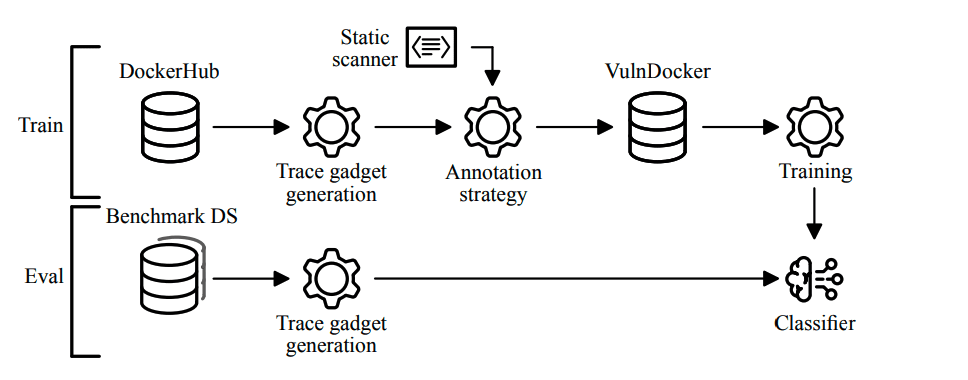
On April 18, 2025, researchers presented Trace Gadgets: Minimizing Code Context for Machine Learning-Based Vulnerability Prediction, introducing a novel code representation that enhances machine learning models’ ability to detect vulnerabilities by providing concise context. Their method improved performance over GitHub’s CodeQL, successfully identifying previously unknown vulnerabilities in real-world applications.
As web applications grow, so do exploitable vulnerabilities. Trace Gadgets, a novel code representation, minimizes context by focusing on relevant statements for vulnerability paths, improving ML-based detection. A large-scale dataset of real-world applications with curated labels enhances model performance. State-of-the-art models using Trace Gadgets outperform industry scanners like GitHub’s CodeQL by at least 4% on unseen data. The framework identifies previously unknown vulnerabilities in widely used software.
SQL injection vulnerabilities remain a critical threat in web applications, enabling attackers to manipulate database queries and access sensitive information. Traditional detection methods, relying on pattern matching and rule-based systems, often fail against sophisticated attacks. Recent advancements in machine learning offer new strategies for robust detection.
SQL injection exploits dynamic SQL query construction, allowing malicious code injection. Traditional methods check specific patterns or use static analysis tools, which can miss novel attack vectors. This limitation highlights the need for adaptive and intelligent systems capable of identifying vulnerabilities across diverse and evolving codebases.
Three machine learning models are explored: VulnDocker, TRACED, and CODET5+. Each leverages deep learning techniques to analyze code snippets and identify potential SQL injection points. VulnDocker simulates attacks in a controlled environment for vulnerability detection. TRACED employs trace-based analysis to understand program behavior, while CODET5+ uses advanced natural language processing to parse complex code structures.
The study evaluates these models using hyperparameters such as learning rate and dropout rate across 108 configurations per model. Training was conducted on VulnDocker, with validation tests on Juliet’s dataset. The best-performing configuration was applied to the OWASP benchmark, a recognized standard for testing vulnerability detection systems.
Each model demonstrated unique strengths. VulnDocker achieved high accuracy in attack simulation, TRACED excelled in trace-based analysis, and CODET5+ showed promise in understanding complex code structures. Effectiveness was measured using F1 scores, with top configurations indicating robust detection capabilities.
Despite successes, challenges remain. Handling try-catch blocks, threading issues, and accurately emulating Java internal behavior pose limitations. These areas require further refinement to improve accuracy and reduce false positives or negatives.
This research highlights machine learning’s potential in detecting SQL injection vulnerabilities, offering a more adaptive approach than traditional methods. While promising, addressing limitations is crucial for real-world application. Future work should focus on enhancing robustness against edge cases and improving handling of diverse programming constructs.
In conclusion, integrating machine learning into vulnerability detection represents a significant step forward in cybersecurity. Continuous refinement of these models can better protect web applications from evolving threats like SQL injection attacks.
👉 More information
🗞 Trace Gadgets: Minimizing Code Context for Machine Learning-Based Vulnerability Prediction
🧠 DOI: https://doi.org/10.48550/arXiv.2504.13676



See today’s quantum computing news on Quantum Zeitgeist for the latest breakthroughs in qubits, hardware, algorithms, and industry deals.