On April 16, 2025, researchers Marco Eckhoff and Markus Reiher published Lifelong and Universal Machine Learning Potentials for Chemical Reaction Network Explorations, exploring innovative machine learning approaches to enhance the efficiency and accuracy of chemical reaction predictions.
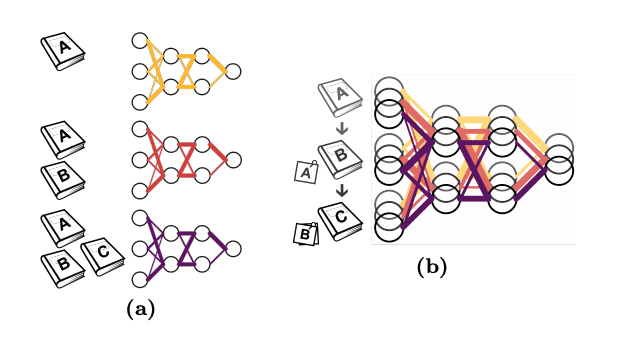
Recent advancements in machine learning potentials (MLPs) aim to enhance efficiency in chemical reaction network exploration while maintaining accuracy derived from first-principles data. However, MLPs face challenges in generalization across diverse chemical spaces, particularly when trained on non-representative datasets. This study evaluates two MLP approaches: universal MLPs, designed for broad chemical space coverage, and lifelong MLPs, which adapt through continual learning. While universal MLPs lack sufficient accuracy without fine-tuning, lifelong MLPs achieve chemical accuracy with an improved adaptive learning algorithm that integrates new data efficiently while preserving prior expertise.
Predicting how molecules interact and transform is crucial in fields like drug discovery and materials science. Traditional methods often require vast computational resources or laboratory experiments to predict outcomes accurately. Current ML models, while effective, typically need extensive pre-training on specific datasets, limiting their versatility.
The breakthrough lies in ML models that can assess their own predictive capabilities without prior training. These models use pre-estimators to gauge accuracy across different chemical systems, allowing them to apply existing knowledge more efficiently. This approach significantly reduces the computational burden and enhances adaptability.
The research employs lifelong learning algorithms, enabling models to dynamically expand their knowledge without retraining from scratch. This method is particularly effective in exploring complex reaction networks, such as those involved in prebiotic chemistry, where understanding molecular evolution is key.
This innovation could accelerate research by reducing reliance on costly lab experiments. It opens new avenues for studying intricate chemical processes, potentially leading to breakthroughs in drug development and materials science. The integration of these models with quantum computing further enhances their potential, offering unprecedented insights into molecular interactions.
The ability of ML models to self-assess marks a paradigm shift in computational chemistry. By efficiently predicting reaction outcomes across diverse systems, this technology promises to revolutionize how we approach chemical research and development. As these models continue to evolve, they hold the potential to unlock new frontiers in understanding complex chemical processes, from the origins of life to advanced materials design. This advancement not only enhances our ability to predict chemical reactions but also underscores the power of interdisciplinary approaches combining machine learning with quantum computing, paving the way for future scientific discoveries.
👉 More information
🗞 Lifelong and Universal Machine Learning Potentials for Chemical Reaction Network Explorations
🧠 DOI: https://doi.org/10.48550/arXiv.2504.11933
See today’s quantum computing news on Quantum Zeitgeist for the latest breakthroughs in qubits, hardware, algorithms, and industry deals.