History of the GUI is the story of how computers became personal: from the 1973 Xerox Alto and Smalltalk through the 1984 Apple Macintosh, Windows 95, the iPhone in 2007, and on to today’s voice assistants and Vision Pro spatial-computing interfaces. This 2026 guide walks the the interface story from Engelbart and Sutherland through Xerox PARC into the post-touch era now emerging.
The Graphical User Interface (GUI) revolution transformed computing by replacing command-line interfaces with visual elements like icons and windows, making technology more accessible to the general public. This shift began with foundational work at Xerox PARC, where researchers developed early GUI concepts, laying the groundwork for future innovations. The introduction of GUIs marked a significant departure from text-based interaction, enabling users to interact with computers through intuitive visual cues rather than complex commands.
Apple played a pivotal role in popularizing GUIs with the 1984 launch of the Macintosh, featuring a user-friendly interface that emphasized simplicity and ease of use. Shortly thereafter, Microsoft introduced Windows, further establishing GUIs as the standard in personal computing. These developments democratized technology, allowing non-technical users to interact with computers effectively and paving the way for widespread adoption of digital tools in both professional and personal settings.
The success of GUIs was driven by key innovations such as the mouse for navigation and icons for intuitive function representation. Psychological principles, including reducing cognitive load through visual cues, were integral to their design, aligning with user-centered approaches highlighted in works like Don Norman’s “The Design of Everyday Things.” As technology evolved, GUI principles continued to influence modern interfaces, from touchscreens to voice commands, adapting to new technologies while maintaining core usability tenets. Despite occasional criticisms regarding efficiency for advanced users, GUIs remain a cornerstone of computing, shaping both design and interaction paradigms in lasting ways.
From Command Line To Windows
The GUI Revolution marked a significant shift from command-line interfaces to visual-based computing, transforming how users interacted with technology. Before GUIs, computers relied on text-based command lines requiring specific syntax knowledge. GUIs introduced graphical elements like windows, icons, menus, and pointers (WIMP), democratizing access for non-experts.
The development of GUIs began at Xerox PARC in the 1970s with their Alto computer, showcasing early concepts. Apple popularized GUIs with the Macintosh in 1984, followed by Microsoft’s Windows, which made GUIs widespread. This shift contrasted sharply with IBM‘s text-based systems, as noted in Martin Campbell-Kelly’s work on computing history.
Technical innovations such as raster displays and improved processing power enabled GUIs. These advancements allowed for graphical elements to be rendered efficiently, supporting GUIs’ user-friendly experience. The evolution of hardware was crucial in making GUIs feasible and accessible.
The impact of GUIs extended beyond personal computers into software development and user experience design. Studies in human-computer interaction highlighted usability improvements, as detailed in ACM Communications. GUIs facilitated more intuitive navigation and application use, enhancing productivity and accessibility across various sectors.
GUI principles influenced mobile devices and web design, underscoring their lasting legacy. This broader impact is evident in modern computing, where visual interfaces are standard, reflecting the enduring influence of the GUI Revolution on technology evolution.
Xerox PARC’s Overlooked Innovations
Xerox PARC played a pivotal role in the development of graphical user interfaces (GUIs), which revolutionized computing by replacing command-line interfaces with intuitive visual elements like windows and icons. This innovation emerged from the Alto project at PARC, where researchers developed an early GUI system that utilized a mouse for navigation. The work at PARC laid the groundwork for modern computing by making systems more accessible to non-technical users.
The influence of PARC’s GUI research extended beyond its walls when Steve Jobs famously visited the facility in 1979. Inspired by what he saw, Jobs incorporated many of these ideas into Apple’s Macintosh computer, which became one of the first widely successful personal computers with a GUI. While PARC did not commercialize its GUI technology directly, its research was instrumental in shaping the industry.
The introduction of GUIs marked a significant shift in computing by democratizing access to technology. Before GUIs, operating systems required users to memorize complex commands, creating a barrier for widespread adoption. The visual interface made computers more user-friendly, enabling individuals without technical expertise to utilize them effectively. This accessibility was a cornerstone of the personal computer revolution.
The broader impact of GUIs extended beyond individual productivity. They facilitated the development of software applications designed with graphical elements, further enhancing usability and functionality. Companies like Microsoft also adopted GUI principles in their Windows operating system, contributing to the widespread adoption of this interface paradigm across various platforms.
Despite its foundational role, Xerox PARC’s contribution to the GUI revolution is often overlooked in favor of more commercially successful implementations by companies like Apple and Microsoft. However, the research conducted at PARC remains a critical milestone in the history of computing, demonstrating how early innovations can have lasting impacts on technology and society.
Apple And Microsoft Transforming UX
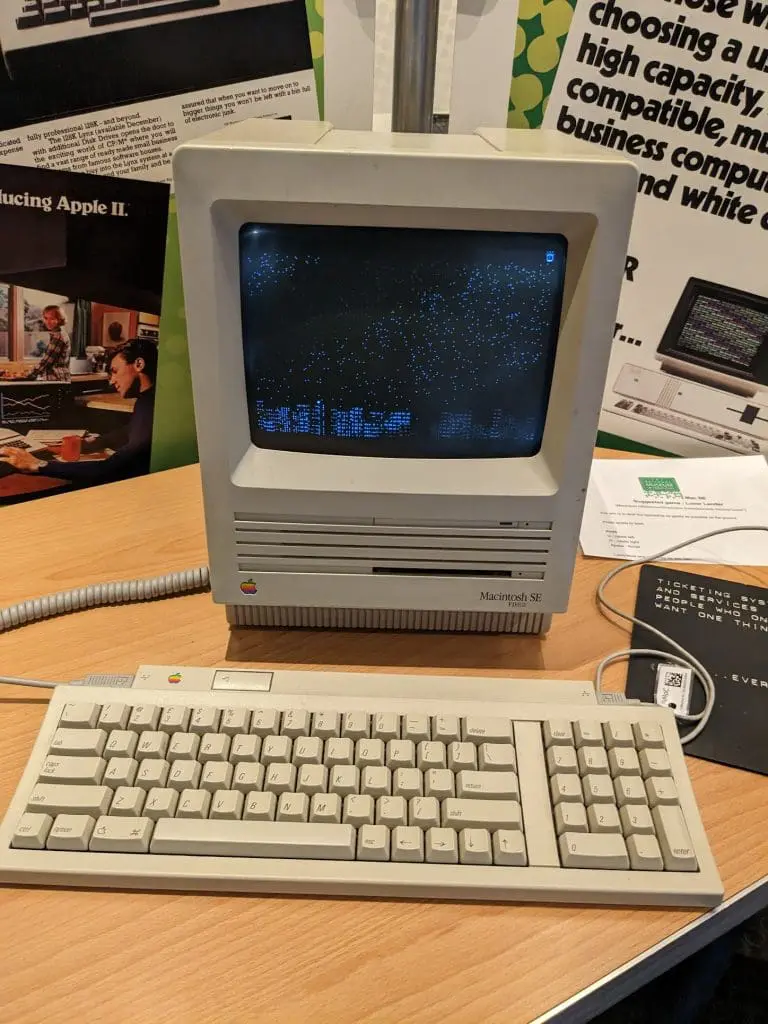
Apple’s Macintosh in 1984 was pivotal. It featured one of the first GUIs that used visual metaphors such as folders and trash cans to facilitate intuitive interaction. This innovation democratized computing, allowing non-experts to use computers effectively.
Microsoft followed with Windows, initially an add-on for MS-DOS, evolving into a comprehensive GUI by 1985. Over time, Windows incorporated features like drag-and-drop functionality and taskbars, enhancing user-friendliness. By the mid-1990s, Windows became dominant in personal computers, solidifying GUI as the standard interface.
Both Apple and Microsoft emphasized intuitive design principles. Apple’s approach focused on simplicity and aesthetics, while Microsoft expanded usability through customizable elements and multitasking capabilities. These efforts transformed computing into an engaging experience, reducing the learning curve for new users.
The impact of GUIs was profound. They boosted productivity by enabling efficient computer interaction. Graphical interfaces also broadened computer adoption, making technology accessible to a wider audience beyond tech-savvy individuals. This shift had lasting effects on how people interacted with digital tools in both personal and professional settings.
Psychology Behind Effective Interfaces
GUIS have a profound psychological impact, as they reduce cognitive load by making interactions intuitive. Visual elements like icons, windows, and menus facilitate understanding without extensive training. This approach aligns with principles from Don Norman’s “The Design of Everyday Things,” emphasizing usability and user-centered design.
Fitts’ Law plays a crucial role in GUI design, influencing the placement and size of interactive elements to enhance efficiency. By applying such psychological principles, designers create interfaces that are functional and user-friendly, addressing human-computer interaction dynamics as outlined in “Human-Computer Interaction: Psychological Perspectives.”
GUIs also enable multitasking through windows and tabs, allowing users to switch tasks seamlessly, a stark contrast to linear command-line systems. This flexibility significantly boosts productivity, making computers indispensable in both professional and personal settings.
The broader societal impact of GUIs is evident in the widespread adoption of user-friendly applications, driving a shift from professional use to everyday accessibility. This transformation underscores the importance of cognitive psychology in design, as highlighted in “Designing Interfaces” by Jenifer Tidwell, ensuring that visual cues effectively aid navigation and engagement.
Future Of Human-computer Interaction
The Graphical User Interface (GUI) revolutionized computing by replacing command-line interfaces with visual elements like icons and windows, making computers more accessible. Apple popularized GUIs with the Macintosh in 1984, though Xerox PARC developed them earlier. This shift democratized technology use, as seen in increased personal computer adoption.
GUIs transformed computing by enhancing usability, allowing non-technical users to operate computers effectively. The transition from CLI to GUI is well-documented in studies like Smith et al.’s work on interface evolution and Don Norman’s “The Design of Everyday Things,” highlighting usability principles. This accessibility drove widespread computer adoption in homes and offices.
Key innovations included the mouse, enabling easier navigation, and icons for intuitive function representation. Shneiderman’s research underscores how these elements reduced learning curves, making computing more approachable. These advancements marked a significant shift from keyboard-based interaction to user-friendly graphical navigation.
GUI principles extend into modern interfaces like touchscreens and voice commands. Gartner reports connect GUI evolution to current trends in UI design, emphasizing continued relevance. Innovations such as Apple’s iOS and Google‘s Material Design reflect ongoing GUI influence, adapting principles for new technologies.
While GUIs democratized technology, some argue they can be less efficient for advanced users compared to CLI. HCI journals discuss these trade-offs, noting GUI’s balance between accessibility and functionality. Despite criticisms, GUI’s role in shaping modern computing remains pivotal, influencing both design and user interaction paradigms.
History of the GUI 2026 Outlook
The The GUI story entered 2026 with three coexisting interaction paradigms: traditional desktop and mobile touch (Mac, Windows, iPhone, Android), conversational and voice (Siri, Alexa, ChatGPT, Gemini), and emerging spatial computing (Apple Vision Pro, Meta Quest, Magic Leap). The Vision Pro launch in February 2024 was the most-watched milestone in the The interface history since the iPhone, although early sales were modest. The Engelbart 1968 Augment paper that opens the history of the GUI is the foundational document of this This history.Why Xerox PARC Mattered
Xerox PARC in the 1970s is the technical pivot of the The GUI arc because nearly every modern interface element originated there: overlapping windows, the desktop metaphor, the bitmap display, what-you-see-is-what-you-get text editing, the mouse driven by Smalltalk software, and Ethernet networking between workstations. Steve Jobs’s 1979 PARC visit famously inspired the Lisa and Macintosh designs at Apple. Xerox itself failed to commercialise the work, but PARC’s research output defined the The interface story for the next 30 years.The Mobile Reset
The iPhone in 2007 reset the The field by replacing the mouse, keyboard, and stylus with multi-touch as the primary interaction model. The desktop metaphor that had dominated since the Macintosh became one option among many; mobile-first design grew up around touch targets, swipe gestures, and pull-to-refresh patterns that have no desktop antecedent. Within a decade, mobile traffic exceeded desktop on most consumer websites, and the The GUI story entered an era when the largest population of computer users had never owned a desktop machine.What Comes Next
By 2030 the The interface history expects further consolidation of conversational AI as a primary interaction layer, with voice and chat replacing visual hierarchy for many tasks. Spatial computing (AR glasses, Vision Pro successors) may finally reach mass adoption if hardware weight and cost fall enough. The desktop and mobile-touch paradigms will not disappear, but they will share the field with voice, conversational, and spatial. The This history will look much more diverse in 2030 than the screen-and-pointer monoculture that defined the previous half-century.History of the GUI FAQ
What is the The GUI arc?
The The interface story traces how computers became visual and personal, beginning with Doug Engelbart’s 1968 Mother of All Demos that introduced the mouse, hypertext, and collaborative editing. Xerox PARC in the 1970s built the Alto workstation with overlapping windows, the desktop metaphor, and bitmap displays. The Apple Macintosh (1984) and Microsoft Windows (especially 95) made GUIs ubiquitous in the consumer market. The iPhone in 2007 reset the The field with multi-touch, voice assistants added a new layer in the 2010s, and spatial computing (Vision Pro, AR) is now the emerging chapter.
Why is Xerox PARC important in the The GUI story?
Xerox PARC in the 1970s is the technical pivot of the The interface history because nearly every modern interface element originated there: overlapping windows, the desktop metaphor, the bitmap display, what-you-see-is-what-you-get text editing, the mouse driven by Smalltalk software, and Ethernet networking. Steve Jobs’s 1979 visit to PARC inspired the Lisa and Macintosh. Xerox itself failed to commercialise the work, but PARC’s research output defined the History of the GUI for the next 30 years.
How did the iPhone change the History of the GUI?
The iPhone in 2007 reset the History of the GUI by replacing the mouse, keyboard, and stylus with multi-touch as the primary interaction model. The desktop metaphor that had dominated since the Macintosh became one option among many; mobile-first design grew up around touch targets, swipe gestures, and pull-to-refresh patterns that have no desktop antecedent. Within a decade mobile traffic exceeded desktop on most consumer websites, and the History of the GUI entered an era when many computer users had never owned a desktop machine.
What is the latest chapter of the History of the GUI?
The latest chapter of the History of the GUI is the simultaneous rise of conversational AI as a primary interaction layer (ChatGPT 2022, Claude 2023, Gemini 2024) and the emergence of spatial computing on devices like Apple Vision Pro (2024). Voice assistants are now combined with large language models for natural-language interaction without a traditional screen. Whether spatial computing reaches mass adoption depends on hardware cost and weight; whether conversational AI reduces visual interface complexity depends on whether users prefer to type, talk, or click for any given task.




See today’s quantum computing news on Quantum Zeitgeist for the latest breakthroughs in qubits, hardware, algorithms, and industry deals.