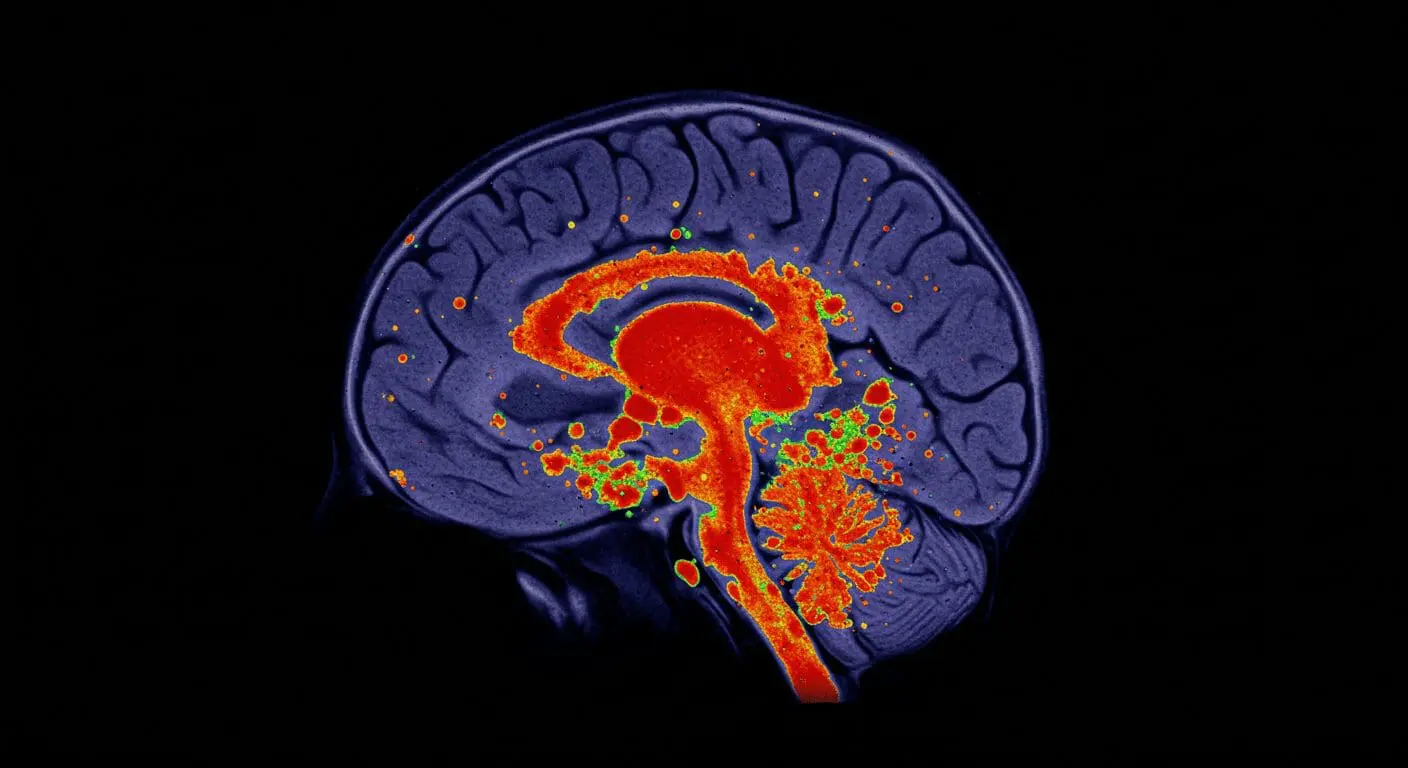
On April 9, 2025, researchers introduced nnLandmark, a self-configuring framework for 3D medical landmark detection that leverages deep learning techniques to achieve state-of-the-art accuracy with a mean radial error of 1.2 mm on brain MRI datasets and 1.5 mm on dental CT scans, aligning closely with human expert variability.
Landmark detection is vital for medical imaging tasks like diagnosis and surgical navigation but is hindered by manual annotation and limited datasets. This work introduces nnLandmark, a self-configuring framework for 3D medical landmark detection based on heatmap regression, leveraging nnU-Net’s automated configuration to eliminate manual tuning. It achieves state-of-the-art accuracy with mean radial errors of 1.5 mm on the MML dental CT dataset and 1.2 mm on the AFIDs brain MRI dataset, matching inter-rater variability. nnLandmark offers strong generalization, reproducibility, and ease of deployment, establishing a reliable baseline for anatomical localization research and clinical workflows.
Recent advancements in deep learning are revolutionizing how medical professionals identify anatomical landmarks in imaging studies. By analyzing vast amounts of medical data, these systems can detect critical points on CT scans and MRIs with unprecedented accuracy. This innovation is improving diagnostic precision and streamlining clinical workflows. For instance, studies have shown that deep learning models can consistently pinpoint landmarks on craniomaxillofacial structures, even when working with limited labeled datasets, a capability particularly valuable in scenarios where data is scarce or expensive to obtain.
One of the most significant breakthroughs has been
One of the most significant breakthroughs has been the development of semi-supervised learning techniques. These methods enable models to learn from both labeled and unlabeled data, reducing reliance on extensive manually annotated datasets. For example, researchers have successfully applied these approaches to detect landmarks in craniofacial images, achieving high accuracy while minimizing time-consuming manual annotations. Another key innovation is consistency-based regularization, which helps models generalize better across different imaging modalities and contrast levels. This approach ensures reliable landmark detection even when dealing with variations in image quality or patient positioning, a critical factor in clinical settings where consistency is essential for accurate diagnoses and treatment planning.
Despite these advances, challenges remain. Inter-rater variability, the differences in landmark identification between human experts, remains a pressing issue. Deep learning models are being trained to account for this variability, ensuring their outputs align more closely with clinical standards. Recent studies have focused on improving the reliability of automated systems by incorporating geometric constraints and anatomical priors into the training process. Additionally, researchers are exploring ways to make these systems more adaptable to real-world conditions, including diverse patient populations and imaging protocols. Addressing these challenges could make deep learning an indispensable tool in modern medical practice.
The implications of these advancements extend far beyondmedical imaging
The implications of these advancements extend far beyond medical imaging. Accurate landmark detection is essential for a wide range of applications, including surgical planning, disease diagnosis, and treatment monitoring. For example, precise identification of craniofacial landmarks can aid in reconstructive surgery, while accurate detection of spinal landmarks can improve diagnostic accuracy. As these technologies continue to evolve, they hold the potential to transform healthcare delivery by reducing human error and improving efficiency. Deep learning-based systems are paving the way for more personalized and effective treatments, freeing up valuable time for medical professionals to focus on patient care rather than administrative tasks.
In conclusion, the application of deep learning to anatomical landmark detection represents a significant leap forward in medical imaging technology. As researchers refine these systems, they unlock new possibilities for improving diagnostic accuracy, enhancing treatment outcomes, and revolutionizing healthcare delivery.
🗞 nnLandmark: A Self-Configuring Method for 3D Medical Landmark Detection
🧠 DOI: https://doi.org/10.48550/arXiv.2504.06742
See today’s quantum computing news on Quantum Zeitgeist for the latest breakthroughs in qubits, hardware, algorithms, and industry deals.