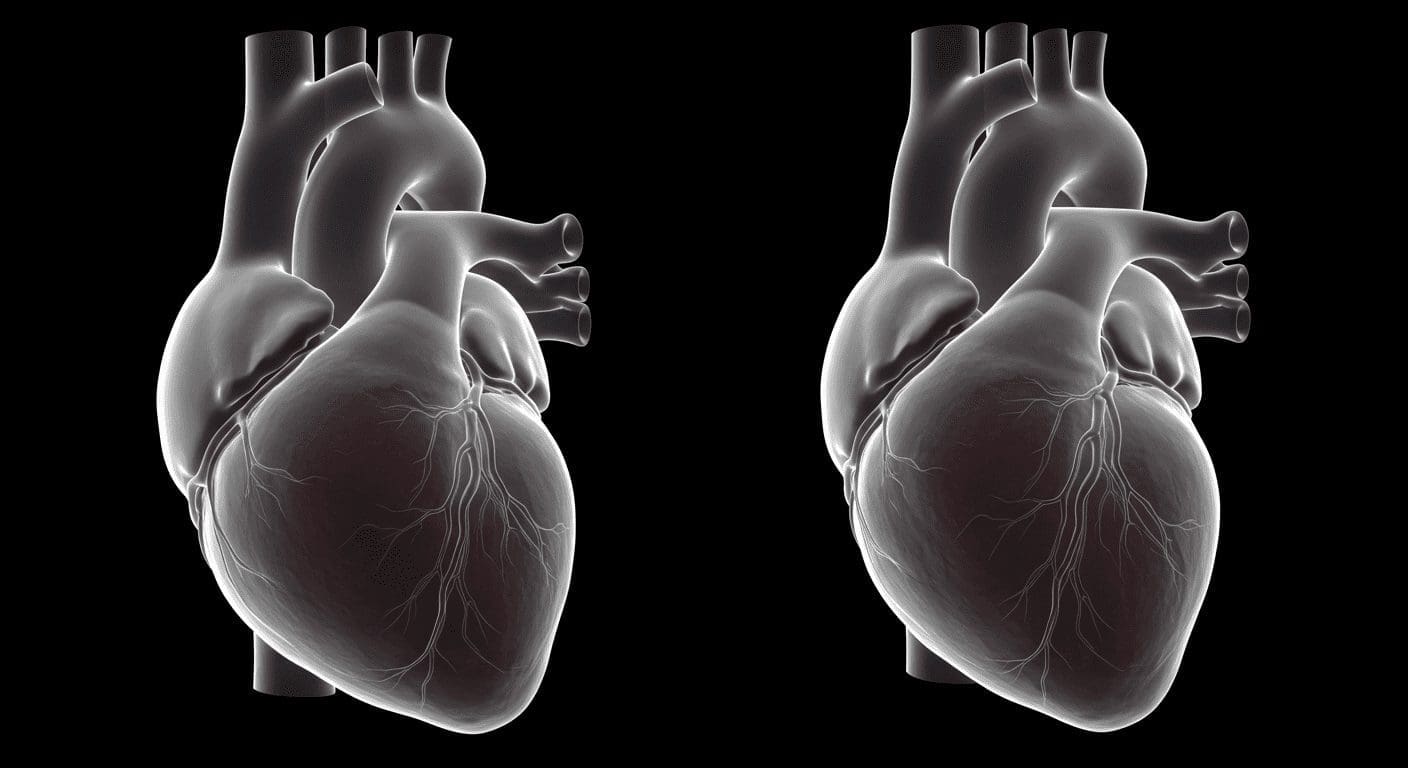
The study demonstrates how AI models can analyze mammograms for breast cancer and assess cardiovascular risk by detecting calcium buildup in breast arteries. Presented at ACC.25 in Chicago by Theo Dapamede of Emory University, the research involved training a deep-learning model on data from over 56,000 patients, enabling it to quantify breast arterial calcification and predict future cardiovascular events. The model performed exceptionally well in younger women, with higher calcium levels correlating to lower five-year survival rates.
AI-Powered Mammograms as a Tool for Heart Health
A study presented at ACC.25 highlights the potential of AI models to analyze mammograms for cardiovascular risk by quantifying breast artery calcification. This approach not only aids in detecting breast cancer but also predicts heart disease risk, particularly among younger women.
The AI model employs deep learning to identify and quantify calcified vessels in mammograms, correlating these findings with electronic health records to assess cardiovascular risk. The study’s robust dataset, involving over 56,000 patients, underscores the reliability of its conclusions.
Early detection through this method can facilitate timely interventions, thereby reducing mortality rates. Women exhibiting higher levels of calcification face lower survival rates, emphasizing the importance of early identification and treatment.
While currently not available for clinical use, the model demonstrates how AI could transform routine mammograms into tools for broader health assessments.
Study Details
The study analyzed imaging and clinical data from over 56,000 women who underwent mammography at Emory Healthcare between 2013 and 2020. Using deep learning, researchers developed an AI model to quantify breast artery calcification visible on mammograms.
This retrospective analysis allowed researchers to correlate AI-derived calcification measurements with long-term health outcomes, including cardiovascular events and all-cause mortality.
The model’s ability to integrate radiological findings with electronic health records enables comprehensive patient risk stratification. Collaborative development between Emory Healthcare and the Mayo Clinic ensured robustness and broad applicability of the findings.
Benefits for Younger Women
The study found that younger women with higher levels of breast artery calcification identified by AI had significantly worse cardiovascular outcomes compared to peers with less calcification. This suggests that AI analysis of mammograms could help identify at-risk individuals earlier than traditional methods.
This approach could enable more proactive management of cardiovascular risk in younger populations, potentially improving long-term health outcomes.
Implications and Future Applications
The findings demonstrate how AI can enhance the utility of routine medical imaging beyond its original purpose. By identifying incidental markers of systemic disease, such as breast artery calcification, AI could enable more holistic patient evaluations.
This innovation exemplifies how technological advancements are reshaping modern healthcare delivery. While this specific model is not yet in clinical use, it highlights the potential for similar approaches in other areas of medicine.
Such applications could optimize resource utilization while enabling earlier detection and intervention for a range of health conditions.
Presentation at ACC25
The study was presented at the 2023 American College of Cardiology (ACC) Scientific Sessions, showcasing how AI is expanding the scope of cardiovascular risk assessment. The research underscores the potential for integrating advanced analytics into routine diagnostic procedures to achieve more comprehensive patient evaluations.
By identifying breast artery calcification on mammograms, the AI model provides insights into cardiovascular risk that complement traditional assessments. This dual-purpose use of medical imaging could set the stage for future innovations in preventive care.
The findings emphasize the importance of early detection in managing cardiovascular risk, particularly among younger women. The ability to identify at-risk individuals through routine screening could lead to more timely interventions and improved health outcomes.
This research exemplifies how technological advancements are transforming healthcare delivery, offering new opportunities for holistic patient evaluation and proactive disease management.
More information
External Link: Click Here For More
See today’s quantum computing news on Quantum Zeitgeist for the latest breakthroughs in qubits, hardware, algorithms, and industry deals.