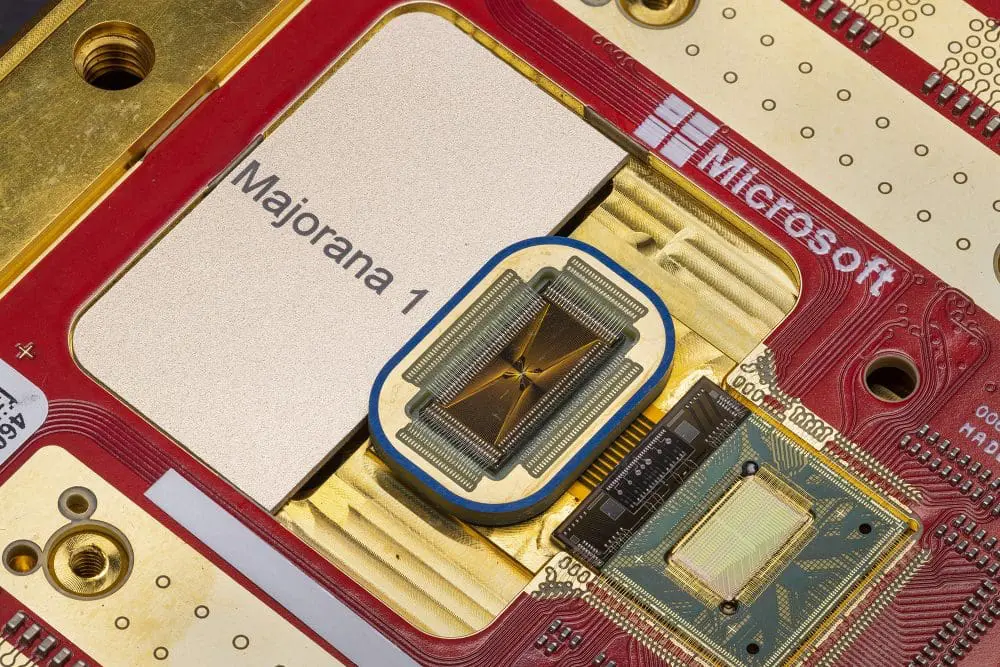
Microsoft has claimed a significant advancement in quantum computing by asserting the creation of topological qubits in its Majorana 1 Chip using the Topological Gap Protocol (TGP). However, physicist Henry Legg has raised concerns about the TGP, pointing out inconsistencies in external conditions during measurements and discrepancies between the protocol’s description and implementation.
Microsoft defends its approach but has yet to provide peer-reviewed evidence supporting its claims. Experts acknowledge Legg’s critique as valid and suggest that Microsoft address these issues publicly, emphasizing the importance of transparency in validating such quantum computing milestones.
Microsoft has announced a significant advancement in its quantum computing efforts, claiming success in detecting Majorana fermions—a key milestone in developing stable topological qubits. This breakthrough could pave the way for more reliable quantum computers capable of solving complex problems beyond the reach of classical systems.
The scientific community has reacted with both excitement and skepticism. While some researchers applaud Microsoft’s progress, others have called for further evidence to validate the claims.
Henry Legg, a prominent researcher, has raised concerns about Microsoft’s methodology in detecting Majorana fermions. He argues that variations in external conditions during measurements could lead to inconsistent results and false positives, casting doubt on the reliability of their findings.
Microsoft has defended its approach, emphasizing confidence in
Microsoft has defended its approach, emphasizing confidence in its research despite criticism. The company plans to respond formally to Legg’s critique once journal editors have reviewed the submission.
Legg’s analysis highlights potential flaws in Microsoft’s Topological Gap Protocol (TGP), used to detect Majorana fermions. He suggests that environmental factors during experiments could produce misleading data, undermining the validity of their claims.
This critique has sparked a broader discussion within the quantum computing community about the challenges of validating such groundbreaking discoveries. Researchers are now questioning whether additional tests or alternative detection methods might be necessary to confirm Microsoft’s findings.
Implications for Quantum Computing Progress
If Microsoft’s claims prove unsubstantiated, it could set back progress in developing topological qubits—a promising avenue for building fault-tolerant quantum computers. Majorana fermions, which are their antiparticles, offer unique properties that could enhance the stability and scalability of quantum systems.
The scientific community remains divided. While some researchers express skepticism due to the lack of published evidence, others acknowledge the potential impact of Microsoft’s work on advancing quantum computing technologies.
In response to Legg’s critique, Microsoft has reaffirmed its confidence in its team’s research. The company plans to address specific concerns once the journal editors review its submission.
If Microsoft’s findings hold up under scrutiny, they
If Microsoft’s findings hold up under scrutiny, they could represent a significant leap forward in quantum computing. However, if the claims are disproven, researchers may revisit their approaches and explore alternative strategies for achieving stable topological qubits.
The debate underscores the importance of rigorous validation and transparency in quantum research. Clear communication and thorough evidence will be crucial for maintaining trust and driving progress as the field evolves.
In summary, Legg’s critique challenges the validity of Microsoft’s Majorana qubit claims due to concerns about their detection protocol. While the scientific community awaits Microsoft’s formal response, the need for careful validation in quantum research remains a central theme.
External Link: Click Here For More