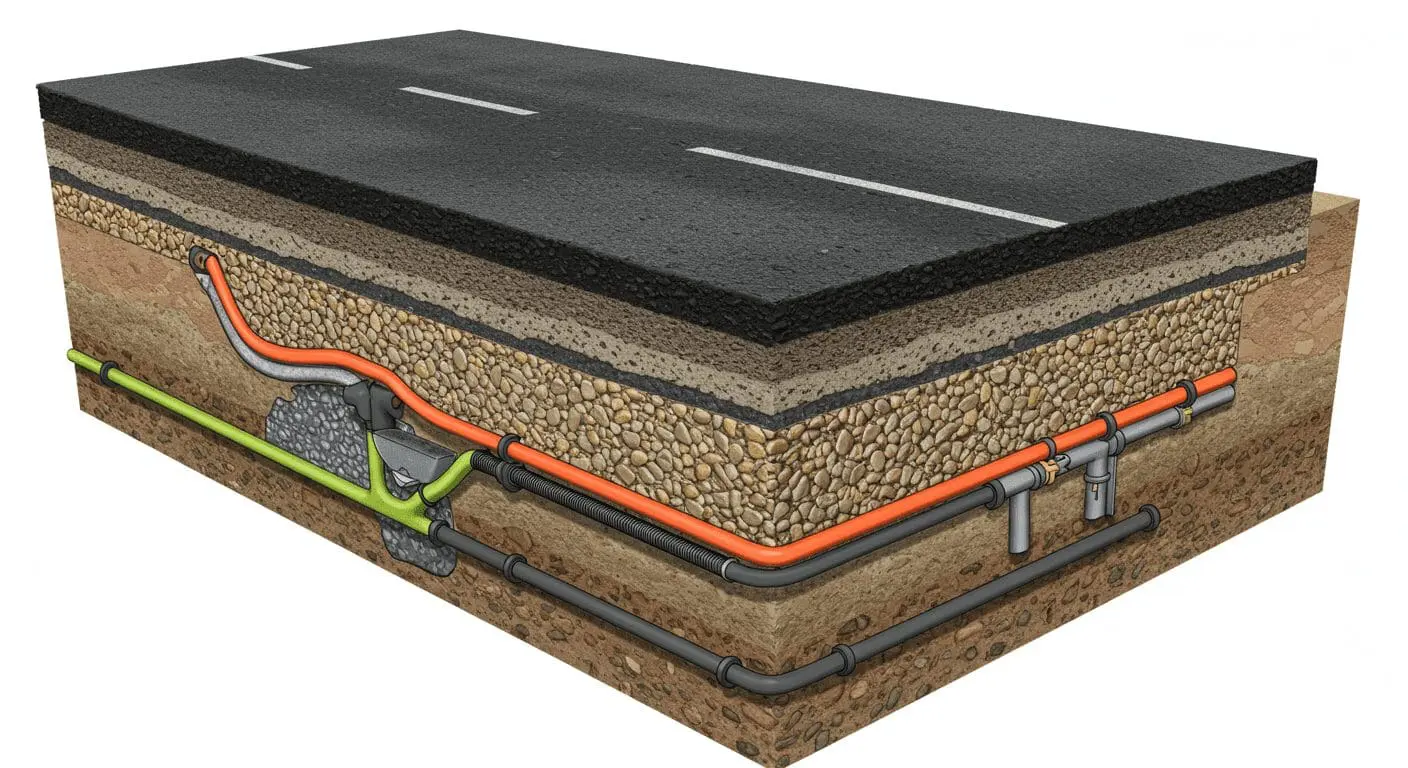
A recent study in Engineering explores the potential of digital twin (DT) technology to transform road engineering across its lifecycle, from planning to demolition. Conducted by researchers from Tongji University and Harbin Institute of Technology (Shenzhen), the research reviews DT-enabling technologies such as model creation, condition sensing, and data processing, highlighting their application in optimizing infrastructure design, construction, and maintenance.
While DT technology has shown promise in integrating engineering data with environmental factors and improving resource allocation during construction, challenges remain, including a lack of standardized definitions, diverse modeling tools, and advanced data interaction techniques. The study emphasizes the need for further innovation in enabling technologies and the establishment of uniform standards to fully realize DT’s potential in enhancing efficiency, safety, and sustainability in road engineering.
Digital Twin Technology Potential in Road Engineering
Digital twin technology holds significant potential for enhancing road engineering by enabling comprehensive lifecycle management. This technology integrates virtual models with physical infrastructure, facilitating real-time monitoring, predictive maintenance, and optimized decision-making across all stages of road development.
In the planning and design phase, digital twins can synthesize engineering data with environmental factors to optimize route selection and pavement design. For instance, an urban road planning method utilizing the DT-MCDM-GIS framework was successfully implemented in Bromley, UK, demonstrating how this approach enhances project efficiency and sustainability.
During construction, digital twin technology aids in resource allocation, quality control, and progress monitoring. Providing a virtual representation of the physical structure allows for precise tracking of materials, labor, and timelines, ensuring projects stay on schedule and within budget.
Digital twins play a crucial role in operation and maintenance by continuously monitoring pavement health, managing road assets, and informing maintenance decisions. This proactive approach reduces downtime and extends infrastructure longevity, contributing to overall efficiency and safety.
Despite these advancements, challenges remain. The lack of standardized definitions and protocols for digital twin systems in road engineering hinders widespread adoption. Additionally, the diversity of tools for digital pavement modeling is limited, and improvements are needed in data acquisition and interaction technologies to achieve seamless real-time interoperability.
To address these issues, researchers recommend establishing uniform standards, developing innovative perception and data interaction techniques, optimizing development costs, and expanding lifecycle applications. By overcoming these challenges, digital twin technology can further enhance the efficiency, safety, and sustainability of road engineering projects.
Enabling Technologies for Digital Twins in Road Engineering
Digital twin technology integrates virtual models with physical road infrastructure, enabling real-time monitoring and predictive maintenance across all lifecycle stages. This integration allows for optimized decision-making by aligning virtual representations with physical structures, enhancing project efficiency and sustainability.
The development of digital twins relies on several key technologies: model creation, condition sensing, data processing, and interaction. Model creation involves constructing accurate virtual replicas of road infrastructure, while condition sensing uses sensors to gather real-time data on pavement health and environmental factors. Data processing transforms raw sensor data into actionable insights, and interaction ensures seamless communication between physical and virtual models.
Current research in digital twin technology focuses heavily on data perception and virtual model accuracy, with significant advancements in these areas. However, challenges remain in achieving seamless real-time interoperability and improving tools for digital pavement modeling. Addressing these gaps is critical to fully realizing the potential of digital twins in road engineering.
To overcome these challenges, researchers emphasize the need for standardized protocols, innovative data interaction techniques, and cost optimization strategies. Expanding the application of digital twins across all lifecycle stages will further enhance their role in improving infrastructure efficiency, safety, and longevity.
Digital Twin Applications Across the Road Engineering Lifecycle
Digital twin technology enables real-time monitoring and predictive maintenance across all lifecycle stages of road infrastructure. This integration enhances project efficiency and sustainability by aligning virtual representations with physical structures. The development of digital twins relies on key technologies: model creation, condition sensing, data processing, and interaction. Model creation involves constructing accurate virtual replicas of road infrastructure, while condition sensing uses sensors to gather real-time data on pavement health and environmental factors. Data processing transforms raw sensor data into actionable insights, and interaction ensures seamless communication between physical and virtual models.
Current research in digital twin technology focuses heavily on data perception and virtual model accuracy, with significant advancements in these areas. However, challenges remain in achieving seamless real-time interoperability and improving tools for digital pavement modeling. Addressing these gaps is critical to fully realizing the potential of digital twins in road engineering. To overcome these challenges, researchers emphasize the need for standardized protocols, innovative data interaction techniques, and cost optimization strategies. Expanding the application of digital twins across all lifecycle stages will further enhance their role in improving infrastructure efficiency, safety, and longevity.
More information
External Link: Click Here For More




See today’s quantum computing news on Quantum Zeitgeist for the latest breakthroughs in qubits, hardware, algorithms, and industry deals.