The ability to monitor and measure life on Earth from space has taken a crucial step forward, thanks to an innovative multinational research project. By leveraging advanced technologies and collaborative efforts, scientists have successfully demonstrated that biodiversity can be assessed and tracked from space, offering unprecedented insights into the health of terrestrial and aquatic ecosystems.
The BioSCape project, which brought together experts from the United States and South Africa, utilized airborne measurements and fieldwork to collect comprehensive data on the Greater Cape Floristic Region, one of the most biodiverse areas on the planet.
This groundbreaking research has paved the way for developing novel techniques and methods to monitor biodiversity globally, with potential applications in conservation efforts and advancing cutting-edge technologies for measuring land and sea ecosystems. As the project’s findings continue to unfold, the possibilities for improving our understanding of life on Earth from space are vast, with far-reaching implications for addressing the pressing issue of biodiversity loss and promoting effective conservation strategies.
Introduction to Measuring Life on Earth from Space
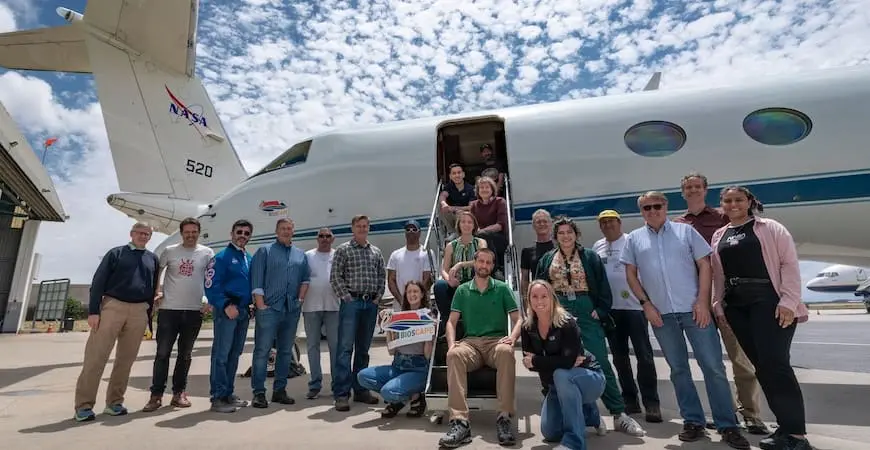
Measuring biodiversity from space is a complex task that requires the collection of various types of data. A recent multinational research project, known as BioSCape, has demonstrated that it is possible to monitor and measure Earth’s biodiversity from space. The project, which was funded by NASA and co-led by researchers from the University of California, Merced, the University of Buffalo, and the University of Cape Town, collected data over six weeks in late 2024 using two NASA aircraft and one South African aircraft. The aircraft flew over South Africa’s Greater Cape Floristic Region, one of the most biodiverse places on the planet, to collect ultraviolet, visual, thermal, and other images.
The data collected during the BioSCape project provides a comprehensive look at the region’s biodiversity, or life systems. This includes information about the types of plants and animals that are present in the area, as well as the health and resilience of the ecosystem. By analyzing this data, researchers can gain a better understanding of the complex relationships between different species and their environments, which is essential for developing effective conservation strategies. The BioSCape project has also developed novel techniques and methods for monitoring biodiversity from space, which could be used to track changes in ecosystems over time.
The use of airborne studies, such as those conducted during the BioSCape project, is an important step towards developing the ability to measure biodiversity from space. By testing the effectiveness of different instruments and techniques in an airborne setting, researchers can refine their methods and develop new technologies that can be used to collect data from satellites. This approach allows researchers to validate their results and ensure that they are collecting accurate and reliable data before investing in more expensive satellite-based studies.
Monitoring Biodiversity from Space
Monitoring biodiversity from space requires the use of specialized instruments that can detect and measure various aspects of ecosystems. The BioSCape project used a combination of ultraviolet, visual, thermal, and other imaging technologies to collect data on the Greater Cape Floristic Region. These instruments allow researchers to examine shifting community composition, ecosystem disturbance, resilience, and recovery, as well as ecosystem function and nature’s contributions to people. By analyzing this data, researchers can gain insights into the complex relationships between different species and their environments, which is essential for developing effective conservation strategies.
The use of satellite-based studies to monitor biodiversity has several advantages over traditional field-based methods. Satellites can collect data over large areas and at regular intervals, providing a comprehensive picture of ecosystem health and change over time. Additionally, satellites can collect data in remote or inaccessible areas, where field-based studies may be difficult or impossible to conduct. However, satellite-based studies also have some limitations, such as the need for specialized instruments and the potential for data interference from atmospheric conditions.
The development of new technologies and methods for monitoring biodiversity from space is an active area of research. The BioSCape project has made significant contributions to this field by developing novel techniques and methods for collecting and analyzing data. The project’s findings have been published in several scientific papers, including two recent publications in Nature Reviews Biodiversity and npj Biodiversity. These papers provide a detailed description of the project’s methods and results, as well as its implications for biodiversity conservation.
Addressing Biodiversity Loss
Addressing biodiversity loss is a global priority, and there is a clear need to improve scientists’ ability to map and monitor change. The BioSCape project has made an important contribution to this effort by developing new technologies and methods for monitoring biodiversity from space. By providing a comprehensive picture of ecosystem health and change over time, these technologies can help researchers and conservationists to identify areas that are most in need of protection and to develop effective strategies for conserving biodiversity.
The BioSCape project has also highlighted the importance of international collaboration in addressing biodiversity loss. The project brought together researchers from several countries, including the United States and South Africa, to collect and analyze data on the Greater Cape Floristic Region. This collaboration allowed researchers to share their expertise and resources, and to develop new technologies and methods that can be used to monitor biodiversity from space.
The project’s findings have also emphasized the need for conservation efforts to be based on sound scientific evidence. By providing a comprehensive picture of ecosystem health and change over time, the BioSCape project’s data can help researchers and conservationists to identify areas that are most in need of protection and to develop effective strategies for conserving biodiversity. The project’s data has been made freely available to scientists and the public around the world, which will help to ensure that conservation efforts are based on the best available evidence.
Future Directions
The BioSCape project has laid the foundation for future research on monitoring biodiversity from space. The project’s findings have demonstrated the potential of satellite-based studies to provide a comprehensive picture of ecosystem health and change over time, and have highlighted the need for continued development of new technologies and methods. In the coming years, researchers will build on the BioSCape project’s results by refining their methods and developing new instruments and techniques.
One of the key areas of focus for future research will be the development of new satellite-based technologies that can collect data at higher resolutions and with greater accuracy. This will require advances in sensor technology, as well as the development of new algorithms and analytical techniques for processing and interpreting the data. Additionally, researchers will need to develop more effective methods for integrating data from multiple sources, including satellites, airborne platforms, and field-based studies.
The BioSCape project has also highlighted the importance of international collaboration in addressing biodiversity loss. Future research will need to build on this collaboration by bringing together researchers from around the world to share their expertise and resources. This will help to ensure that conservation efforts are based on the best available evidence and that new technologies and methods are developed and implemented effectively.
External Link: Click Here For More




See today’s quantum computing news on Quantum Zeitgeist for the latest breakthroughs in qubits, hardware, algorithms, and industry deals.