Robotics has revolutionized industries, from manufacturing to healthcare, with machines designed to enhance efficiency and precision. Nonetheless, not all robots were built for practicality—some defy logic, pushing the boundaries of innovation into the bizarre. While many robots serve practical roles, others remain experimental oddities, too strange for mainstream adoption.
- 1. Snake Robot
- 2. Octavia
- 3. Digesting Duck
- 4. Boston Dynamics’ Atlas: The Parkour Prodigy Robot
- 5. Unitree G1
- 6. Elektro
- 7. Squee: The Robot Squirrel
- 8. Tentacle Arm: The Robot That Moved Like an Octopus
- 9. “Friendly Robotic Educational Device” (FRED)
- 10. AIBO
- 11. Omnibot 2000
- 12. Irony Man
- 13. Lovot
- 14. Slothboth
- 15. H1N1 flu robot
Some of these robots are seriously impressive. They show off amazing advancements in AI and automation. They also demonstrate how they interact with people. But then there are also the weird ones that make you wonder why they were even created.
For example, some robots can do parkour, while others try to mimic human emotions. And believe it or not, some robots exist just to wag their tails or just hunt down squirrels! It isn’t totally weird. But at some point, you just happen to ask, “But why were these invented, though?”
So, before we get started, let’s consider what exactly makes a robot “strange.” Is it the design or how it looks? Or is the main purpose? Or maybe the concept is too futuristic and resembles science fiction? Or it might be a blend of both—teetering between genius and sheer absurdity, innovation and mere curiosity.
In this article, we’ll look at some of the oddest robots ever created. Some will astound you. Others will simply make you shake your head. Whether they’re innovative, creepy, or just plain bizarre, one thing is certain. Robotics is one area that never ceases to amaze us.
1. Snake Robot
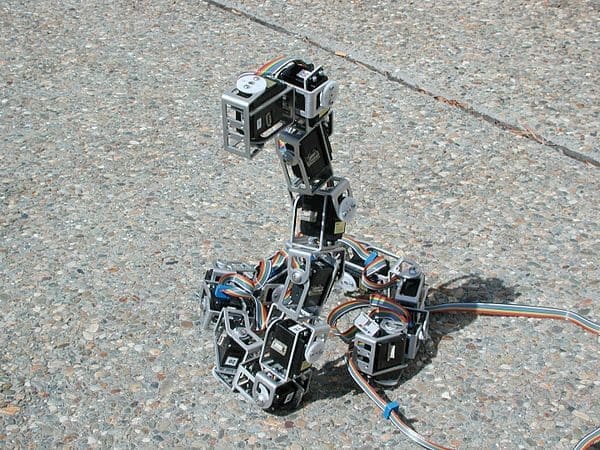
First on the list is the Snakebots, or snake robots, which are some of the most intriguing and unconventional machines ever created out there. Created in the 1970s, the inventor behind this intriguing concept was Professor Shigeo Hirose from Japan’s Tokyo Institute of Technology.
The purpose behind the creation of these snakebots is to provide a helping hand to urban search and rescues; Hirose wanted to give a tool to these rescuers that would allow them to reach out on a collapsed rubble pile and locate victims without disturbing the entire area. Additionally, other useful applications include inspecting narrow pipelines or even in minimally invasive surgeries, amazing right? Their unique design enables them to squeeze through narrow passages or areas.
What makes snakebots a ‘strange robot’ is how different they are from the usual robots we’re used to. Instead of looking like humans or rolling around on wheels, these robots slither just like real snakes. It’s a pretty wild design choice that not only challenges how we think about robots but also proves how much we can learn from nature. Their movements are so lifelike that they can be both fascinating and a little creepy—almost like a mix between a machine and a living creature.
2. Octavia
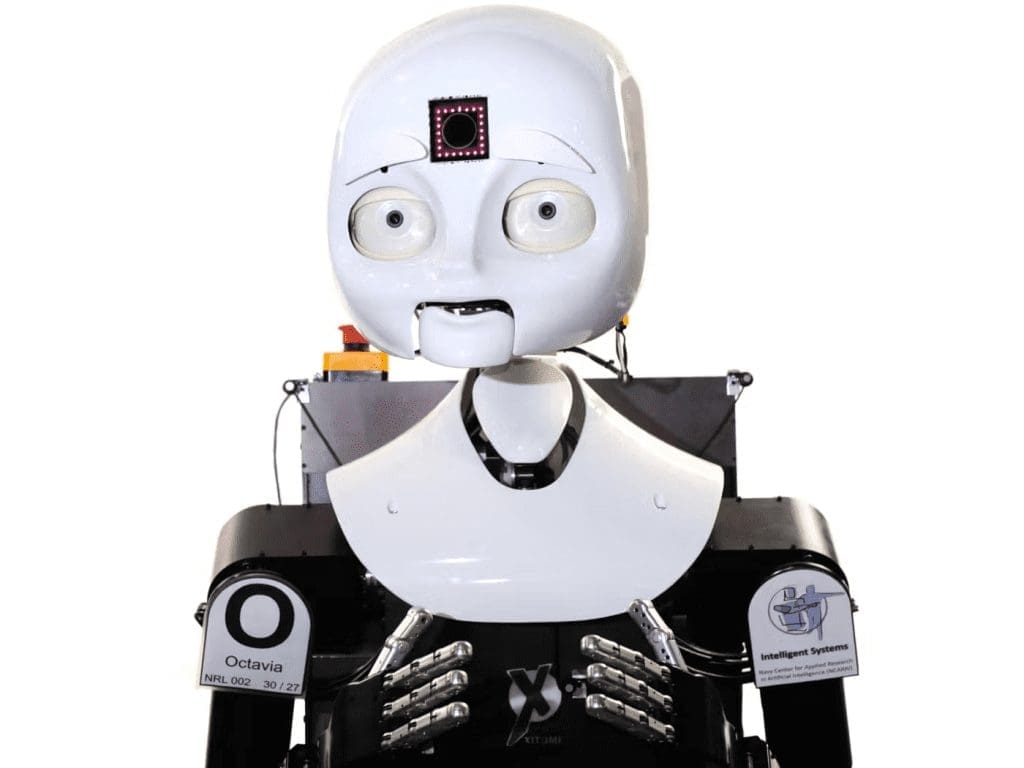
Octavia, invented in 2009, is a humanoid robot developed by the U.S. Naval Research Laboratory’s Navy Center for Applied Research in Artificial Intelligence (NCARAI). Octavia is about 5’9″ tall and has a super expressive face, almost similar to humans. She’s also got pretty nimble hands that let her grab and handle things easily. The cool part? She was designed to actually understand how people think and act so she can interact with humans in a really natural way.
One of Octavia’s primary roles is to assist in firefighting operations aboard naval vessels. Octavia is highly equipped with high-tech sensors, including infrared cameras, so she can spot fires and figure out exactly where they are. She also has a special backpack that sprays water or compressed air to help put out fires. On top of that, she can also recognize people she trusts and respond to both voice commands and gestures.
What makes Octavia particularly unique is her blend of mobility, dexterity, and social interaction capabilities. Unlike traditional robots that may focus solely on mechanical tasks, Octavia’s design emphasizes natural human-robot interaction. Her ability to express emotions, understand gestures, and process natural language allows her to function as a teammate rather than just a tool.
3. Digesting Duck
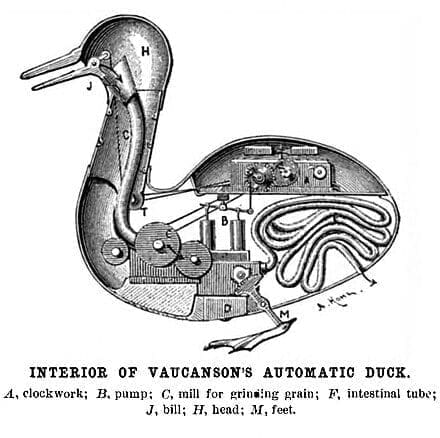
The Digesting Duck is one of the strangest and most fascinating robots ever created in history. Literally, from its name, “digesting duck,” this invention is a mechanical replica of an actual duck. It was built in 1739 by Jacques de Vaucanson, a French inventor known for his obsession with automata—mechanical to mimic living things.
This mechanical marvel is so similar to an ordinary duck that it could actually flap its wings, drink water, eat grain, and even “digest” food before excreting waste. Inside, it had nearly 400 moving parts, all carefully designed to simulate digestion. Amazing, right? However, there was a twist—the digestion process was actually fake! The food never really got processed; instead, the duck had a hidden compartment where pre-stored waste was released after eating, tricking people into believing it was truly digesting.
So, why was it built? Well, Vaucanson’s goal wasn’t really just to entertain people—he actually wanted to explore the mechanics of life itself. Weird, right? But still, you can’t deny that man is a genius. For him, he believed that by understanding biological movement and functions, engineers could eventually replicate living creatures through machines. Although the Digesting Duck didn’t revolutionize science, it still inspired future generations of roboticists and even contributed to the early development of biomechanics. And, well, even today, the Digesting Duck remains a quirky symbol of early robotics, blending genius with absurdity in the most entertaining way possible.
4. Boston Dynamics’ Atlas: The Parkour Prodigy Robot
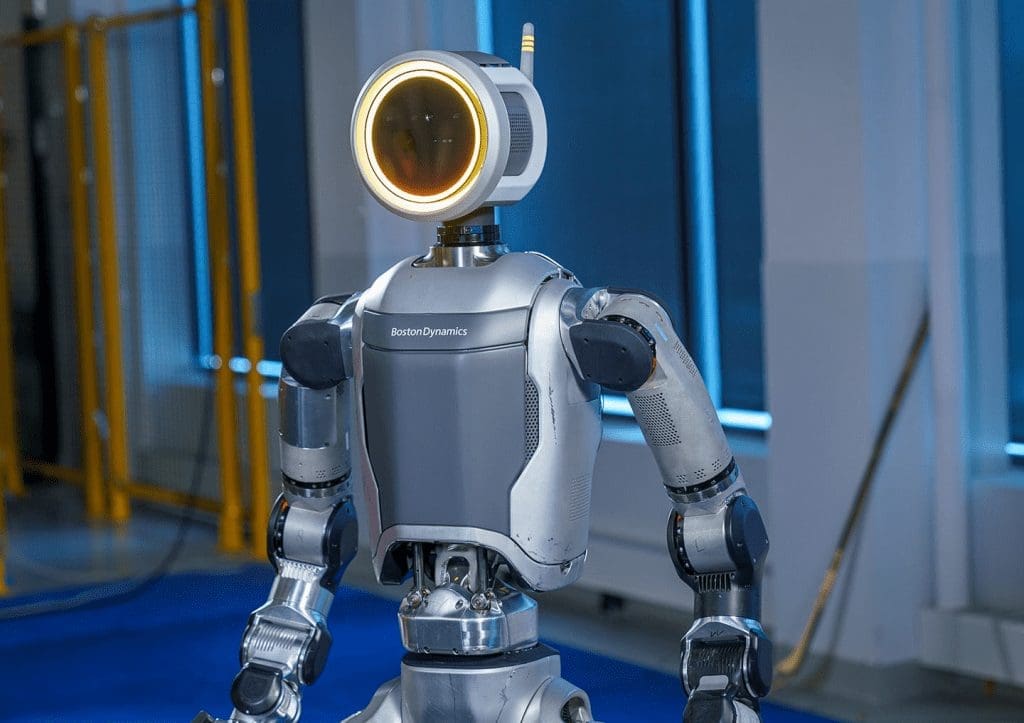
The next one is Atlas, Boston Dynamics’ ultra-athletic, humanoid robot that looks like it was ripped straight out of a sci-fi movie. It’s pretty cool and modernized to look at. Atlas was first introduced to the world in 2013 in the USA, thanks to the brilliant minds at Boston Dynamics, a robotics company that has been pushing the boundaries of what machines can do for years. Originally, Atlas was developed with funding from DARPA for search and rescue missions. But let’s be honest—the world is far more fascinated by its jaw-dropping parkour skills than its ability to navigate disaster zones.
So, what makes Atlas so strange and special? Well, for starters, it moves like a robotic ninja. This bipedal machine can jump, run, do backflips, and even dance better than most humans. Unlike the traditional robots that we have seen – stiff and clunky, Atlas is built differently; it has incredible balance and agility thanks to its state-of-the-art hydraulic system, advanced AI, and 3D vision sensors.
Over the years, Boston Dynamics has upgraded Atlas to be lighter, faster, and more capable. What started as a bulky, awkward bot has transformed into a parkour master that can leap over obstacles, dodge incoming objects, and even perform choreographed routines that make it look eerily lifelike. While Atlas was originally designed with practical applications in mind—like assisting in dangerous environments—its true claim to fame is as a viral sensation, wowing the internet with every new stunt.
5. Unitree G1
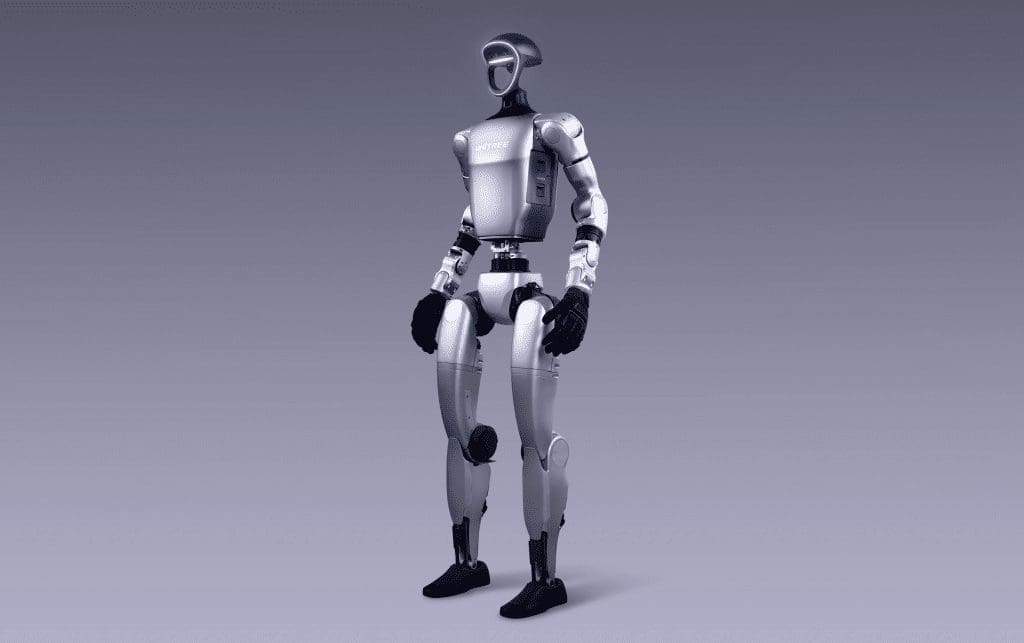
Another strange robot is the famous Unitree G1, a humanoid robot that’s turning heads in the robotics world. Originating from China in 2024, this impressive bot is the brainchild of Unitree Robotics, a company founded by Wang Xingxing in 2016.
So, what’s the deal with the G1? Well Unitree designed this robot to be an affordable and versatile platform for research and development in robotics and artificial intelligence. With a price tag of around $16,000, it’s more accessible than many of its competitors, making it a popular choice for universities and tech enthusiasts looking to explore the capabilities of humanoid robots.
One of the key features of this robot is that it is equipped with 23 to 43 degrees of freedom, depending on the model, meaning it has a wide range of motion, allowing it to perform tasks that require human-like dexterity. Its three-fingered hands enable it to handle delicate objects and even perform tasks like cooking with a frying pan.
Additionally, Unitree G1 can walk at speeds over 4.4 mph, climb stairs, and even jump. Its vision system combines 3D LiDAR and depth cameras, giving it a comprehensive view of its surroundings to navigate complex environments safely. One of the coolest features of the G1 is its ability to learn through imitation and reinforcement learning. This means it can observe human actions and improve its performance over time, making it a promising tool for developing advanced AI behaviors.
6. Elektro
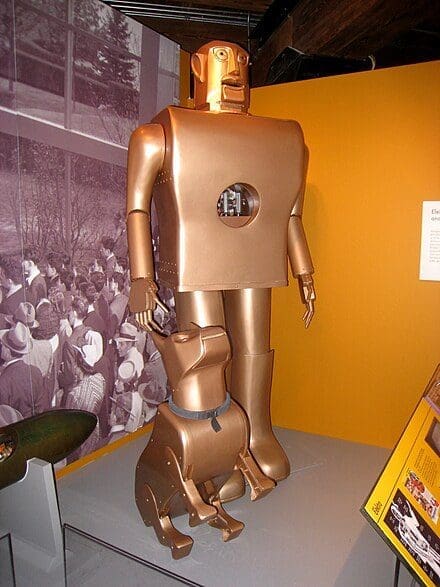
Let’s take a trip back to 1939, a time when the idea of robots was mostly confined to science fiction. That was until Elektro stepped onto the stage at the New York World’s Fair and blew everyone’s minds. Created by Westinghouse Electric Corporation, this 7-foot-tall, 265-pound metal man was one of the first humanoid robots to ever exist, and he was nothing short of a spectacle.
So, what could Elektro do? Well, for a robot built in the 1930s, quite a lot! He could walk (kind of), move his arms, turn his head, count on his fingers, and even talk using a 700-word vocabulary—which was a massive deal at the time. But the real showstopper? Elektro could smoke a cigarette! Yes, this retro-futuristic bot could inhale and blow out puffs of smoke like a Hollywood star.
Elektro wasn’t some AI-powered genius, though—his “brain” was essentially a system of relay switches and record players, and his speech was pre-recorded on 78 RPM vinyl records. But that didn’t stop crowds from being completely mesmerized. He even cracked jokes with a robotic voice, making him a full-blown entertainer.
Originally designed to show off Westinghouse’s engineering capabilities, Elektro became a pop culture icon and traveled around the U.S. as a promotional attraction. After the World’s Fair, he even got a sidekick—Sparko, a robotic dog that could bark and wag its tail.
7. Squee: The Robot Squirrel
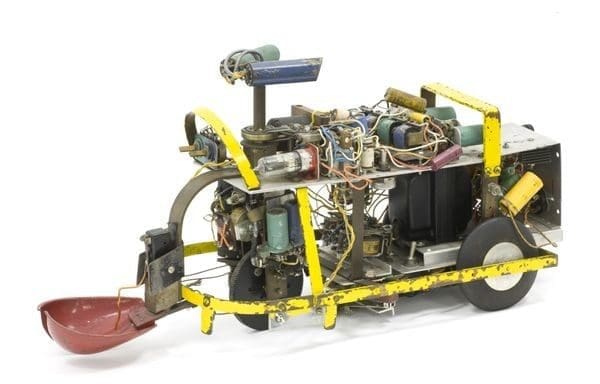
Robots that do backflips are cool, but have you ever heard of a robot squirrel that hunts for nuts? Meet Squee, a robotic rodent from the 1950s that was built not for military, industry, or science—but just to chase and collect ping-pong balls like a hyperactive squirrel looking for acorns.
Designed by Edmund C. Berkeley, an early computer scientist and roboticist, Squee was one of the first robots to demonstrate rudimentary artificial intelligence and autonomous behavior. Built in 1951, this quirky little bot had a simple but fascinating purpose: it could see (using light sensors), move around, and “grab” objects—in this case, small balls that it treated like nuts. It would detect a ball, approach it, pick it up, and carry it back to a designated “nest” before going off to find another.
Squee was not remote-controlled—it operated independently based on sensory input. It had three basic “neurons” (in the form of electrical relays), giving it the ability to search for objects, decide what to do, and act accordingly. This was a huge deal at the time because most robots were just programmed to perform repetitive motions.
While it might sound like a goofy science experiment, Squee was actually a major milestone in robotics. It was one of the earliest examples of a robot using sensor-based feedback to make decisions. Though it never became a commercially successful product, Squee proved that robots could interact in their environment through a sensory program.
8. Tentacle Arm: The Robot That Moved Like an Octopus
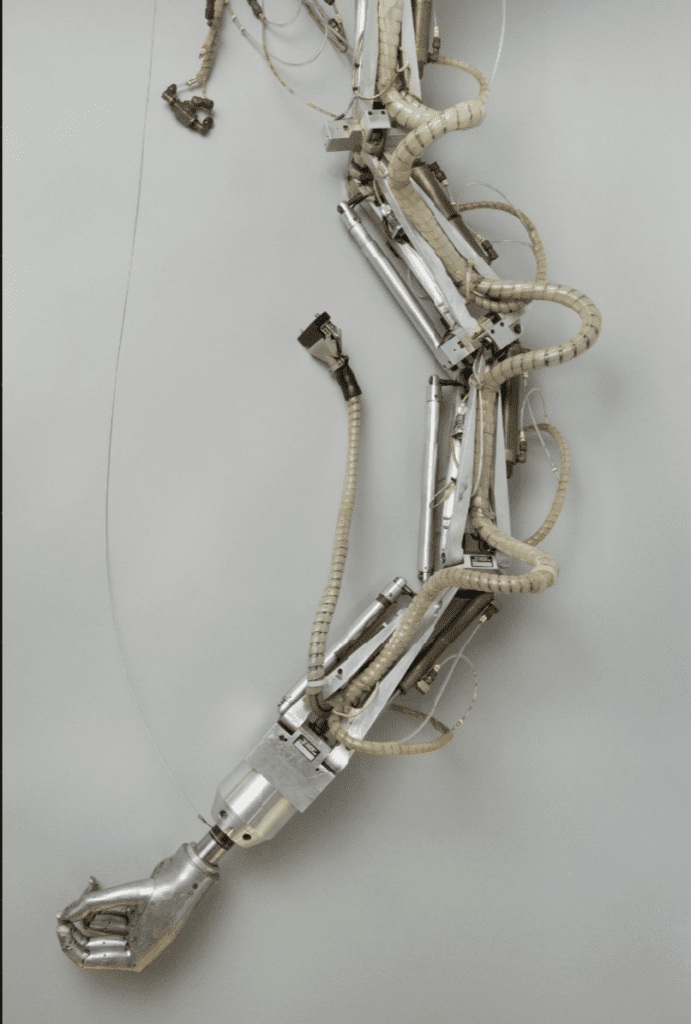
If you think all robots have stiff, mechanical movements, think again. Back in 1968, legendary AI researcher Marvin Minsky built something that looked straight out of a sci-fi horror movie: the Tentacle Arm. This robotic limb moved like an octopus tentacle instead of a traditional, rigid mechanical arm.
Developed at the Massachusetts Institute of Technology (MIT), the Tentacle Arm was one of the first robotic arms to have flexible, continuous movement, making it radically different from the industrial robotic arms of its time. Instead of rigid joints and gears, the Tentacle Arm was made up of twelve independently controlled motors, allowing it to bend, twist, and slither like a living creature. Fascinating, right?
Generally, the idea of this invention is to mimic a human arm that is flexible and can easily grasp and manipulate objects. The arm had sensors that let it “feel” its environment and adjust its grip accordingly. Unlike traditional robotic arms that needed precise programming to pick something up, the Tentacle Arm could wrap around an object and adjust itself dynamically, which was a huge step toward modern robotic dexterity.
At the time, most robotic arms were bulky and limited in movement, built for factories rather than for delicate, real-world interactions. Minsky’s Tentacle Arm was an early experiment in soft robotics, paving the way for today’s snake-like robots, robotic tentacles, and even medical robotic assistants that need to navigate complex environments (like inside the human body).
9. “Friendly Robotic Educational Device” (FRED)
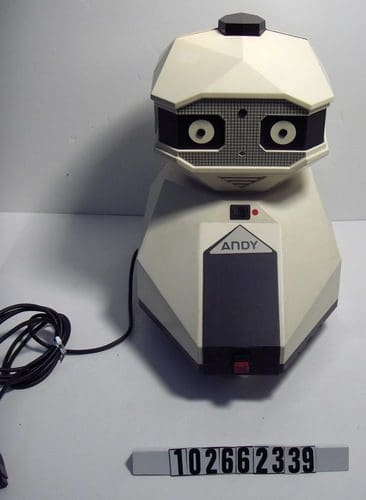
Next on the list is the robot named F.R.E.D., which stands for Friendly Robotic Educational Device. Developed in the 1980s by Androbot Inc., a company founded by Nolan Bushnell (the same visionary behind Atari), F.R.E.D. was designed as an educational robot suitable for kids aged 6 to 15.
F.R.E.D. was a 12-inch, compact, and sturdy little bot that could walk, talk, and even draw pictures. With a 45-word vocabulary, F.R.E.D. could actually engage in simple conversations as well, making it appropriate for engaging with children. On top of that, F.R.E.D.’s best feature was its ability to sketch. By attaching a pen to its drawing mechanism, F.R.E.D. could replicate patterns created on a connected computer screen, dragging the pen across a surface to bring designs to life. With some planning, users could even teach it to draw on paper. Talk about an artistic robot, right?
F.R.E.D. was also equipped with mechanical sensors that allowed it to avoid edges, preventing accidental tumbles off tables or desks. An optional accessory, the mini AndroWagon, enabled F.R.E.D. to transport small items, adding a layer of interactivity and utility. There were plans for additional features, such as an accessory arm and a voice synthesizer, to expand its capabilities further.
Despite its innovative design and potential as an educational tool, F.R.E.D. never made it to the consumer market. It’s believed that only a few prototypes were ever produced, making it a rare piece of robotics history.
10. AIBO
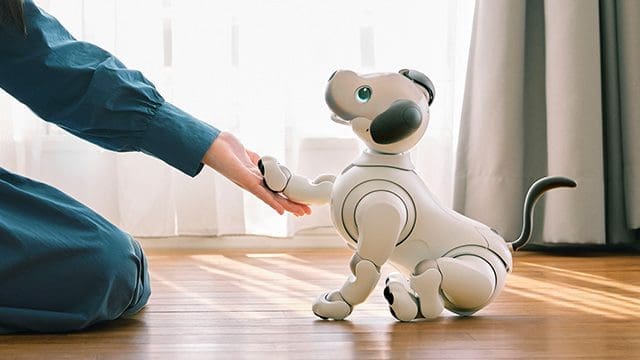
In 1999, Sony broke the robotics industry with its launch of AIBO—a robotic dog that wasn’t just a toy but a smart, AI-powered companion. AIBO (short for Artificial Intelligence Robot) was designed to act like a real pet, learning, responding, and even developing a personality over time.
AIBO was created in Japan by Sony’s AI and robotics team, led by Dr. Toshitada Doi. Unlike the simple robotic toys of the time, AIBO was built to be much more sophisticated—capable of recognizing faces, responding to voice commands, and even showing emotions through body language. It was marketed as a pet alternative for people who wanted the companionship of a dog without the mess, allergies, or responsibilities.
But beyond its cuteness, AIBO was equipped with advanced AI and machine learning, meaning no two AIBOs behaved the same. They had cameras for eyes, speech recognition, touch sensors, and even the ability to learn tricks with training. Over time, AIBO would develop a unique personality based on how its owner interacted with it.
Wherein your very own AIBO could recognize and react to its owner’s voice, play catch (chase and fetch a specific pink ball item), show expressions of happiness and sadness (moving of LED lights), learn and adapt over time, and even dance to some tunes.
AIBO wasn’t just a gimmick—it was one of the first robots to bring AI-powered companionship into homes, paving the way for today’s smart pets, AI assistants, and social robots. AIBO will always be remembered as one of the most iconic robot pets ever made.
11. Omnibot 2000
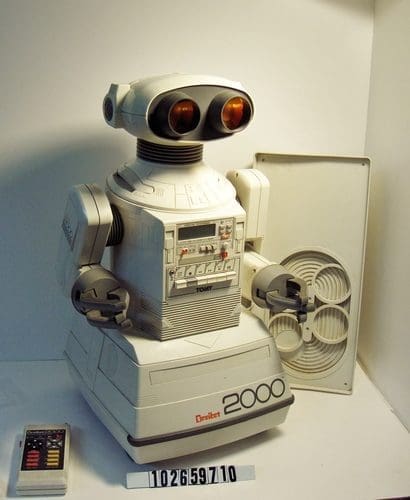
Back in the 1980s, kids didn’t just dream of having a robot—they actually had one, thanks to Omnibot 2000, a futuristic-looking toy robot that doubled as a remote-controlled butler. Released by Tomy (a Japanese toy company) in 1984, this towering plastic companion was the flagship model of the Omnibot series, standing about 25 inches tall and packed with features that made it feel like a real-life home assistant (at least by 80s standards).
For a toy robot, the Omnibot 2000 was surprisingly advanced for its time. It wasn’t just another wind-up toy—it came with a wireless remote control that let users drive it around, move its arms, and even deliver drinks on a built-in tray (yes, it could bring you a soda if you placed it carefully on its serving platform!).
But the real magic? Omnibot 2000 could “remember” and replay movements and voice recordings! It came with a built-in cassette recorder that allowed users to pre-record messages, making it one of the first “programmable” toy robots. You could set it up to wake you up in the morning, deliver a message to your family, or even act like a futuristic answering machine.
12. Irony Man

Meet Irony Man, the brainchild of researchers at the University of Augsburg in Germany. Unveiled around 2019, this unique robot was designed to explore how incorporating irony into a machine’s communication could enhance human-robot interactions.
The intent behind Irony Man was to create a more natural and engaging conversational partner. By using irony, the robot could convey critical information less directly, potentially making interactions more pleasant and relatable.
Functionally, Irony Man was equipped with the ability to adapt its language, tone, and facial expressions to deliver ironic statements. For instance, it could roll its eyes or wink to emphasize its sarcastic remarks, adding a layer of non-verbal communication to its interactions. It’s something that normal humans do, right?
One of the coolest features of Irony Man was its combination of verbal irony with synchronized facial cues, making its sassy comments feel more authentic. However, the robot wasn’t yet adept at determining the appropriate moments to employ irony, which sometimes led to user irritation instead of amusement.
13. Lovot
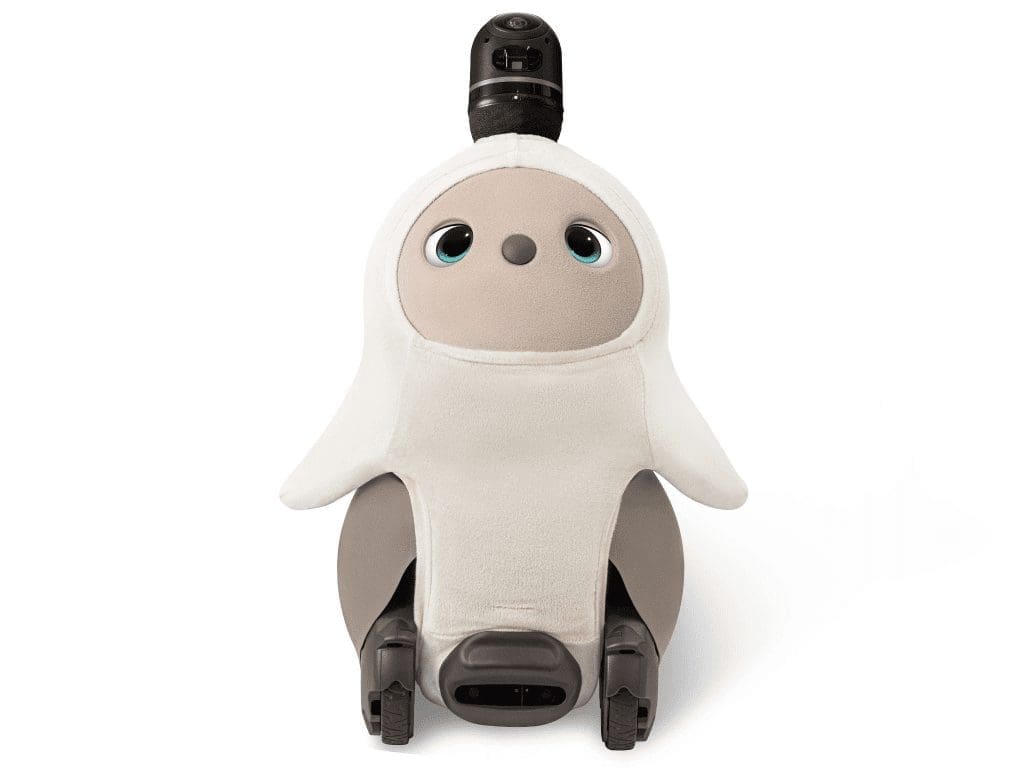
In a world where technology often feels cold and impersonal, Lovot stands out as a beacon of warmth and companionship. Created by the Japanese company GROOVE X and launched in 2019, Lovot—whose name blends “love” and “robot”—was designed with a singular purpose: to make people happy.
Lovot resembles a cuddly penguin with big, expressive eyes and soft, plushy skin. It moves around on wheels, autonomously exploring its environment, and is equipped with over 50 sensors to interact with its surroundings and human companions.
This adorable robot is more than just a cute face; it’s designed to combat loneliness and provide emotional support. Lovot can recognize its owner’s face, respond to touch, and even follow them around like a loyal pet. It reacts to affection by making happy sounds, wiggling its arms, and displaying joyful expressions, creating a genuine sense of companionship.
One of Lovot’s coolest features is its ability to learn and adapt to its owner’s behavior. Over time, it becomes more attuned to the user’s preferences, creating a personalized companionship experience. Its warm, huggable body and endearing reactions make it hard not to fall in love with this little robot.
In essence, Lovot is a testament to how technology can be designed to nurture human emotions and provide comfort, proving that sometimes, the best kind of robot is one that simply makes you feel loved.
14. Slothboth
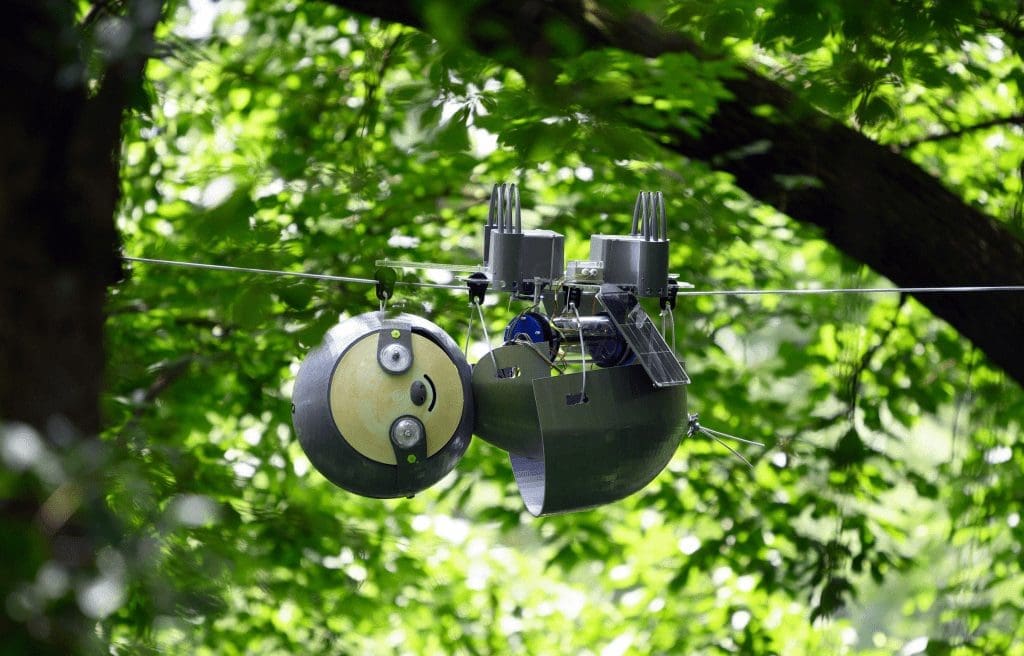
Meet SlothBot, the slow-moving, tree-hugging robot that’s taking its sweet time to help scientists monitor the environment. Developed by researchers at the Georgia Institute of Technology in the United States, SlothBot was introduced around 2020 as an innovative tool for long-term environmental observation.
Inspired by the leisurely lifestyle of real sloths, SlothBot is designed to move slowly and conserve energy, allowing it to remain in natural habitats for extended periods. This approach enables continuous monitoring of environmental factors such as temperature, weather, and carbon dioxide levels without frequent human intervention.
Functionally, SlothBot operates by traversing along cables strung between trees, using its 3D-printed shell to protect its internal components from the elements. It’s equipped with solar panels to recharge its batteries, ensuring a sustainable power source. The robot is programmed to move only when necessary, such as when seeking sunlight to recharge or relocating to gather data from different areas.
One of the coolest features of SlothBot is its ability to linger in the environment, providing researchers with valuable long-term data on ecosystems. Its slow movement minimizes disturbance to wildlife, making it an unobtrusive tool for conservation efforts. By embracing slowness as a design principle, SlothBot offers a unique and effective approach to environmental monitoring.
15. H1N1 flu robot

In 2009, amid the H1N1 “swine flu” pandemic, Japanese medical engineers developed a life-sized humanoid robot designed to simulate the symptoms of the H1N1 virus. This innovative creation was intended to assist healthcare professionals in diagnosing and treating swine flu by providing a realistic training tool.
The robot was coated in human-like skin and exhibited symptoms such as sweating, moaning, crying, and convulsing, closely mimicking the distress experienced by human patients infected with the H1N1 virus. If not treated properly during training exercises, the robot’s condition would deteriorate, eventually leading to respiratory failure and “death.”
This advanced patient simulator provided healthcare workers with a realistic and interactive platform. They used it to practice their diagnostic and treatment skills. The ultimate aim was to improve patient outcomes during the pandemic.