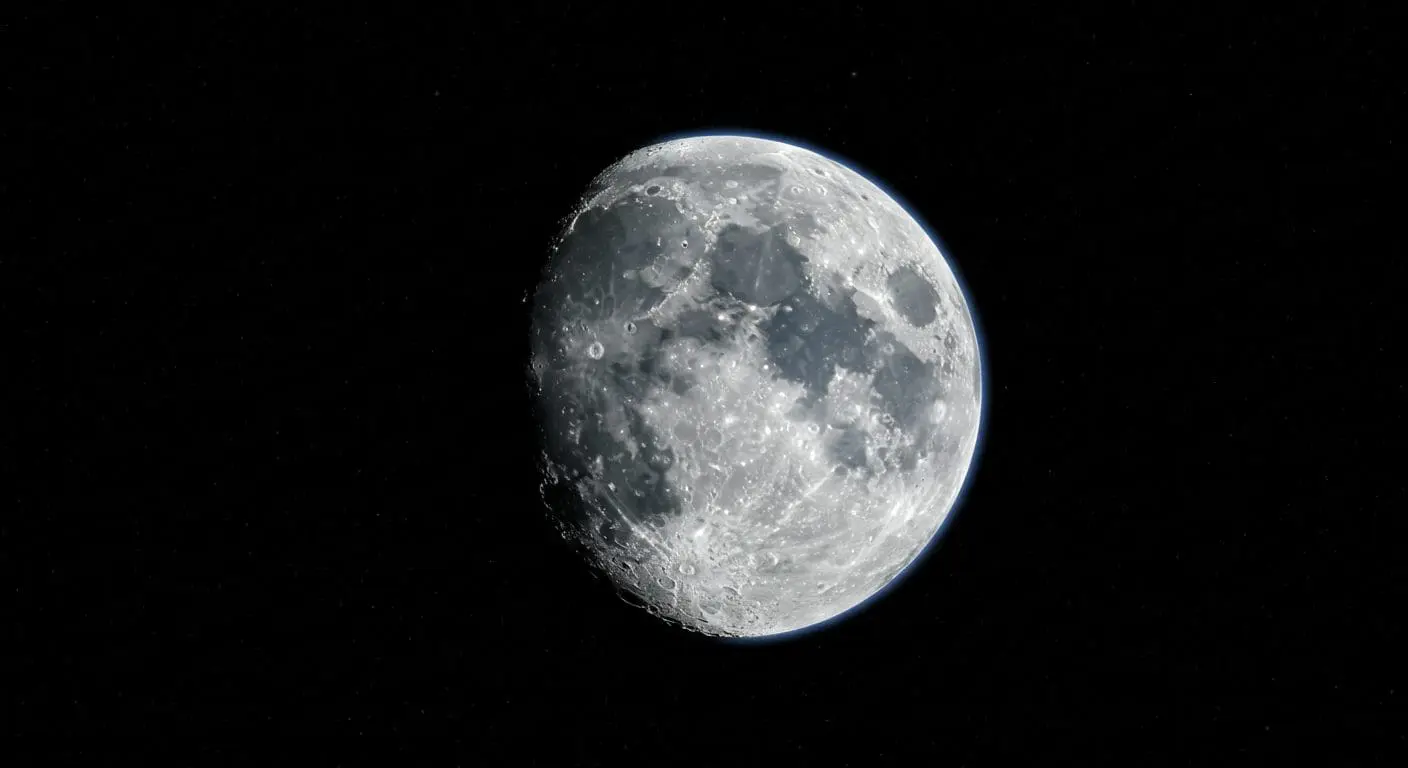
Researchers from the University of Göttingen and the Max Planck Institute for Solar System Research have made a crucial discovery about the formation of the Moon and the origin of water on Earth. Led by Professor Andreas Pack, the team analyzed oxygen isotopes from fourteen samples from the Moon and carried out extensive measurements on minerals from Earth using an improved version of laser fluorination.
The findings, published in the Proceedings of the National Academy of Sciences, suggest that the Moon formed from material ejected from the Earth’s mantle with little contribution from the protoplanet Theia. First author Meike Fischer explains that the data also sheds light on the history of water on Earth, potentially ruling out certain types of meteorites as the cause of the Late Veneer Event. The research team’s work has significant implications for our understanding of the Earth’s composition and the source of its volatiles.
Introduction to the Formation of the Moon
The formation of the Moon has long been a topic of interest and debate among scientists. The prevailing theory, known as the giant impact hypothesis, suggests that the Moon was formed from debris left over after a collision between the early Earth and a protoplanet called Theia. However, new research conducted by a team from the University of Göttingen and the Max Planck Institute for Solar System Research in Germany has shed new light on this theory. By analyzing oxygen isotopes from samples taken from the Moon and Earth, the researchers have found that the Moon may have formed from material ejected from the Earth’s mantle with little contribution from Theia.
The study, published in the Proceedings of the National Academy of Sciences (PNAS), involved the analysis of 14 samples from the Moon and 191 measurements on minerals from Earth. The team used an improved version of “laser fluorination,” a method that releases oxygen from rock using a laser, to measure the oxygen isotopes. The results showed a very high similarity between samples taken from both Earth and the Moon of an isotope called oxygen-17 (17O). This similarity has been a long-standing problem in cosmochemistry, often referred to as the “isotope crisis.” The findings suggest that Theia may have lost its rocky mantle in earlier collisions and then slammed into the early Earth like a metallic cannonball, resulting in the formation of the Moon from ejected material from the Earth’s mantle.
The implications of this research are significant, as they challenge our current understanding of the Moon’s formation. If the Moon did indeed form from material ejected from the Earth’s mantle, it would explain the similarity in composition between the two bodies. This theory also has implications for our understanding of the history of water on Earth. According to a widespread assumption, water arrived on Earth after the formation of the Moon through a series of further impacts known as the “Late Veneer Event.” However, the new data suggests that this may not be the case, and that water could have reached the Earth early in its development.
The research team’s findings also provide insight into the potential source of volatiles on Earth. The data obtained from the study can be explained particularly well by a class of meteorites called “enstatite chondrites,” which are isotopically similar to the Earth and contain enough water to be solely responsible for the Earth’s water. This suggests that enstatite chondrites could have played a significant role in delivering water to early Earth, rather than the Late Veneer Event.
The Giant Impact Hypothesis
The giant impact hypothesis has been the prevailing theory of Moon formation for several decades. This theory suggests that the Moon was formed from debris left over after a collision between the early Earth and Theia, a Mars-sized protoplanet. The collision is thought to have occurred around 4.5 billion years ago, when the solar system was still in its early stages of formation. The impact would have caused a massive amount of debris to be ejected into orbit around the Earth, where it eventually coalesced to form the Moon.
However, the new research from the University of Göttingen and the Max Planck Institute for Solar System Research challenges this theory. The study’s findings suggest that the Moon may have formed from material ejected from the Earth’s mantle with little contribution from Theia. This would mean that the giant impact hypothesis is not entirely accurate, and that the formation of the Moon was a more complex process than previously thought.
The giant impact hypothesis has been supported by several lines of evidence, including the similarity in composition between the Earth and the Moon, and the large size of the Moon relative to the Earth. However, the new research highlights the need for a re-evaluation of this theory. The study’s findings suggest that the Moon’s formation may have been more closely tied to the Earth’s mantle than previously thought, and that the role of Theia in the Moon’s formation may have been less significant than assumed.
The implications of this research are not limited to our understanding of the Moon’s formation. The study’s findings also have implications for our understanding of the early solar system and the formation of the planets. If the giant impact hypothesis is not entirely accurate, it could mean that the formation of the planets was a more complex and nuanced process than previously thought.
Oxygen Isotopes and the Formation of the Moon
Oxygen isotopes play a crucial role in our understanding of the Moon’s formation. The study of oxygen isotopes allows scientists to determine the origin and evolution of rocks and minerals, and to reconstruct the history of the solar system. In the case of the Moon, the analysis of oxygen isotopes has provided valuable insights into its formation.
The new research from the University of Göttingen and the Max Planck Institute for Solar System Research involved the analysis of oxygen isotopes from 14 samples taken from the Moon and 191 measurements on minerals from Earth. The study found a very high similarity between samples taken from both Earth and the Moon of an isotope called oxygen-17 (17O). This similarity has been a long-standing problem in cosmochemistry, often referred to as the “isotope crisis.”
The findings suggest that the Moon may have formed from material ejected from the Earth’s mantle with little contribution from Theia. This would mean that the Moon and the Earth share a common origin, and that the formation of the Moon was closely tied to the Earth’s mantle.
The study of oxygen isotopes has also provided insights into the potential source of volatiles on Earth. The data obtained from the study can be explained particularly well by a class of meteorites called “enstatite chondrites,” which are isotopically similar to the Earth and contain enough water to be solely responsible for the Earth’s water.
Implications for the History of Water on Earth
The new research has significant implications for our understanding of the history of water on Earth. According to a widespread assumption, water arrived on Earth after the formation of the Moon through a series of further impacts known as the “Late Veneer Event.” However, the study’s findings suggest that this may not be the case, and that water could have reached the Earth early in its development.
The data obtained from the study can be explained particularly well by a class of meteorites called “enstatite chondrites,” which are isotopically similar to the Earth and contain enough water to be solely responsible for the Earth’s water. This suggests that enstatite chondrites could have played a significant role in delivering water to early Earth, rather than the Late Veneer Event.
The implications of this research are significant, as they challenge our current understanding of the history of water on Earth. If water did indeed arrive on Earth early in its development, it would have had a profound impact on the planet’s evolution and the emergence of life.
The study’s findings also highlight the need for further research into the origin and evolution of water on Earth. The discovery of water on other planets and moons in our solar system has made the search for extraterrestrial life a major area of research, and understanding the history of water on Earth is crucial to this endeavor.
Conclusion
The new research from the University of Göttingen and the Max Planck Institute for Solar System Research has shed new light on the formation of the Moon. The study’s findings suggest that the Moon may have formed from material ejected from the Earth’s mantle with little contribution from Theia, challenging our current understanding of the giant impact hypothesis.
The implications of this research are significant, as they challenge our current understanding of the Moon’s formation and the history of water on Earth. The study’s findings highlight the need for further research into the origin and evolution of the solar system, and the emergence of life on Earth.
The discovery of enstatite chondrites as a potential source of volatiles on Earth is also significant, as it highlights the importance of meteorites in delivering water and other essential compounds to early Earth. Further research into the composition and origin of meteorites will be crucial to our understanding of the solar system’s evolution and the emergence of life on Earth.
In conclusion, the new research from the University of Göttingen and the Max Planck Institute for Solar System Research has made a significant contribution to our understanding of the Moon’s formation and the history of water on Earth. The study’s findings highlight the need for further research into the origin and evolution of the solar system, and the emergence of life on Earth.
External Link: Click Here For More
See today’s quantum computing news on Quantum Zeitgeist for the latest breakthroughs in qubits, hardware, algorithms, and industry deals.