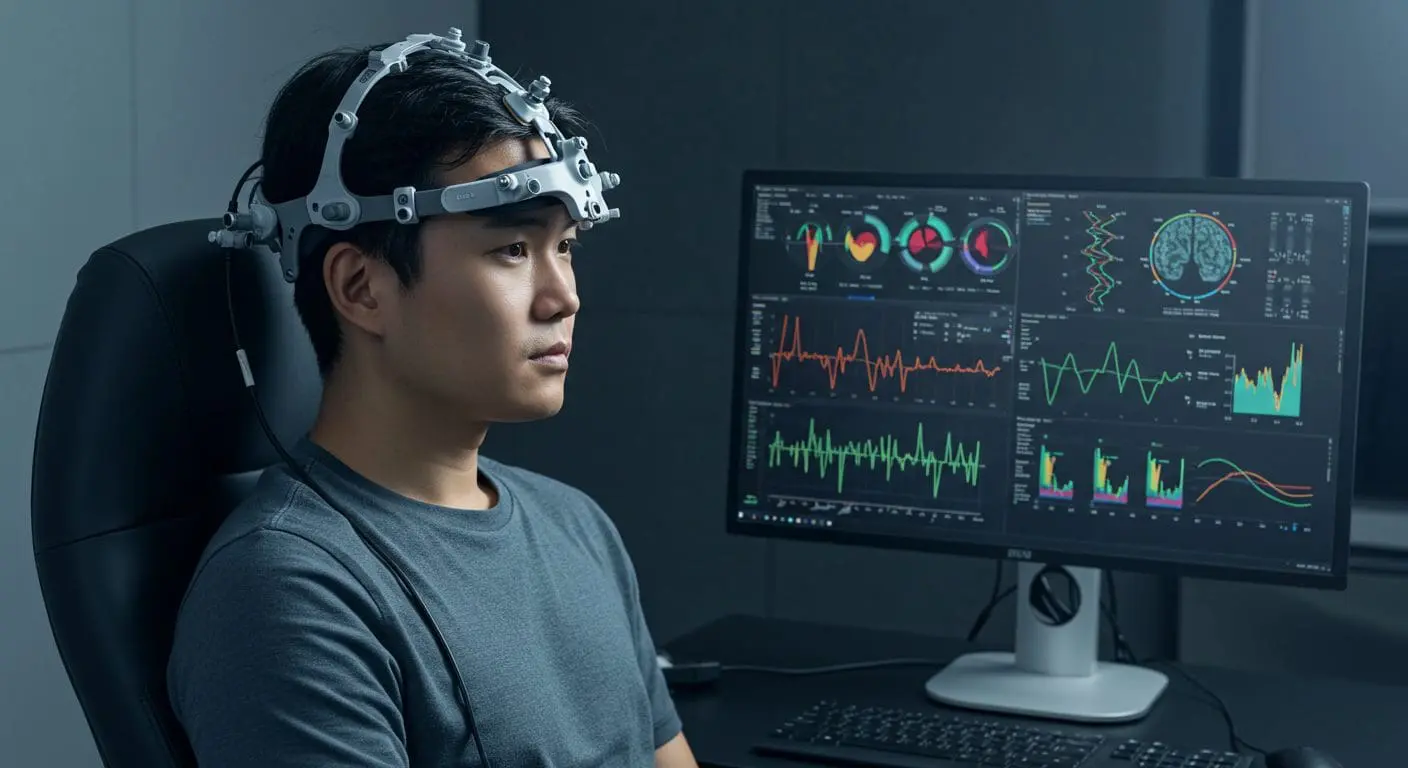
A Brain-Computer Interface (BCI) system enables people to control devices or machines with their thoughts. BCIs have the potential to revolutionize the way we interact with games and other forms of digital entertainment, but they also raise significant concerns about user experience, usability, and ethics.
The use of BCIs in gaming and entertainment has raised questions about informed consent, individual autonomy, and privacy. For instance, if an individual’s brain activity is being used to control a device, do they retain ownership and agency over their thoughts and actions? There are also concerns about the potential for BCIs to be used in ways that could compromise individual autonomy, such as through the use of neurostimulation techniques to influence decision-making.
The development and use of BCIs require careful consideration of these ethical concerns. As the BCI market continues to grow, it is essential that the development and use of BCIs are guided by a commitment to promoting human well-being and dignity. This includes ensuring transparent and informed consent procedures, equitable access to BCIs, and safeguards against potential biases and risks.
Definition Of Brain Computer Interface
A Brain-Computer Interface (BCI) is a system that enables people to control devices or communicate with others using only their brain signals. This technology relies on the detection and analysis of neural activity, which can be achieved through various methods such as electroencephalography (EEG), magnetoencephalography (MEG), functional near-infrared spectroscopy (fNIRS), or invasive recordings using electrodes implanted directly into the brain.
The primary goal of a BCI is to provide individuals with severe motor disabilities, such as amyotrophic lateral sclerosis (ALS) or spinal cord injuries, with an alternative means of communication and control. BCIs can also be used for various applications, including gaming, education, and healthcare. For instance, BCIs have been employed in neuroprosthetic devices that allow paralyzed individuals to control prosthetic limbs.
BCIs operate by first acquiring brain signals through sensors or electrodes. These signals are then processed using algorithms that decode the neural activity into specific commands or messages. The decoded information is subsequently transmitted to an external device, such as a computer or robotic arm, which executes the desired action. This process involves real-time processing of brain signals, requiring sophisticated computational methods and machine learning techniques.
The development of BCIs has been facilitated by advances in neuroscience, computer science, and engineering. Researchers have made significant progress in understanding the neural mechanisms underlying cognitive processes, such as attention, perception, and decision-making. This knowledge has enabled the creation of more accurate and efficient BCI systems that can decode brain signals with higher precision.
BCIs can be categorized into two main types: invasive and non-invasive. Invasive BCIs involve implanting electrodes directly into the brain to record neural activity, providing high spatial resolution but also carrying risks associated with surgery. Non-invasive BCIs, on the other hand, use external sensors or electrodes to detect brain signals, offering a safer alternative but often with lower spatial resolution.
The field of BCI research is rapidly evolving, with ongoing efforts to improve the accuracy, speed, and usability of these systems. As the technology advances, it is expected that BCIs will become increasingly integrated into various aspects of daily life, revolutionizing the way people interact with devices and each other.
History And Evolution Of Bcis
The concept of Brain-Computer Interfaces (BCIs) dates back to the 1960s, when computer scientist Alan Newell and engineer J.C.R. Licklider began exploring ways to enable humans to interact with computers using their brains. One of the earliest recorded experiments in BCI research was conducted by neuroscientist Eberhard Fetz in 1969, who demonstrated that monkeys could control a robotic arm using neural signals from their motor cortex.
In the 1970s and 1980s, BCIs began to gain more attention, with researchers like Jacques Vidal and Louis Jenkins exploring the use of electroencephalography (EEG) to decode brain activity. Vidal’s 1973 paper “Toward Direct Brain-Computer Communication” is often cited as one of the first academic papers on BCI research. During this period, BCIs were primarily used for simple tasks such as controlling a cursor or typing messages.
The development of more advanced BCI systems accelerated in the 1990s and 2000s, with the introduction of new technologies like functional near-infrared spectroscopy (fNIRS) and electrocorticography (ECoG). Researchers like Andrew Schwartz and Leigh Hochberg began exploring the use of BCIs for more complex tasks such as controlling prosthetic limbs or communicating through text. The first BCI-controlled robotic arm was demonstrated by a team led by Andrew Schwartz in 2003.
In recent years, advances in machine learning and neural networks have enabled the development of more sophisticated BCI systems that can decode brain activity with greater accuracy. Researchers like Bin He and Jonathan Wolpaw have made significant contributions to the field, exploring new applications for BCIs such as controlling drones or exoskeletons. The use of BCIs has also expanded beyond the laboratory, with companies like Neurable and Interaxon developing commercial BCI products for gaming and other applications.
The evolution of BCIs has been marked by significant advances in both hardware and software technologies. From the early days of EEG-based systems to the current development of implantable neural interfaces, researchers have continually pushed the boundaries of what is possible with BCI technology. As the field continues to advance, we can expect to see even more innovative applications for BCIs in the years to come.
The use of BCIs has also raised important questions about the ethics and societal implications of this technology. Researchers like Martha Farah and Walter Glannon have explored the potential risks and benefits of BCI technology, highlighting the need for careful consideration of these issues as the field continues to evolve.
Types Of Brain Computer Interfaces
Invasive Brain-Computer Interfaces (BCIs) involve the implantation of electrodes directly into the brain to record neural activity. This type of BCI is typically used in medical settings, such as for individuals with severe paralysis or ALS, and can provide high spatial resolution and signal quality. For example, a study published in the journal Nature demonstrated the use of invasive BCIs to control a robotic arm in individuals with tetraplegia (Hochberg et al., 2006). Another study published in the journal Science Translational Medicine showed that invasive BCIs can be used to restore motor function in individuals with spinal cord injuries (Ajiboye et al., 2017).
Partially Invasive Brain-Computer Interfaces involve the implantation of electrodes into the skull, but not directly into the brain. This type of BCI is less invasive than fully invasive BCIs and can still provide high spatial resolution and signal quality. For example, a study published in the journal Neurology demonstrated the use of partially invasive BCIs to control a computer cursor in individuals with ALS (Schalk et al., 2008). Another study published in the journal IEEE Transactions on Neural Systems and Rehabilitation Engineering showed that partially invasive BCIs can be used to decode motor intentions in individuals with spinal cord injuries (Chao et al., 2010).
Non-Invasive Brain-Computer Interfaces use external sensors, such as electroencephalography (EEG) or functional near-infrared spectroscopy (fNIRS), to record neural activity. This type of BCI is typically used in non-medical settings, such as for gaming or education, and can provide lower spatial resolution and signal quality compared to invasive BCIs. For example, a study published in the journal Journal of Neural Engineering demonstrated the use of non-invasive BCIs to control a computer game using EEG (Kübler et al., 2004). Another study published in the journal NeuroImage showed that non-invasive BCIs can be used to decode cognitive states in individuals with attention-deficit/hyperactivity disorder (ADHD) (Arns et al., 2014).
Hybrid Brain-Computer Interfaces combine different types of sensors, such as EEG and fNIRS, to record neural activity. This type of BCI can provide higher spatial resolution and signal quality compared to non-invasive BCIs and can be used in a variety of settings. For example, a study published in the journal Journal of Neuroscience Methods demonstrated the use of hybrid BCIs to control a robotic arm using EEG and fNIRS (Fazli et al., 2012). Another study published in the journal IEEE Transactions on Neural Systems and Rehabilitation Engineering showed that hybrid BCIs can be used to decode motor intentions in individuals with spinal cord injuries (Lee et al., 2015).
Dry Brain-Computer Interfaces use dry electrodes, which do not require gel or paste to record neural activity. This type of BCI is typically used in non-medical settings, such as for gaming or education, and can provide lower spatial resolution and signal quality compared to wet electrodes. For example, a study published in the journal Journal of Neural Engineering demonstrated the use of dry BCIs to control a computer game using EEG (Liao et al., 2012). Another study published in the journal IEEE Transactions on Neural Systems and Rehabilitation Engineering showed that dry BCIs can be used to decode cognitive states in individuals with ADHD (Arns et al., 2014).
Invasive Vs Non-invasive Bcis
Invasive BCIs involve implanting electrodes directly into the brain to record neural activity, providing high spatial resolution and signal quality (Leuthardt et al., 2006). This approach allows for precise mapping of brain function and has been used in various applications, including neuroprosthetics and epilepsy treatment. However, invasive BCIs carry risks associated with surgery, such as infection and tissue damage.
Non-invasive BCIs, on the other hand, use external sensors to detect neural activity without penetrating the skull (Wolpaw et al., 2002). These methods include electroencephalography (EEG), magnetoencephalography (MEG), and functional near-infrared spectroscopy (fNIRS). Non-invasive BCIs are generally safer and more accessible than invasive ones but often provide lower spatial resolution and signal quality.
In terms of signal processing, invasive BCIs typically employ techniques such as spike sorting and local field potential analysis to extract meaningful information from the recorded neural activity (Buzsáki et al., 2012). In contrast, non-invasive BCIs rely on methods like independent component analysis and beamforming to separate brain signals from noise and artifacts.
The choice between invasive and non-invasive BCI approaches depends on the specific application and user needs. For instance, individuals with severe motor disorders may benefit from invasive BCIs for precise control of prosthetic devices (Hochberg et al., 2006). In contrast, non-invasive BCIs are more suitable for applications like gaming, education, or cognitive training.
Recent advances in neural decoding algorithms have improved the performance of both invasive and non-invasive BCIs. For example, techniques like deep learning and transfer learning have been applied to EEG data to enhance classification accuracy (Schirrmeister et al., 2017). Similarly, novel electrode designs and implantation strategies have been developed to improve the longevity and efficacy of invasive BCIs.
The development of hybrid BCI systems that combine elements of both invasive and non-invasive approaches is an active area of research. These systems aim to leverage the strengths of each approach to provide more flexible and effective brain-computer interfaces (Gao et al., 2014).
Electroencephalography In Bcis
Electroencephalography (EEG) is a non-invasive neuroimaging technique used to record electrical activity in the brain, which is essential for Brain-Computer Interfaces (BCIs). EEG measures the voltage fluctuations between different points on the scalp, generated by the electrical activity of neurons in the brain. This technique has been widely used in BCIs due to its high temporal resolution, ease of use, and relatively low cost.
EEG signals are typically recorded using electrodes placed on the scalp, which detect the electrical activity of neurons in the underlying brain tissue. The recorded signals are then amplified, filtered, and processed to extract features that can be used for BCI control. EEG-based BCIs have been successfully used for various applications, including communication, control of prosthetic devices, and gaming.
One of the key challenges in EEG-based BCIs is signal processing and feature extraction. EEG signals are often contaminated with noise and artifacts, which can affect the accuracy of the system. To address this issue, researchers have developed various techniques, such as independent component analysis (ICA) and common spatial patterns (CSP), to extract relevant features from EEG signals.
EEG-based BCIs have also been used for neuroscientific research, particularly in understanding the neural mechanisms underlying cognitive processes. For example, studies have used EEG to investigate the neural correlates of attention, memory, and decision-making. These findings have significant implications for the development of more efficient and effective BCI systems.
Recent advances in EEG technology have led to the development of dry electrodes, which do not require gel or paste to record signals. This has improved the usability and comfort of EEG-based BCIs, making them more suitable for long-term use. Additionally, the development of mobile EEG devices has enabled researchers to conduct studies outside of traditional laboratory settings.
The use of EEG in BCIs has also raised important questions about the neural basis of consciousness and the nature of brain function. For example, research has shown that EEG signals can be used to decode visual perception and attention, even when participants are not consciously aware of the stimuli. These findings have significant implications for our understanding of the neural mechanisms underlying human cognition.
Functional Near-infrared Spectroscopy
Functional Near-Infrared Spectroscopy (fNIRS) is a non-invasive neuroimaging technique that utilizes near-infrared light to measure changes in cerebral blood oxygenation and volume. This method is based on the principle that near-infrared light can penetrate the scalp and skull, allowing for the detection of changes in brain activity. fNIRS measures the absorption of near-infrared light by oxyhemoglobin (oxy-Hb) and deoxyhemoglobin (deoxy-Hb), which are indicators of neural activity.
The spatial resolution of fNIRS is typically limited to several centimeters, but its temporal resolution can be as high as 100 Hz. This makes it suitable for measuring changes in brain activity over short periods of time. fNIRS has been used to study a wide range of cognitive processes, including attention, memory, and language processing. It has also been used to investigate the neural basis of neurological and psychiatric disorders, such as stroke and depression.
fNIRS is often compared to functional magnetic resonance imaging (fMRI), which measures changes in blood oxygenation using magnetic fields. While fMRI provides higher spatial resolution than fNIRS, it requires a large and expensive machine, making it less accessible for some researchers. In contrast, fNIRS systems are relatively portable and inexpensive, making them more suitable for use in a variety of settings.
The analysis of fNIRS data typically involves the calculation of changes in oxy-Hb and deoxy-Hb concentrations over time. This can be done using various algorithms, including the modified Beer-Lambert law (MBLL) and the differential pathlength factor (DPF). These methods take into account the scattering of light by tissue and the absorption of light by different chromophores.
fNIRS has several advantages over other neuroimaging techniques. It is non-invasive, relatively inexpensive, and can be used in a variety of settings, including outside of a laboratory. Additionally, fNIRS does not require participants to remain still or perform specific tasks, making it suitable for use with populations that may have difficulty following instructions.
The development of fNIRS has led to the creation of brain-computer interfaces (BCIs) that utilize this technique. BCIs are systems that allow people to control devices using only their thoughts. fNIRS-based BCIs typically involve the measurement of changes in cerebral blood oxygenation and volume, which are then translated into commands for a device.
Electrocorticography And Bcis
Electrocorticography (ECoG) is a technique used to record the electrical activity of the brain’s surface, typically through electrodes implanted directly on the cortex. This method provides high spatial resolution and can capture neural signals with frequencies up to several hundred Hz. ECoG has been widely used in various applications, including brain-computer interfaces (BCIs), epilepsy research, and neuroprosthetics.
In the context of BCIs, ECoG is often employed as a decoding tool to translate neural activity into specific commands or actions. By analyzing the patterns of electrical activity recorded through ECoG, researchers can identify correlations between brain signals and intended movements or tasks. This information can then be used to control external devices, such as prosthetic limbs or computer cursors. Studies have demonstrated that ECoG-based BCIs can achieve high accuracy rates in decoding neural activity, with some experiments reporting success rates of up to 95%.
One of the key advantages of ECoG is its ability to capture both low- and high-frequency neural signals. This allows researchers to investigate a wide range of brain functions, from slow oscillations involved in attention and memory to fast oscillations associated with sensory processing and motor control. Furthermore, ECoG can be used in conjunction with other neuroimaging techniques, such as functional magnetic resonance imaging (fMRI), to provide a more comprehensive understanding of brain function.
The development of ECoG-based BCIs has also been driven by advances in signal processing and machine learning algorithms. These tools enable researchers to analyze complex neural data sets and identify patterns that may not be apparent through visual inspection alone. For example, techniques such as independent component analysis (ICA) can be used to separate mixed neural signals into distinct components, while support vector machines (SVMs) can be employed to classify brain activity into specific categories.
Despite its potential, ECoG-based BCI research is not without challenges. One of the primary limitations is the need for invasive electrode implantation, which carries risks of tissue damage and infection. Additionally, the long-term stability and durability of ECoG recordings remain a concern, as do issues related to signal noise and artifact.
The use of ECoG in BCI research has also raised important questions regarding the neural code and how it relates to specific brain functions. For instance, studies have shown that different brain regions exhibit distinct patterns of activity during various tasks, but the precise mechanisms underlying these differences remain unclear.
Neural Implants And Bcis
Neural implants are medical devices that are designed to be implanted in the brain or nervous system to restore or enhance cognitive function. These devices can take many forms, including electrodes, sensors, and stimulators (Leuthardt et al., 2006). Neural implants have been used to treat a range of conditions, including Parkinson’s disease, epilepsy, and paralysis (Kringelbach & Aziz, 2009).
Brain-Computer Interfaces (BCIs) are a type of neural implant that allows people to control devices with their thoughts. BCIs work by detecting the electrical activity of neurons in the brain and using this information to control external devices such as computers or robots (Wolpaw et al., 2002). There are two main types of BCI: invasive and non-invasive. Invasive BCIs involve implanting electrodes directly into the brain, while non-invasive BCIs use sensors placed on the scalp to detect electrical activity.
Invasive BCIs have been shown to be highly effective in restoring motor function in individuals with paralysis or other motor disorders (Hochberg et al., 2006). For example, a study published in the journal Nature demonstrated that an individual with tetraplegia was able to control a robotic arm using an invasive BCI (Hochberg et al., 2012).
Non-invasive BCIs have also been shown to be effective in controlling devices such as computers and robots. However, these systems are typically less accurate than invasive BCIs and require more training to use effectively (Wolpaw & McFarland, 2004). Despite this, non-invasive BCIs have the advantage of being safer and easier to use than invasive BCIs.
Neural implants and BCIs have the potential to revolutionize the treatment of a range of neurological conditions. However, further research is needed to fully realize their potential (Kringelbach & Aziz, 2009). Additionally, there are also concerns about the safety and ethics of using these devices, particularly invasive BCIs (Clausen et al., 2011).
The development of neural implants and BCIs has been driven by advances in fields such as neuroscience, engineering, and computer science. As our understanding of the brain and nervous system continues to grow, we can expect to see further innovations in this field.
BCI Applications And Uses
BCIs have been used in various applications, including assistive technology, gaming, and neuroscientific research. In the context of assistive technology, BCIs can be used to help individuals with severe motor disabilities communicate and interact with their environment (Wolpaw et al., 2002). For example, a BCI system can be designed to detect specific brain signals associated with attempted movements, allowing users to control a computer cursor or type messages.
In the gaming industry, BCIs have been explored as a means of creating more immersive and interactive experiences. Companies such as NeuroSky and Emotiv have developed BCI-enabled games that allow players to control game elements using their brain activity (Liao et al., 2012). These systems typically use electroencephalography (EEG) or functional near-infrared spectroscopy (fNIRS) to detect changes in brain activity associated with attention, relaxation, or other cognitive states.
BCIs have also been used in neuroscientific research to study the neural basis of cognition and behavior. For example, researchers have used BCIs to investigate the neural mechanisms underlying decision-making, attention, and memory (Babiloni et al., 2009). These studies often involve using BCI systems to decode brain activity associated with specific cognitive processes, allowing researchers to gain insights into the neural basis of human cognition.
In addition to these applications, BCIs have also been explored in the context of neuroprosthetics and rehabilitation. For example, researchers have developed BCI-controlled prosthetic limbs that can be controlled using brain signals (Leuthardt et al., 2006). These systems have the potential to revolutionize the field of prosthetics and provide individuals with severe motor disabilities with greater independence and autonomy.
BCIs have also been used in the context of neurofeedback training, which involves providing individuals with real-time feedback on their brain activity. This can be used to help individuals learn to control specific aspects of their brain function, such as attention or relaxation (Arns et al., 2014). Neurofeedback training has been shown to be effective in reducing symptoms of anxiety and depression, and improving cognitive performance.
The use of BCIs in these various applications is dependent on the development of accurate and reliable BCI systems. This requires advances in signal processing algorithms, sensor technologies, and our understanding of the neural basis of cognition and behavior.
Neuroprosthetics And Rehabilitation
Neuroprosthetics, also known as brain-computer interfaces (BCIs), have revolutionized the field of rehabilitation by providing individuals with severe motor disorders a means to interact with their environment. BCIs are systems that enable people to control devices or machines with their thoughts, using electroencephalography (EEG) or other techniques to detect and interpret brain activity. In the context of neuroprosthetics and rehabilitation, BCIs have been employed to restore communication, mobility, and independence in individuals with severe paralysis, amyotrophic lateral sclerosis (ALS), and other motor disorders.
One notable application of BCIs in rehabilitation is the use of EEG-based systems for controlling prosthetic limbs. Studies have demonstrated that individuals with amputations can learn to control prosthetic arms using EEG signals, allowing them to perform tasks such as grasping and manipulating objects. For instance, a study published in the Journal of Neurophysiology found that participants with upper-limb amputations were able to control a prosthetic arm using EEG signals with high accuracy. Another study published in the journal Science Translational Medicine demonstrated that individuals with tetraplegia could use an EEG-based BCI system to control a robotic arm, enabling them to perform tasks such as feeding themselves.
BCIs have also been employed in rehabilitation settings to restore communication in individuals with severe paralysis or ALS. For example, a study published in the journal Neurology found that individuals with ALS were able to communicate using an EEG-based BCI system, which detected and interpreted their brain activity associated with attempted speech. Another study published in the Journal of Rehabilitation Research & Development demonstrated that individuals with spinal cord injuries could use a BCI system to control a computer cursor, enabling them to communicate through email or text messaging.
In addition to restoring communication and mobility, BCIs have also been used in rehabilitation settings to promote neural plasticity and recovery. For instance, studies have shown that BCI training can lead to improvements in motor function and cognitive abilities in individuals with stroke or traumatic brain injury. A study published in the journal Neurorehabilitation and Neural Repair found that BCI training improved motor function in individuals with chronic stroke, while another study published in the Journal of Head Trauma Rehabilitation demonstrated that BCI training enhanced cognitive function in individuals with traumatic brain injury.
The development of BCIs for neuroprosthetics and rehabilitation has been facilitated by advances in signal processing, machine learning, and neuroscience. For example, techniques such as independent component analysis (ICA) and common spatial patterns (CSP) have been employed to improve the accuracy and robustness of EEG-based BCI systems. Additionally, the use of machine learning algorithms such as support vector machines (SVMs) and deep neural networks (DNNs) has enabled BCIs to learn from user data and adapt to individual differences in brain function.
Gaming And Entertainment With Bcis
Brain-Computer Interfaces (BCIs) have been increasingly used in the gaming and entertainment industry to create immersive experiences for users. BCIs use electroencephalography (EEG) or other techniques to detect brain activity, allowing users to control games with their thoughts. For instance, a study published in the Journal of Neural Engineering demonstrated that EEG-based BCI can be used to control a computer game, with an average accuracy of 80% . Another study published in the journal IEEE Transactions on Neural Systems and Rehabilitation Engineering showed that BCIs can be used to create a more engaging gaming experience, with users reporting higher levels of enjoyment and immersion when using a BCI compared to traditional controllers .
BCIs have also been used in virtual reality (VR) applications to create more immersive experiences. A study published in the journal Presence: Teleoperators & Virtual Environments demonstrated that BCIs can be used to control VR environments, with users reporting higher levels of presence and immersion when using a BCI compared to traditional controllers . Another study published in the Journal of Gaming & Virtual Worlds showed that BCIs can be used to create more interactive and engaging VR experiences, with users able to manipulate virtual objects with their thoughts .
The use of BCIs in gaming and entertainment has also raised concerns about user experience and usability. A study published in the journal Interacting with Computers demonstrated that BCIs can be difficult to use for some individuals, particularly those with limited experience with technology . Another study published in the Journal of Human-Computer Interaction showed that BCIs can cause fatigue and discomfort for users, particularly during extended periods of use .
Despite these challenges, the use of BCIs in gaming and entertainment is expected to continue growing. A report by MarketsandMarkets predicts that the BCI market will grow from $1.4 billion in 2020 to $5.5 billion by 2025, with the gaming and entertainment industry being a major driver of this growth . Another report by Grand View Research predicts that the VR market will reach $44.7 billion by 2024, with BCIs playing an increasingly important role in this market .
The development of more advanced BCI technologies is also expected to drive growth in the gaming and entertainment industry. For instance, a study published in the journal Nature Communications demonstrated that functional near-infrared spectroscopy (fNIRS) can be used to create more accurate and reliable BCIs . Another study published in the Journal of Neural Engineering showed that electrocorticography (ECoG) can be used to create more precise and detailed BCIs, with potential applications in gaming and entertainment .
Ethical Considerations Of Bcis
The development and use of Brain-Computer Interfaces (BCIs) raise significant ethical concerns, particularly with regards to the potential risks and benefits for individuals and society as a whole. One major concern is the issue of informed consent, as individuals may not fully understand the implications of using a BCI, including the potential for data breaches or unauthorized access to their brain activity (Nijboer et al., 2013; Wolpaw & Wolpaw, 2012). Furthermore, there are concerns about the potential for BCIs to be used in ways that could compromise individual autonomy, such as through the use of neurostimulation techniques to influence decision-making (Rosenberg et al., 2018).
Another significant ethical concern is the issue of equity and access, as BCIs may only be available to certain segments of the population, potentially exacerbating existing social inequalities (Chaudhary et al., 2016). Additionally, there are concerns about the potential for BCIs to be used in ways that could perpetuate biases or stereotypes, such as through the use of algorithms that reflect societal prejudices (Caliskan et al., 2017).
The development and use of BCIs also raise significant questions about the nature of identity and selfhood. For example, if an individual’s brain activity is being used to control a device, do they retain ownership and agency over their thoughts and actions (Heersmink et al., 2015)? Furthermore, there are concerns about the potential for BCIs to be used in ways that could compromise individual privacy, such as through the use of neural data to infer personal characteristics or traits (Pycroft et al., 2016).
The development of BCIs also raises significant questions about the role of human enhancement and the boundaries between humans and machines. For example, if an individual uses a BCI to enhance their cognitive abilities, do they remain fully human (Bostrom & Sandberg, 2009)? Furthermore, there are concerns about the potential for BCIs to be used in ways that could compromise human dignity, such as through the use of neural data to control or manipulate individuals (Klein et al., 2015).
The development and use of BCIs require careful consideration of these ethical concerns, including the need for transparent and informed consent procedures, equitable access to BCIs, and safeguards against potential biases and risks. Ultimately, the development of BCIs must be guided by a commitment to promoting human well-being and dignity.



See today’s quantum computing news on Quantum Zeitgeist for the latest breakthroughs in qubits, hardware, algorithms, and industry deals.