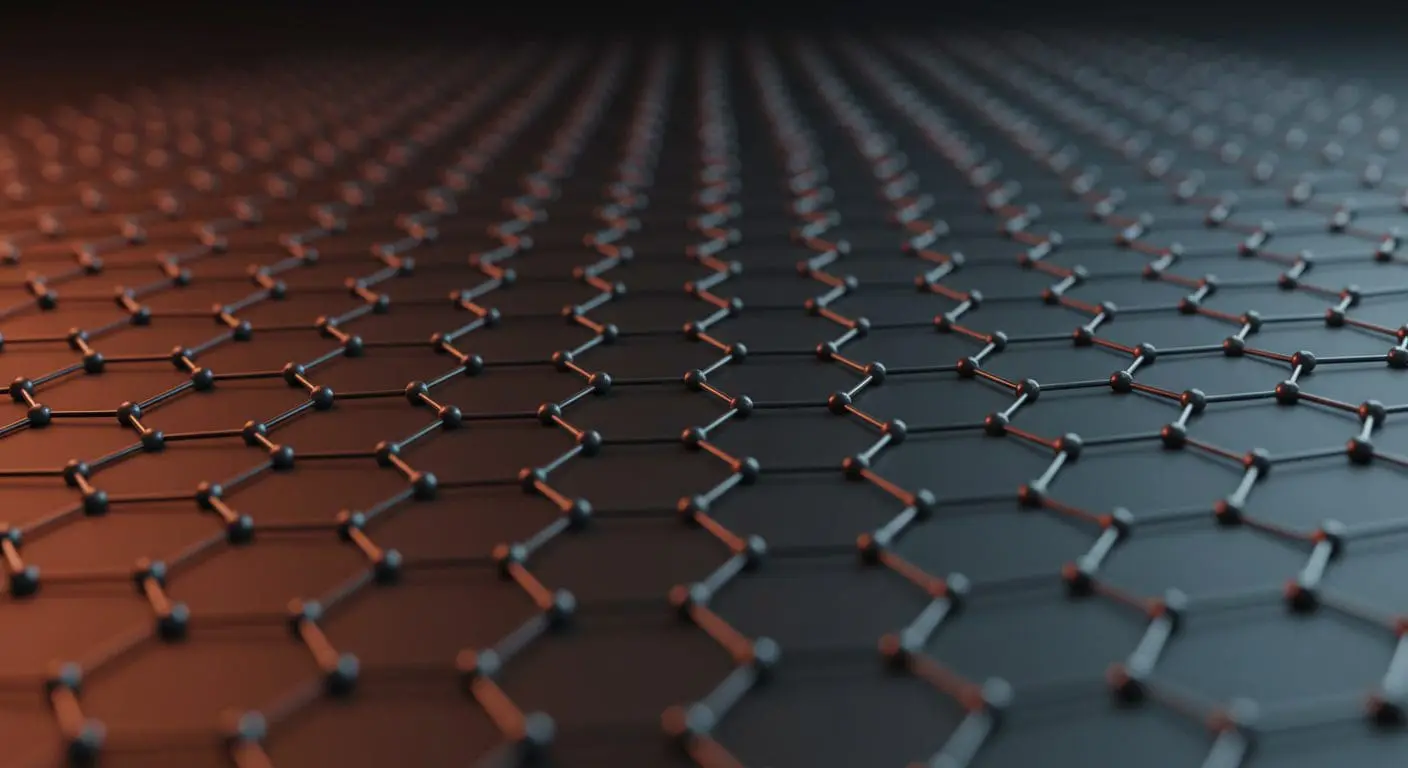
Researchers at POSTECH and Japan’s National Institute for Materials Science have made a crucial discovery about electron transport in bilayer graphene, a material that could revolutionize next-generation device innovation. Led by Professor Gil-Ho Lee and Ph.D. candidate Hyeon-Woo Jeong, the team found that electron transport in bilayer graphene exhibits a pronounced dependence on edge states and a nonlocal transport mechanism.
This finding has significant implications for the development of valleytronics, an emerging paradigm for faster and more efficient data processing. Valleytronics relies on the unique properties of materials like bilayer graphene to store and process data using quantum states. The research team, which included Dr. Kenji Watanabe and Dr. Takashi Taniguchi from NIMS, used a dual-gate graphene device to study the electrical characteristics of pristine and artificially processed graphene edges. Their work was supported by organizations such as the National Research Foundation of Korea, Samsung Electronics Co., Ltd., and the Japan Society for the Promotion of Science.
Introduction to Valleytronics and Bilayer Graphene
The field of valleytronics has emerged as a promising paradigm for next-generation data processing, with bilayer graphene being a key material in this area of research. Valleytronics exploits the “valley” degree of freedom in an electron’s energy structure, which functions as a discrete data storage unit, enabling faster and more efficient data handling than conventional electronics or spintronics. Bilayer graphene, comprising two vertically stacked graphene layers, can modulate its electronic band gap using externally applied electric fields, making it an attractive platform for valleytronics research and device innovation.
The concept of the Valley Hall Effect (VHE) is central to valleytronics, describing how electron flow is selectively channeled through discrete energy states within a given material. This phenomenon leads to the emergence of nonlocal resistance, where measurable resistance is observed in regions lacking direct current flow, even in the absence of conduction paths. However, the origins of nonlocal resistance have been debated, with some researchers suggesting that device-edge impurities or external factors may also produce the observed signals.
Recent studies have focused on understanding the transport properties of bilayer graphene, including the role of edge states and nonlocal transport mechanisms. A joint research team from POSTECH and Japan’s National Institute for Materials Science (NIMS) has made significant progress in this area, fabricating a dual-gate graphene device to investigate the electrical characteristics of pristine and artificially processed graphene edges. The findings of this study have shed new light on the origins of nonlocal resistance in bilayer graphene and its implications for valleytronics device design and development.
The research team’s discovery that nonlocal resistance in naturally formed edges conformed to theoretical expectations, while etching-processed edges exhibited nonlocal resistance exceeding those values by two orders of magnitude, highlights the importance of considering the impact of fabrication processes on transport properties. This study underscores the need for a more nuanced understanding of the interplay between edge states, nonlocal transport, and device performance in bilayer graphene, with implications for the development of next-generation valleytronics devices.
Electron Transport in Bilayer Graphene
Electron transport in bilayer graphene is a complex phenomenon that has been the subject of extensive research. The material’s unique electronic structure, which features two vertically stacked graphene layers, gives rise to a range of interesting transport properties. One of the key features of bilayer graphene is its ability to modulate its electronic band gap using externally applied electric fields, making it an attractive platform for valleytronics research and device innovation.
The Valley Hall Effect (VHE) plays a central role in electron transport in bilayer graphene, describing how electron flow is selectively channeled through discrete energy states within the material. This phenomenon leads to the emergence of nonlocal resistance, where measurable resistance is observed in regions lacking direct current flow, even in the absence of conduction paths. However, the origins of nonlocal resistance have been debated, with some researchers suggesting that device-edge impurities or external factors may also produce the observed signals.
Recent studies have focused on understanding the role of edge states in electron transport in bilayer graphene. The joint research team from POSTECH and NIMS has made significant progress in this area, fabricating a dual-gate graphene device to investigate the electrical characteristics of pristine and artificially processed graphene edges. The findings of this study have shed new light on the origins of nonlocal resistance in bilayer graphene and its implications for valleytronics device design and development.
The discovery that nonlocal resistance in naturally formed edges conformed to theoretical expectations, while etching-processed edges exhibited nonlocal resistance exceeding those values by two orders of magnitude, highlights the importance of considering the impact of fabrication processes on transport properties. This study underscores the need for a more nuanced understanding of the interplay between edge states, nonlocal transport, and device performance in bilayer graphene, with implications for the development of next-generation valleytronics devices.
Nonlocal Transport Mechanisms in Bilayer Graphene
Nonlocal transport mechanisms play a crucial role in determining the electronic properties of bilayer graphene. The Valley Hall Effect (VHE) is a key phenomenon that contributes to nonlocal resistance, where measurable resistance is observed in regions lacking direct current flow, even in the absence of conduction paths. However, the origins of nonlocal resistance have been debated, with some researchers suggesting that device-edge impurities or external factors may also produce the observed signals.
Recent studies have focused on understanding the role of edge states in nonlocal transport mechanisms in bilayer graphene. The joint research team from POSTECH and NIMS has made significant progress in this area, fabricating a dual-gate graphene device to investigate the electrical characteristics of pristine and artificially processed graphene edges. The findings of this study have shed new light on the origins of nonlocal resistance in bilayer graphene and its implications for valleytronics device design and development.
The discovery that nonlocal resistance in naturally formed edges conformed to theoretical expectations, while etching-processed edges exhibited nonlocal resistance exceeding those values by two orders of magnitude, highlights the importance of considering the impact of fabrication processes on transport properties. This study underscores the need for a more nuanced understanding of the interplay between edge states, nonlocal transport, and device performance in bilayer graphene, with implications for the development of next-generation valleytronics devices.
The research team’s findings also highlight the importance of reexamining the considerations surrounding device fabrication, particularly regarding the impact of etching processes on nonlocal transport. As Hyeon-Woo Jeong, the paper’s first author, commented, “Our findings underscore the need to reexamine these considerations and offer crucial insights for advancing valleytronics device design and development.”
Implications for Valleytronics Device Design and Development
The study of electron transport in bilayer graphene has significant implications for the development of next-generation valleytronics devices. The discovery that nonlocal resistance in naturally formed edges conformed to theoretical expectations, while etching-processed edges exhibited nonlocal resistance exceeding those values by two orders of magnitude, highlights the importance of considering the impact of fabrication processes on transport properties.
The research team’s findings underscore the need for a more nuanced understanding of the interplay between edge states, nonlocal transport, and device performance in bilayer graphene. This study provides crucial insights for advancing valleytronics device design and development, with potential applications in a range of fields, including electronics, optoelectronics, and spintronics.
The development of next-generation valleytronics devices will require a deeper understanding of the complex interplay between edge states, nonlocal transport, and device performance. Further research is needed to fully elucidate the mechanisms underlying electron transport in bilayer graphene and to develop new fabrication techniques that can minimize the impact of etching processes on nonlocal transport.
The study’s findings also highlight the importance of interdisciplinary collaboration in advancing our understanding of complex materials like bilayer graphene. The joint research team from POSTECH and NIMS brought together experts from a range of fields, including materials science, physics, and electrical engineering, to tackle the challenges of valleytronics device design and development.
External Link: Click Here For More



See today’s quantum computing news on Quantum Zeitgeist for the latest breakthroughs in qubits, hardware, algorithms, and industry deals.