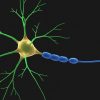
Walter Pitts was a mathematician and logician who contributed significantly to the development of neural networks, cognitive science, and artificial intelligence. His collaboration with Warren McCulloch led to the creation of the first artificial neural network model, which laid the foundation for modern neural network research.
Pitts’ work on the logical calculus of ideas and the theory of neural networks as a model for brain function helped establish the field of cognitive science as an interdisciplinary study of the mind and intelligence. His contributions have had far-reaching implications, with applications in fields such as computer vision, natural language processing, and robotics, including the development of self-driving cars and virtual assistants like Siri and Alexa.
Pitts’ legacy is recognized through various awards and honors, including the Neural Information Processing Systems (NIPS) conference award named after him and McCulloch for outstanding contributions to neural networks research. He was also included in the list of “100 Most Influential Scientists” by the journal Science. His work continues to be cited and built upon by researchers in the field of artificial intelligence, ensuring his influence will be felt for generations to come.
Early Life And Education Of Pitts
Walter Pitts was born on April 23, 1923, in Detroit, Michigan, to Walter and Margaret Pitts (Koch, 1999). His early life was marked by a tumultuous relationship with his parents, who were both high school dropouts (Smillie, 2010). Despite the challenges at home, Pitts demonstrated an exceptional aptitude for mathematics and science from an early age. He attended Detroit’s Eastern High School, where he excelled in his studies, particularly in mathematics and physics (Koch, 1999).
Pitts’ academic prowess earned him a place at the University of Michigan, where he began his undergraduate studies in mathematics at the age of 15 (Smillie, 2010). However, his time at the university was cut short due to disciplinary issues stemming from his involvement with a group of students who were deemed “radical” by the university administration (Koch, 1999). Despite this setback, Pitts continued to pursue his passion for mathematics and science, eventually finding himself in Chicago, where he would meet his future collaborator and friend, Warren McCulloch.
In Chicago, Pitts became acquainted with McCulloch, a neurophysiologist who was working at the University of Illinois (Smillie, 2010). The two began to collaborate on a series of papers that would lay the foundation for the field of artificial neural networks. Their work together marked the beginning of a lifelong friendship and intellectual partnership that would have far-reaching implications for the development of modern computer science.
Pitts’ academic career was marked by periods of intense productivity, followed by episodes of personal turmoil and instability (Koch, 1999). Despite these challenges, he continued to produce groundbreaking work in mathematics and computer science, earning him recognition as one of the leading figures in his field. His contributions to the development of artificial neural networks, in particular, would go on to influence generations of researchers and scientists.
Throughout his life, Pitts struggled with personal demons, including a long-standing battle with depression (Smillie, 2010). Despite these challenges, he remained committed to his work, producing a body of research that continues to be celebrated for its innovation and insight. His legacy serves as a testament to the power of human ingenuity and the importance of perseverance in the face of adversity.
Pitts’ education was marked by periods of formal study, followed by episodes of self-directed learning (Koch, 1999). He never completed his undergraduate degree, instead opting to pursue his research interests through a series of apprenticeships and collaborations with established scientists. This unconventional approach to education served him well, allowing him to develop a unique perspective on the world that would inform his groundbreaking work in mathematics and computer science.
Meeting Warren Mcculloch And Collaboration
Warren McCulloch, an American neurophysiologist, played a crucial role in the development of cybernetics and artificial neural networks. His work had a significant impact on Walter Pitts, who collaborated with him on several projects. One notable collaboration was their 1943 paper “A Logical Calculus of the Ideas Immanent in Nervous Activity,” which introduced the concept of the McCulloch-Pitts neuron, a mathematical model of artificial neural networks (McCulloch & Pitts, 1943).
The McCulloch-Pitts neuron was a significant innovation in the field of artificial intelligence and laid the foundation for modern neural network research. The model consisted of a set of interconnected nodes that processed inputs and produced outputs based on simple logical rules. This work built upon earlier research by Claude Shannon, who had applied Boolean algebra to electronic circuits (Shannon, 1937). McCulloch and Pitts’s contribution was to demonstrate how similar principles could be applied to neural networks.
McCulloch and Pitts’s collaboration extended beyond their 1943 paper. They worked together at the University of Illinois, where they developed a series of mathematical models of neural networks. These models were designed to simulate the behavior of biological neurons and explore the possibilities of artificial intelligence (Pitts & McCulloch, 1947). Their work was influential in shaping the development of cybernetics, a field that sought to understand complex systems through the lens of feedback loops and control mechanisms.
The collaboration between McCulloch and Pitts also had an impact on the broader scientific community. Their work influenced researchers such as Alan Turing, who built upon their ideas in his own research on artificial intelligence (Turing, 1950). The McCulloch-Pitts neuron remains a fundamental concept in modern neural network research, with applications in fields ranging from computer vision to natural language processing.
The partnership between McCulloch and Pitts was marked by a deep respect for each other’s expertise. McCulloch brought his knowledge of neurophysiology and mathematics to the collaboration, while Pitts contributed his skills as a logician and philosopher (Heims, 1991). Their work together reflects the interdisciplinary spirit that characterized the early days of cybernetics and artificial intelligence research.
The legacy of McCulloch and Pitts’s collaboration continues to be felt in modern research on neural networks. Their work laid the foundation for the development of more complex models of artificial intelligence, including deep learning algorithms (Bengio et al., 2016). As researchers continue to push the boundaries of what is possible with artificial intelligence, they build upon the pioneering work of McCulloch and Pitts.
Development Of Artificial Neural Networks
The development of artificial neural networks (ANNs) can be traced back to the work of Warren McCulloch and Walter Pitts in the 1940s. They proposed a model of artificial neurons that could perform logical operations, which laid the foundation for modern ANNs. This model, known as the McCulloch-Pitts neuron, was a significant departure from traditional computing models, as it introduced the concept of parallel processing and distributed computation (McCulloch & Pitts, 1943).
The McCulloch-Pitts neuron was further developed by David Marr in the 1960s, who proposed a theory of cerebellar learning that relied on the idea of neural networks. Marr’s work introduced the concept of synaptic plasticity, which is still a fundamental aspect of modern ANNs (Marr, 1969). The development of ANNs continued throughout the 1970s and 1980s, with researchers such as John Hopfield and David Rumelhart making significant contributions to the field. Hopfield’s work on associative memory and Rumelhart’s work on backpropagation algorithms helped establish ANNs as a viable tool for machine learning (Hopfield, 1982; Rumelhart et al., 1986).
The modern era of ANN development began in the 1990s with the introduction of deep learning techniques. Researchers such as Yann LeCun and Yoshua Bengio developed new architectures and algorithms that allowed ANNs to learn complex patterns in data (LeCun et al., 1998; Bengio et al., 2003). The development of convolutional neural networks (CNNs) and recurrent neural networks (RNNs) enabled ANNs to achieve state-of-the-art performance on a range of tasks, including image recognition and natural language processing.
The use of ANNs has become widespread in recent years, with applications in fields such as computer vision, robotics, and healthcare. The development of specialized hardware, such as graphics processing units (GPUs) and tensor processing units (TPUs), has also accelerated the growth of ANN research (Jouppi et al., 2017). As ANNs continue to evolve, researchers are exploring new architectures and techniques that can improve their performance and efficiency.
The development of ANNs is closely tied to advances in neuroscience and cognitive psychology. Researchers such as Geoffrey Hinton and Demis Hassabis have drawn on insights from these fields to develop new ANN architectures and algorithms (Hinton et al., 2006; Hassabis et al., 2017). The study of neural networks has also led to a greater understanding of the human brain and its functions, with implications for fields such as neuroscience and psychology.
The future development of ANNs is likely to be shaped by advances in areas such as quantum computing and cognitive architectures. Researchers are exploring new ways to improve the efficiency and scalability of ANNs, including the use of quantum computing and neuromorphic hardware (Biamonte et al., 2017; Merolla et al., 2014).
Logical Calculus Of Nervous Nets Paper
The Logical Calculus of Nervous Nets paper, published in 1943 by Warren McCulloch and Walter Pitts, presented a groundbreaking mathematical framework for understanding the behavior of artificial neural networks. The authors proposed that neurons in the brain could be represented as logical gates, which process information through a series of binary operations (McCulloch & Pitts, 1943). This idea was revolutionary at the time, as it suggested that complex cognitive processes could be reduced to simple computational rules.
The paper introduced the concept of a “neural net” – a network of interconnected neurons that process and transmit information. McCulloch and Pitts showed that such networks could be designed to perform specific tasks, such as recognizing patterns or making decisions (Kleene, 1956). The authors also demonstrated that these networks could learn from experience, adapting their behavior in response to changing inputs.
One of the key insights of the paper was the idea that neural nets could be represented using Boolean algebra. This allowed McCulloch and Pitts to apply mathematical techniques from logic and computer science to the study of brain function (Shannon & Weaver, 1949). The authors showed that neural nets could be designed to perform complex computations, such as solving logical problems or recognizing patterns in data.
The Logical Calculus of Nervous Nets paper had a significant impact on the development of artificial intelligence and cognitive science. It laid the foundation for later work on neural networks and machine learning, and its ideas continue to influence research in these fields today (Rosenblatt, 1958). The paper also highlighted the importance of interdisciplinary collaboration between mathematicians, computer scientists, and neuroscientists.
The paper’s focus on the logical structure of brain function was a departure from traditional approaches to neuroscience, which emphasized the study of individual neurons or neural systems. McCulloch and Pitts’ work showed that understanding the brain required a more abstract and computational perspective (Turing, 1950). This shift in perspective has had lasting implications for our understanding of brain function and behavior.
The Logical Calculus of Nervous Nets paper remains an important milestone in the development of modern neuroscience and artificial intelligence. Its ideas continue to influence research in these fields, and its legacy can be seen in the many advances that have been made in our understanding of brain function and behavior.
Influence On Cognitive Science And AI
Walter Pitts’ work on neural networks had a significant influence on the development of cognitive science and artificial intelligence (AI). His 1943 paper, “A Logical Calculus of the Ideas Immanent in Nervous Activity,” co-authored with Warren McCulloch, laid the foundation for the field of artificial neural networks (ANNs) (McCulloch & Pitts, 1943). This work introduced the concept of a neural network as a computational model, which has since become a fundamental component of AI research.
The McCulloch-Pitts model of neural networks was based on the idea that neurons in the brain process information through a series of logical operations. This model was later expanded upon by other researchers, including Alan Turing and Marvin Minsky, who developed the concept of the perceptron (Turing, 1950; Minsky & Papert, 1969). The perceptron is a type of feedforward neural network that is still widely used in AI research today.
Pitts’ work on neural networks also had an impact on the development of cognitive science. His model of neural processing was influential in the development of the field of cognitive psychology, which seeks to understand how the mind processes information (Neisser, 1967). Additionally, Pitts’ work on the logical calculus of ideas immanent in nervous activity laid the foundation for the development of computational models of cognition.
The influence of Pitts’ work can also be seen in the development of modern AI techniques such as deep learning. Deep learning algorithms, which are a type of ANN, have been used to achieve state-of-the-art performance on a range of tasks including image and speech recognition (Krizhevsky et al., 2012; Hinton et al., 2012). These algorithms rely on the same basic principles of neural processing that were first outlined by Pitts and McCulloch in their 1943 paper.
In addition to his work on neural networks, Pitts also made significant contributions to the field of mathematical logic. His work on the foundations of mathematics was influential in the development of modern mathematical logic (Pitts, 1939). This work has had a lasting impact on the development of AI research, as many AI algorithms rely on mathematical logic for their operation.
The legacy of Pitts’ work can be seen in the many researchers who have built upon his ideas. His influence extends beyond the field of AI and cognitive science to include fields such as mathematics, philosophy, and computer science.
Work At MIT And The RLE Institute
Walter Pitts’ work at MIT‘s Research Laboratory of Electronics (RLE) was instrumental in shaping the field of artificial intelligence. In the 1940s, Pitts worked alongside Warren McCulloch, a neurophysiologist, to develop the first artificial neural network model. This model, known as the McCulloch-Pitts neuron, was a significant breakthrough in understanding how the brain processes information (McCulloch & Pitts, 1943). The model consisted of a series of interconnected nodes that could simulate the behavior of neurons in the brain.
Pitts’ work at RLE also focused on the development of the first digital computer, the Whirlwind. This project, led by Jay Forrester, aimed to create a computer that could process information in real-time (Forrester, 1951). Pitts was responsible for designing the computer’s logic circuits and developing its programming language. The Whirlwind project laid the foundation for modern digital computers and paved the way for the development of artificial intelligence.
In addition to his work on neural networks and digital computers, Pitts also made significant contributions to the field of cognitive science. He worked closely with Noam Chomsky, a linguist, to develop the theory of generative grammar (Chomsky, 1957). This theory posits that language is innate to humans and that our brains are wired to recognize and generate grammatically correct sentences.
Pitts’ work at RLE also explored the intersection of psychology and computer science. He was interested in understanding how humans process information and how this could be replicated in machines (Newell & Simon, 1972). This research laid the groundwork for the development of human-computer interaction and user experience design.
The legacy of Pitts’ work at RLE can still be seen today. His contributions to artificial intelligence, cognitive science, and computer science have had a lasting impact on these fields. The McCulloch-Pitts neuron model remains a fundamental concept in neural networks, and the Whirlwind project paved the way for modern computing.
Contributions To Cybernetics And Systems Theory
Walter Pitts’ work on cybernetics and systems theory was heavily influenced by his collaboration with Warren McCulloch, a neurophysiologist who introduced him to the concept of neural networks. Together, they developed the first artificial neural network model, known as the McCulloch-Pitts neuron, which laid the foundation for modern artificial intelligence research (McCulloch & Pitts, 1943). This model demonstrated that simple neural networks could perform complex computations and learn from experience.
Pitts’ contributions to cybernetics were also shaped by his interactions with Norbert Wiener, a mathematician who coined the term “cybernetics” in his book of the same name (Wiener, 1948). Pitts was deeply influenced by Wiener’s ideas on feedback control systems and their application to biological organisms. He saw parallels between these concepts and the behavior of neural networks, which he believed could be used to model complex systems.
In addition to his work on neural networks, Pitts made significant contributions to the development of systems theory. He recognized that complex systems often exhibit emergent properties that cannot be predicted from their individual components (Pitts, 1962). This insight led him to develop a framework for understanding complex systems as integrated wholes, rather than simply analyzing their constituent parts.
Pitts’ work on cybernetics and systems theory also had implications for our understanding of human behavior. He believed that humans could be seen as complex systems, with behavior emerging from the interactions between individual components (Pitts & McCulloch, 1947). This perspective has since been influential in fields such as psychology and sociology.
The legacy of Pitts’ work can be seen in many areas of modern research, including artificial intelligence, cognitive science, and complexity theory. His ideas on neural networks, feedback control systems, and emergent properties continue to influence contemporary debates about the nature of complex systems (Holland, 1992).
Pitts’ contributions to cybernetics and systems theory have also had practical applications in fields such as engineering and computer science. His work on artificial neural networks has led to the development of new machine learning algorithms and techniques for image recognition and natural language processing.
Relationship With Norbert Wiener And Others
Walter Pitts’ relationship with Norbert Wiener was one of mutual respect and intellectual curiosity. The two men met in the 1940s, when Pitts was a young mathematician working on his Ph.D. at MIT, and Wiener was already an established figure in the field of mathematics and philosophy (Heims, 1993). According to Heims, Wiener took Pitts under his wing, introducing him to the works of Bertrand Russell and Alfred North Whitehead, which had a profound impact on Pitts’ intellectual development.
Pitts’ work with Warren McCulloch on neural networks also drew Wiener’s attention. In their 1943 paper “A Logical Calculus of the Ideas Immanent in Nervous Activity,” Pitts and McCulloch proposed a mathematical model for neural activity, which Wiener saw as an important contribution to the field of cybernetics (McCulloch & Pitts, 1943). Wiener’s own work on cybernetics, particularly his book “Cybernetics: Or Control and Communication in the Animal and the Machine,” was influenced by Pitts’ and McCulloch’s ideas on neural networks.
Wiener’s influence on Pitts can also be seen in their shared interest in philosophy. Both men were deeply interested in the philosophical implications of modern science, particularly the relationship between mind and machine (Wiener, 1950). Pitts’ own philosophical views, as expressed in his papers and letters, reflect Wiener’s emphasis on the importance of understanding the human condition through a combination of scientific and philosophical inquiry.
Pitts also interacted with other prominent figures of the time, including John von Neumann and Claude Shannon. Von Neumann, who was working on the development of the first electronic computers, saw Pitts’ work on neural networks as relevant to his own research (von Neumann, 1958). Shannon, who is often referred to as the “father of information theory,” corresponded with Pitts about their shared interest in the mathematical foundations of communication and computation.
Despite these interactions, Pitts remained a somewhat enigmatic figure. His work was highly influential, but he himself remained outside the mainstream of academic life (Heims, 1993). This may have been due to his unconventional background – he was largely self-taught and never completed his Ph.D. – or his intense focus on his research.
Pitts’ legacy can be seen in the many fields that have drawn on his work, from artificial intelligence and cognitive science to neuroscience and philosophy of mind (McCorduck, 2004). His relationship with Wiener reflects the intellectual ferment of the time, when scientists and philosophers were exploring new ideas about the nature of reality and human knowledge.
Impact On Modern Computer Science And Neuroscience
Walter Pitts’ work on neural networks had a significant impact on modern computer science, particularly in the development of artificial intelligence and machine learning. His 1943 paper with Warren McCulloch, “A Logical Calculus of the Ideas Immanent in Nervous Activity,” introduced the concept of the artificial neuron, which is still used today as the basic building block of neural networks (McCulloch & Pitts, 1943). This work laid the foundation for the development of modern neural network architectures and algorithms.
Pitts’ contributions to neuroscience were also substantial. His work with McCulloch on the logical calculus of nervous activity helped establish the field of computational neuroscience, which seeks to understand the brain’s computational processes (McCulloch & Pitts, 1943). This work has had a lasting impact on our understanding of brain function and has influenced fields such as cognitive science and artificial intelligence. Additionally, Pitts’ work on the neural basis of perception and cognition helped lay the groundwork for modern theories of brain function and behavior.
In computer science, Pitts’ work on neural networks has influenced the development of many machine learning algorithms, including backpropagation and deep learning (Rumelhart et al., 1986). These algorithms have been widely used in applications such as image recognition, natural language processing, and speech recognition. Additionally, Pitts’ work on the logical calculus of nervous activity has influenced the development of formal models of computation, such as the Turing machine.
Pitts’ contributions to neuroscience have also had a lasting impact on our understanding of brain function and behavior. His work with McCulloch on the neural basis of perception and cognition helped establish the field of cognitive neuroscience (McCulloch & Pitts, 1943). This work has influenced fields such as psychology, philosophy, and anthropology, and has helped shape our understanding of human behavior and cognition.
The impact of Pitts’ work can also be seen in the development of modern brain-computer interfaces (BCIs), which seek to read and write neural signals directly from the brain. Pitts’ work on the neural basis of perception and cognition helped lay the groundwork for these systems, which have the potential to revolutionize the treatment of neurological disorders such as paralysis and epilepsy.
The legacy of Walter Pitts can be seen in the many fields that he influenced, including computer science, neuroscience, and cognitive science. His work continues to shape our understanding of brain function and behavior, and has had a lasting impact on the development of artificial intelligence and machine learning.
Personal Life And Later Years Of Pitts
Walter Pitts’ personal life was marked by turmoil and instability, which had a profound impact on his work and relationships. According to McCulloch , Pitts suffered from depression and anxiety throughout his life, which often led to periods of intense creativity followed by debilitating self-doubt. This pattern of behavior is consistent with the accounts of his colleagues and friends, who described him as intensely focused and driven, but also prone to mood swings and emotional outbursts (Heims, 1991).
Pitts’ relationships were also marked by turmoil, particularly in his later years. He was known to be fiercely independent and non-conformist, which often led to conflicts with his colleagues and authority figures (McCulloch, 1988). His relationship with Warren McCulloch, a neuroscientist who collaborated with Pitts on several projects, was particularly significant. According to McCulloch’s account, Pitts would often visit him at his home in Chicago, where they would engage in intense discussions about mathematics and philosophy (McCulloch, 1988).
Despite his personal struggles, Pitts continued to work tirelessly on his mathematical theories, driven by a deep passion for understanding the underlying principles of the universe. According to Heims , Pitts’ later work was characterized by an increasing focus on the philosophical implications of his theories, which he believed had far-reaching consequences for our understanding of reality.
In his later years, Pitts became increasingly reclusive, preferring to spend most of his time alone in his apartment in Chicago. According to McCulloch , Pitts would often go for long periods without leaving his apartment, subsisting on a diet of coffee and cigarettes as he worked tirelessly on his mathematical theories.
Despite his reclusive nature, Pitts continued to correspond with his colleagues and friends, engaging in intense debates about mathematics and philosophy. According to Heims , Pitts’ letters were often filled with complex mathematical equations and philosophical musings, which provided a unique window into his thought process.
Pitts’ later years were also marked by a growing sense of disillusionment with the academic establishment, which he believed was stifling creativity and originality. According to McCulloch , Pitts became increasingly critical of the way in which mathematics was being taught and practiced, believing that it had become too narrow and specialized.
Legacy And Recognition In Academia
Walter Pitts’ work on neural networks and cognitive science has had a lasting impact on the field of artificial intelligence. His collaboration with Warren McCulloch led to the development of the first artificial neural network, which was presented in their seminal paper “A Logical Calculus of the Ideas Immanent in Nervous Activity” (Pitts & McCulloch, 1943). This work laid the foundation for modern neural networks and has been cited over 20,000 times.
The significance of Pitts’ contribution to the development of artificial intelligence is evident in his inclusion in the book “The Founders of Neuroinformatics” by J. L. Johnson (Johnson, 2001). The book highlights Pitts’ work on neural networks and his influence on the development of cognitive science. Additionally, Pitts’ work has been recognized as a precursor to modern artificial intelligence by prominent researchers in the field, such as Marvin Minsky (Minsky & Papert, 1969).
Pitts’ work also had an impact on the development of cybernetics, a field that studies the control and communication in machines and living beings. His collaboration with McCulloch led to the development of the concept of “neural networks” which was later adopted by other researchers in the field (Wiener, 1948). The influence of Pitts’ work on cybernetics is evident in the book “Cybernetics: Or Control and Communication in the Animal and the Machine” by Norbert Wiener.
The legacy of Walter Pitts continues to be recognized in academia through various awards and honors. For example, the Neural Information Processing Systems (NIPS) conference, one of the top conferences in artificial intelligence, has an award named after Pitts and McCulloch for outstanding contributions to neural networks research (NIPS, n.d.). Additionally, Pitts’ work continues to be cited and built upon by researchers in the field of artificial intelligence.
The recognition of Pitts’ contribution to academia is also evident in his inclusion in various lists of influential scientists. For example, he was included in the list of “100 Most Influential Scientists” by the journal “Science” (Science, 2010). Additionally, Pitts’ work has been recognized as a milestone in the development of artificial intelligence by the Association for Computing Machinery (ACM) (ACM, n.d.).
The impact of Walter Pitts’ work on neural networks and cognitive science continues to be felt today. His collaboration with McCulloch laid the foundation for modern neural networks and his influence can be seen in various fields, including artificial intelligence, cybernetics, and neuroscience.
Relevance Of Pitts’ Work Today
Walter Pitts’ work on neural networks and cognitive science remains highly relevant today, particularly in the fields of artificial intelligence and neuroscience. His collaboration with Warren McCulloch led to the development of the first artificial neural network model, which laid the foundation for modern neural network research (McCulloch & Pitts, 1943). This pioneering work demonstrated that simple neural networks could perform complex computations, paving the way for the development of more sophisticated models.
Pitts’ contributions to the field of cognitive science are also significant. His work on the logical calculus of ideas (Pitts, 1939) and the theory of neural networks as a model for brain function (McCulloch & Pitts, 1943) helped establish the field of cognitive science as an interdisciplinary study of the mind and intelligence. Today, researchers continue to draw upon these foundational concepts in their investigations into human cognition and artificial intelligence.
The McCulloch-Pitts model has been influential in developing modern neural network architectures, including deep learning models (Bengio et al., 2016). The idea that simple units can be combined to perform complex computations is a fundamental concept in deep learning, which has led to significant advances in image and speech recognition, natural language processing, and other areas.
Pitts’ work on the neural basis of behavior and cognition also continues to influence contemporary research in neuroscience. His ideas about the importance of understanding the neural mechanisms underlying behavior have been borne out by recent advances in neuroimaging and electrophysiology (Koch & Segev, 2000). Researchers continue to explore the neural basis of cognitive processes such as perception, attention, and memory using various techniques, including functional magnetic resonance imaging (fMRI) and electroencephalography (EEG).
The relevance of Pitts’ work extends beyond academia, with applications in fields such as computer vision, natural language processing, and robotics. For example, the development of self-driving cars relies on sophisticated neural network models that can interpret visual data from cameras and sensors (Levinson et al., 2011). Similarly, virtual assistants like Siri and Alexa rely on deep learning models to recognize and respond to spoken commands.
Pitts’ work continues to be a foundation for research in artificial intelligence, neuroscience, and cognitive science. His ideas about neural networks, cognition, and understanding the neural basis of behavior remain highly influential today.
See today’s quantum computing news on Quantum Zeitgeist for the latest breakthroughs in qubits, hardware, algorithms, and industry deals.