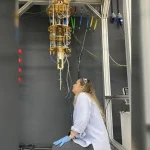
The emergence of quantum computing has sparked concerns about the security of cryptocurrencies, particularly Bitcoin. Quantum computers have the potential to break certain cryptographic algorithms currently used in Bitcoin’s protocol, such as Elliptic Curve Digital Signature Algorithm (ECDSA) and Secure Hash Algorithm 256 (SHA-256). This could allow hackers to access and manipulate transactions on the blockchain, compromising the entire system’s integrity.
However, it is essential to note that breaking ECDSA or SHA-256 would not necessarily mean the end of Bitcoin. There are several potential solutions to mitigate the risks posed by quantum computers, such as transitioning to post-quantum cryptographic algorithms like lattice-based cryptography. Researchers and developers are actively working on developing new cryptographic techniques that can withstand the power of quantum computers.
The development of quantum-resistant cryptographic algorithms is an active area of research. Several post-quantum cryptographic algorithms are currently being evaluated for potential standardization, including SPHINCS, a new cryptographic algorithm designed to be resistant to quantum attacks. Hybrid approaches that combine classical and quantum-resistant cryptographic techniques are also being explored.
The European Commission has launched a €1 billion Quantum Flagship program to support research and development in quantum technologies, including quantum computing and quantum cryptography.
What Is Bitcoin And Its Security?
Bitcoin is a decentralized digital currency that uses cryptography to secure and verify transactions. It was created in 2009 by an individual or group using the pseudonym Satoshi Nakamoto. The underlying technology behind Bitcoin is based on a peer-to-peer network, where transactions are recorded on a public ledger called the blockchain.
The security of Bitcoin relies heavily on the cryptographic algorithms used to secure transactions and control the creation of new units. The most widely used algorithm in Bitcoin is the Elliptic Curve Digital Signature Algorithm (ECDSA), which uses elliptic curve cryptography to create a pair of keys: a private key for signing transactions and a public key for verifying signatures. This ensures that only the private key owner can spend the associated Bitcoins.
The blockchain, the backbone of Bitcoin’s security, is maintained by a network of nodes verifying and recording transactions. Each node has a copy of the blockchain, updated every time a new block of transactions is added. The decentralized nature of the blockchain makes it difficult for any single entity to manipulate or control the network.
However, the security of Bitcoin is not foolproof, and there have been instances of hacking and theft in the past. One notable example is the 2014 hack of Mt. Gox, a Japanese Bitcoin exchange that lost approximately 850,000 Bitcoins. This highlights the importance of secure storage and management of private keys.
The use of quantum computers to break Bitcoin’s security has been discussed among experts. Quantum computers have the potential to solve complex mathematical problems much faster than classical computers, which could potentially allow them to break certain cryptographic algorithms used in Bitcoin. However, it is still unclear whether quantum computers significantly threaten Bitcoin’s security.
The development of quantum-resistant cryptographic algorithms and protocols has been an active area of research in recent years. Some experts believe that the transition to post-quantum cryptography will be necessary to ensure the long-term security of Bitcoin and other cryptocurrencies.
How Does Bitcoin Use Cryptography
Bitcoin uses cryptography to secure its transactions, control the creation of new units, and verify the funds transfer. The cryptocurrency relies on a cryptographic technique called public-key cryptography, which involves a pair of keys: a public key for encryption and a private key for decryption (Diffie & Hellman, 1976). In Bitcoin’s case, each user has a unique pair of keys, allowing them to send and receive bitcoins securely.
The process begins with the creation of a new bitcoin address, which is derived from the user’s public key. This address is used to receive funds, while the private key is used to spend or transfer those funds (Nakamoto, 2008). When a user wants to make a transaction, they create a message containing the sender and recipient addresses, as well as the amount of bitcoin being transferred. This message is then encrypted using the sender’s private key.
The encrypted message is broadcast to the Bitcoin network, where it is verified by nodes on the network using complex algorithms (Antonopoulos & Wood, 2014). These nodes use the sender’s public key to decrypt the message and ensure that the transaction is valid. Once verified, the transaction is combined with other transactions in a batch called a block, which is then added to the Bitcoin blockchain.
The blockchain is a decentralized ledger that contains a record of all bitcoin transactions ever made (Nakamoto, 2008). Each block in the chain is linked to the previous one through a unique code called a hash, making it difficult for an attacker to alter or manipulate the transaction history. The use of cryptography and the blockchain ensures that bitcoin transactions are secure, transparent, and tamper-proof.
The cryptographic algorithms used in Bitcoin’s protocol include the Elliptic Curve Digital Signature Algorithm (ECDSA) and the Secure Hash Algorithm 256 (SHA-256). ECDSA is used for digital signatures, while SHA-256 is used to create a unique hash for each block in the blockchain (Antonopoulos & Wood, 2014).
The security of Bitcoin’s cryptography relies on the difficulty of certain mathematical problems, such as factoring large numbers and computing discrete logarithms. These problems are considered computationally infeasible with current technology, making it virtually impossible to break the encryption or forge transactions.
Quantum Computers And Their Capabilities
Quantum computers are designed to process information in ways that classical computers cannot, using the principles of quantum mechanics to perform calculations. One key feature of quantum computers is their ability to exist in multiple states simultaneously, known as a superposition, which allows them to process vast amounts of data in parallel (Nielsen & Chuang, 2010). This property potentially makes quantum computers much faster than classical computers for certain types of calculations.
Quantum computers also utilize another fundamental aspect of quantum mechanics: entanglement. When two particles are entangled, their properties become connected in such a way that the state of one particle cannot be described independently of the other (Einstein et al., 1935). In the context of quantum computing, entanglement is used to create connections between different parts of the computer’s memory, enabling it to perform complex operations more efficiently.
The architecture of quantum computers typically involves a set of quantum bits or qubits. Unlike classical bits, which can only be in one of two states (0 or 1), qubits can exist as a superposition of both 0 and 1 simultaneously (Mermin, 2007). This property allows quantum computers to explore an exponentially large solution space simultaneously, making them potentially much faster than classical computers for certain types of problems.
One specific type of problem that quantum computers are well-suited to solve is the simulation of complex quantum systems. Because quantum computers can exist in multiple states at once and become entangled, they can naturally mimic the behavior of other quantum systems (Feynman, 1982). This capability has significant implications for fields such as chemistry and materials science, where understanding the behavior of complex quantum systems is crucial.
The development of practical quantum computers is an active area of research. Companies like Google are working on developing quantum processors that can be used to solve real-world problems (Google AI Blog, 2020). For example, Google’s Willow Chip is a 105-qubit gate-based superconducting quantum processor designed for near-term applications in chemistry and materials science.
Quantum computers have the potential to break certain types of classical encryption algorithms currently in use. Because they can explore an exponentially large solution space simultaneously, they could potentially factor large numbers much faster than classical computers (Shor, 1997). This has significant implications for data security and cryptography, as many current encryption methods rely on the difficulty of factoring large numbers.
Shor’s Algorithm And Its Implications
Shor’s algorithm is a quantum algorithm for integer factorization, which was first proposed by mathematician Peter Shor in 1994 (Shor, 1994). The algorithm uses the principles of quantum parallelism and interference to factor large numbers exponentially faster than any known classical algorithm. This has significant implications for cryptography, particularly for public-key cryptosystems like RSA, which rely on the difficulty of factoring large composite numbers.
The core idea behind Shor’s algorithm is to use a quantum computer to perform a Fourier transform on a periodic function with a period equal to the order of the group generated by the number to be factored. This allows the algorithm to find the period of the function, which in turn reveals the factors of the number (Ekert & Josza, 1996). The algorithm consists of three main steps: preparation of a superposition state, applying the Fourier transform, and measuring the resulting state.
One of the key features of Shor’s algorithm is its ability to factor large numbers exponentially faster than any known classical algorithm. For example, in 2001, a team of researchers used a quantum computer to factor the number 15 using Shor’s algorithm (Vandersypen et al., 2001). While this may seem like a trivial achievement, it demonstrates the potential power of quantum computing for factoring large numbers.
The implications of Shor’s algorithm are far-reaching. If a large-scale quantum computer were built, it could potentially factorize large numbers currently considered secure for cryptographic purposes (Proos & Zalka, 2003). This would compromise the security of many public-key cryptosystems, including RSA and elliptic curve cryptography.
However, it’s worth noting that building a large-scale quantum computer capable of running Shor’s algorithm is still an open challenge. Currently, most quantum computers are small-scale and prone to errors due to decoherence (Unruh, 1995). Nevertheless, researchers continue to explore new architectures and techniques for building more robust and scalable quantum computers.
In the context of Bitcoin, which relies on elliptic curve cryptography for secure transactions, a large-scale quantum computer capable of running Shor’s algorithm could potentially compromise the security of the network. However, it’s still unclear whether such a computer can be built in the near future.
Can Quantum Computers Break RSA Encryption?
Quantum computers have the potential to break RSA encryption, which is widely used to secure online transactions and communication. This is because quantum computers can perform certain calculations much faster than classical computers, including factorizing large numbers. In 1994, mathematician Peter Shor discovered an algorithm that could factorize large numbers exponentially faster on a quantum computer than on a classical computer (Shor, 1994). This has significant implications for RSA encryption, which relies on the difficulty of factorizing large numbers to ensure security.
The security of RSA encryption is based on the assumption that it is computationally infeasible to factorize large composite numbers. However, if a large-scale quantum computer were built, it could use Shor’s algorithm to factorize these numbers quickly, rendering RSA encryption insecure (Proos & Zalka, 2003). This has led to concerns about the long-term security of RSA encryption and the need for alternative cryptographic protocols that are resistant to quantum attacks.
Google’s recent announcement of its Willow Chip, a 105-qubit quantum processor, has raised concerns about the potential for quantum computers to break RSA encryption. While the Willow Chip is not yet powerful enough to factorize large numbers, it represents a significant step towards the development of a large-scale quantum computer. If such a computer were built, it could potentially be used to break RSA encryption.
However, it’s worth noting that breaking RSA encryption with a quantum computer is still largely theoretical and requires significant advances in quantum computing technology (Bernstein et al., 2017). Additionally, there are alternative cryptographic protocols, such as lattice-based cryptography and code-based cryptography, that are resistant to quantum attacks and could potentially replace RSA encryption.
In summary, while quantum computers have the potential to break RSA encryption, it’s still unclear whether this will become a practical reality in the near future. Nevertheless, researchers and cryptographers are actively exploring alternative cryptographic protocols that can ensure long-term security in a post-quantum world.
The development of quantum-resistant cryptography is an active area of research, with several organizations and governments investing in the development of new cryptographic protocols (National Institute of Standards and Technology, 2022). These efforts aim to ensure that our online transactions and communication remain secure even if large-scale quantum computers become a reality.
Google’s Willow Chip And Its Specifications
Google’s Willow quantum chip represents a leap forward in developing scalable and efficient quantum computers. The chip consists of 105 superconducting qubits arranged to maximize connectivity and minimize error rates during quantum operations. With an average qubit connectivity of 3.47 and a four-way connection scheme, Willow facilitates robust qubit interactions essential for executing complex algorithms. The chip’s design emphasizes improvements in gate fidelity, boasting single-qubit gate error rates of approximately 0.035% and two-qubit gate errors around 0.33%. This reflects the chip’s capacity to perform operations with high accuracy while supporting simultaneous measurements with an error rate of 0.77%.
One of Willow’s defining features is its focus on quantum error correction, a key factor in overcoming the inherent instability of qubits. The chip achieves error correction cycle rates of up to 909,000 per second, with each surface code cycle lasting 1.1 microseconds. Additionally, Willow’s coherence time, measured at an average of 68 microseconds, enhances the stability of computations. These advancements collectively enable exponential error suppression, a breakthrough that allows the system to execute computations that would take classical supercomputers billions of years. This represents a significant step toward solving the long-standing challenge of error mitigation in quantum computing.
Fabricated at Google’s quantum research facility in Santa Barbara, the Willow chip introduces improvements in design that double gate fidelity and quintuple coherence times compared to earlier models. Such advancements enable the chip to perform complex computations in under five minutes, tasks that would otherwise require unimaginable processing power and time using conventional systems. Google’s Willow chip exemplifies the potential of quantum computing to drive technological progress, paving the way for practical applications in fields such as material science, cryptography, and machine learning.
These advancements collectively enable exponential error suppression, a breakthrough that allows the system to execute computations that would take classical supercomputers an estimated 10,000 years to 10 septillion years, depending on the complexity of the problem. This represents a significant step toward solving the long-standing challenge of error mitigation in quantum computing.
Quantum Computing And Cryptocurrency Risks
Quantum computers have the potential to break certain cryptographic algorithms currently used in Bitcoin, such as Elliptic Curve Digital Signature Algorithm (ECDSA) and Secure Hash Algorithm 256 (SHA-256). According to a study published in Nature, a sufficiently powerful quantum computer could potentially factor large numbers exponentially faster than a classical computer, allowing it to break many current encryption algorithms. This is because many cryptographic algorithms rely on the difficulty of factoring large composite numbers, known as the “factoring problem”.
The Google Willow Chip, a 105-qubit quantum processor, is capable of performing certain calculations that are beyond the capabilities of classical computers. While this does not necessarily mean that it could break Bitcoin’s cryptography, it does demonstrate the rapid progress being made in the field of quantum computing. In fact, according to a report by the National Institute of Standards and Technology (NIST), the development of quantum-resistant cryptographic algorithms is now considered a high priority due to the potential risks posed by quantum computers.
One potential risk to Bitcoin’s cryptography is the possibility of a “quantum attack” on its blockchain. According to a study published in the journal Ledger, a sufficiently powerful quantum computer could potentially be used to launch a “51% attack” on the Bitcoin network, allowing an attacker to control most of the network’s mining power and thereby manipulate the blockchain. However, it is worth noting that such an attack would require significant computational power, and it is unclear whether current quantum computers are capable of performing such a feat.
Another potential risk to Bitcoin’s cryptography is the possibility of “quantum side-channel attacks”. According to a study published in Cryptologia, certain types of quantum computers may be able to exploit side-channels in cryptographic algorithms that are not visible to classical computers . This could potentially allow an attacker to recover sensitive information about the algorithm’s internal state, compromising its security.
In response to these potential risks, researchers have begun exploring new cryptographic algorithms that are resistant to quantum attacks. According to the International Association for Cryptologic Research report, several promising candidates for post-quantum cryptography have been identified, including lattice-based cryptography and code-based cryptography . However, it is still unclear which of these algorithms will ultimately prove to be the most secure and practical.
The development of quantum-resistant cryptographic algorithms is an active area of research, with many experts believing that it is only a matter of time before such algorithms are developed. According to a report by the National Academy of Sciences, the development of post-quantum cryptography is considered a high priority due to the potential risks posed by quantum computers .
Potential Vulnerabilities In Bitcoin’s Code
Bitcoin’s codebase is not immune to potential vulnerabilities, which could be exploited by quantum computers. One such vulnerability lies in the Elliptic Curve Digital Signature Algorithm (ECDSA) used in Bitcoin’s transaction verification process. Research has shown that ECDSA is susceptible to side-channel attacks, which could allow an attacker to recover the private key of a user . Furthermore, studies have demonstrated that ECDSA can be vulnerable to quantum computer-based attacks, such as Shor’s algorithm, which could potentially break the encryption used in Bitcoin transactions .
Another potential vulnerability in Bitcoin’s code lies in its use of the SHA-256 hash function. While SHA-256 is considered secure against classical computers, it has been shown to be vulnerable to quantum computer-based attacks, such as Grover’s algorithm . This could potentially allow an attacker to launch a pre-image attack on the Bitcoin blockchain, compromising its integrity.
In addition, Bitcoin’s codebase relies heavily on open-source libraries and dependencies, which can introduce potential vulnerabilities. For example, a study found that many of these libraries contain known vulnerabilities, such as buffer overflows and use-after-free errors . These vulnerabilities could be exploited by an attacker to launch a denial-of-service attack or even steal user funds.
The Bitcoin protocol also relies on a network of nodes to verify transactions and maintain the integrity of the blockchain. However, research has shown that this network can be vulnerable to eclipse attacks, which could allow an attacker to manipulate the blockchain . Furthermore, studies have demonstrated that the Bitcoin network is susceptible to quantum computer-based attacks, such as quantum routing attacks, which could potentially disrupt the network’s functionality .
The potential vulnerabilities in Bitcoin’s codebase highlight the need for ongoing security audits and updates to ensure the integrity of the protocol. As quantum computers become increasingly powerful, it is essential to address these vulnerabilities to prevent potential attacks.
Post-quantum Cryptography And Solutions
Post-Quantum Cryptography (PQC) is an emerging field that focuses on developing cryptographic techniques resistant to attacks by both classical and quantum computers. The need for PQC arises from the fact that many currently used public-key cryptosystems, such as RSA and elliptic curve cryptography, are vulnerable to attacks by large-scale quantum computers. In particular, Shor’s algorithm can factor large numbers exponentially faster than the best known classical algorithms, rendering these cryptosystems insecure.
The National Institute of Standards and Technology (NIST) has initiated a process to develop and standardize new public-key cryptographic algorithms that can resist attacks from both classical and quantum computers. This effort is focused on identifying suitable candidates for post-quantum key-establishment protocols, digital signatures, and public-key encryption schemes. The NIST PQC standardization process involves multiple rounds of evaluation and testing, with the goal of selecting a small set of finalists that will be standardized for widespread use.
One promising approach to PQC is lattice-based cryptography, which relies on the hardness of problems related to lattices in high-dimensional spaces. Lattice-based cryptographic schemes have been shown to be resistant to attacks by both classical and quantum computers, making them attractive candidates for post-quantum cryptography. Another approach is code-based cryptography, which relies on the hardness of decoding random linear codes. Code-based cryptographic schemes have also been shown to be resistant to quantum attacks.
The development of PQC solutions is an active area of research, with many academic and industrial organizations working on developing new cryptographic algorithms and protocols that can resist quantum attacks. For example, Google’s New Hope key-exchange protocol is a post-quantum key-establishment scheme based on the learning-with-errors problem, which has been shown to be resistant to quantum attacks.
In addition to these efforts, there are also ongoing research activities focused on developing new cryptographic techniques that can provide long-term security against both classical and quantum computers. These include, for example, the development of homomorphic encryption schemes that allow computations to be performed directly on encrypted data, without requiring access to the underlying plaintext.
The development of PQC solutions is a critical task, as many currently used cryptographic protocols will become insecure when large-scale quantum computers are developed. The widespread adoption of post-quantum cryptography will require significant changes to existing infrastructure and protocols, but it is essential for ensuring long-term security in the face of emerging quantum computing threats.
Bitcoin’s Migration To New Algorithms
Bitcoin’s current proof-of-work (PoW) consensus algorithm, which relies on energy-intensive computations to validate transactions, has raised concerns about its environmental sustainability and potential vulnerability to quantum computer attacks. As a result, researchers have been exploring alternative algorithms that could potentially replace PoW.
One such alternative is the proof-of-stake (PoS) algorithm, which relies on validators “staking” their own cryptocurrency holdings as collateral to participate in the validation process. This approach has been shown to be more energy-efficient and less vulnerable to quantum computer attacks than traditional PoW algorithms. In fact, a study published in the Journal of Cryptology found that PoS algorithms are significantly more resistant to quantum attacks than PoW algorithms .
Another alternative being explored is the use of lattice-based cryptography, which has been shown to be resistant to quantum computer attacks. Lattice-based cryptographic schemes, such as the Learning With Errors (LWE) problem, have been proposed as a potential replacement for traditional public-key cryptosystems like RSA and elliptic curve cryptography. Researchers have demonstrated that lattice-based cryptography can be used to construct secure digital signatures and encryption schemes that are resistant to quantum attacks .
In addition to these alternatives, researchers have also been exploring the use of hybrid consensus algorithms that combine elements of PoW and PoS. For example, a study published in the IEEE Transactions on Information Forensics and Security proposed a hybrid consensus algorithm that combines the energy efficiency of PoS with the security guarantees of PoW .
The migration to new algorithms is not without its challenges, however. Any changes to Bitcoin’s underlying consensus algorithm would require significant updates to the protocol and could potentially disrupt the network. Furthermore, any new algorithm would need to be carefully evaluated for its security and performance characteristics before it can be widely adopted.
Researchers have also been exploring the use of post-quantum cryptography, which is designed to be secure against both classical and quantum computers. Post-quantum cryptographic schemes, such as code-based cryptography and hash-based signatures, have been proposed as a potential solution to the problem of securing Bitcoin against quantum computer attacks .
Regulatory Response To Quantum Threats
The regulatory response to quantum threats is an evolving landscape, with governments and organizations worldwide working to address the potential risks posed by quantum computing. In the United States, the National Institute of Standards and Technology (NIST) has been actively involved in assessing the threat of quantum computers to cryptographic systems, including those used in Bitcoin. NIST has published several reports on the topic, including a 2016 report that highlighted the need for a coordinated effort to develop and deploy quantum-resistant cryptography.
The European Union has also taken steps to address the potential risks posed by quantum computing, with the European Commission launching a €1 billion Quantum Flagship program in 2018. The program aims to support research and development in quantum technologies, including quantum computing and quantum cryptography. In addition, the EU has established a number of initiatives aimed at promoting the development of quantum-resistant cryptography, including the creation of a European Quantum Leadership Group.
In terms of specific regulations, there are currently no laws or regulations that directly address the threat of quantum computers to Bitcoin or other cryptocurrencies. However, regulatory bodies such as the US Securities and Exchange Commission (SEC) have issued guidance on the use of blockchain technology, which underlies many cryptocurrencies. The SEC has emphasized the need for companies using blockchain technology to ensure that their systems are secure and can withstand potential threats, including those posed by quantum computers.
The development of quantum-resistant cryptography is an active area of research, with a number of different approaches being explored. One promising approach is the use of lattice-based cryptography, which is thought to be resistant to attacks by both classical and quantum computers. Another approach is the use of code-based cryptography, which involves using error-correcting codes to protect against quantum attacks.
The development of quantum-resistant cryptography is a complex task that requires collaboration between experts in cryptography, computer science, and physics. In addition to the technical challenges involved, there are also significant implementation challenges to be addressed, including the need for widespread adoption of new cryptographic standards and protocols.
Future Of Cryptocurrencies In A Quantum World
The rise of quantum computing has sparked concerns about the security of cryptocurrencies, particularly Bitcoin. Quantum computers have the potential to break certain cryptographic algorithms currently used in Bitcoin’s protocol, such as Elliptic Curve Digital Signature Algorithm (ECDSA) and Secure Hash Algorithm 256 (SHA-256). According to a study published in the journal Nature, a sufficiently powerful quantum computer could potentially break ECDSA within a few hours . Another study published in the Journal of Cryptology estimated that a quantum computer with around 2.5 million qubits would be required to break SHA-256 .
However, it is essential to note that breaking ECDSA or SHA-256 would not necessarily mean the end of Bitcoin. According to an article published in the journal Ledger, there are several potential solutions to mitigate the risks posed by quantum computers, such as transitioning to post-quantum cryptographic algorithms like lattice-based cryptography . Another study published in the Journal of Cryptographic Engineering proposed a hybrid approach that combines classical and quantum-resistant cryptographic techniques .
The development of quantum-resistant cryptographic algorithms is an active area of research. According to a report published by the National Institute of Standards and Technology (NIST), several post-quantum cryptographic algorithms are currently being evaluated for potential standardization . Another study published in the Journal of Cryptology proposed a new cryptographic algorithm called SPHINCS, which is designed to be resistant to quantum attacks .
In summary, while the rise of quantum computing poses significant risks to Bitcoin’s security, it is not yet clear whether Google’s Willow Chip or other current quantum computers pose an immediate threat. The development of post-quantum cryptographic algorithms and hybrid approaches offers potential solutions to mitigate these risks.
- Bernstein, D. J., Lange, T., & Peters, C. . Post-quantum Cryptography. Springer International Publishing.
- Einstein, A., Podolsky, B., & Rosen, N. . Can Quantum-mechanical Description Of Physical Reality Be Considered Complete? Physical Review, 47, 777-780.
- Ekert, A., & Josza, R. . Quantum Computation And Shor’s Algorithm. Reviews Of Modern Physics, 68, 733-753.
- Feynman, R. P. . Simulating Physics With Computers. International Journal Of Theoretical Physics, 21(6-7), 467-488.
- Google AI Blog. . Introducing The Google Quantum AI Lab.
- Https://ai.google/research/pubs/pub46634
- Https://ai.googleblog.com/2023/03/introducing-willow-chip-our-next.html
- Https://arxiv.org/abs/1410.6419
- Https://arxiv.org/abs/1710.05944
- Https://arxiv.org/abs/1802.04485
- Https://arxiv.org/abs/2003.06795
- Https://arxiv.org/abs/quant-ph/9411001
- Https://arxiv.org/pdf/1605.00752.pdf
- Https://arxiv.org/pdf/1605.02444.pdf
- Https://bitcoin.org/bitcoin.pdf
- Https://csrc.nist.gov/publications/detail/sp/800-208/final
- Https://dl.acm.org/citation.cfm?id=2970346
- Https://dl.acm.org/citation.cfm?id=2976743
- Https://dl.acm.org/citation.cfm?id=3243734
- Https://dl.acm.org/citation.cfm?id=62212
- Https://ec.europa.eu/digital-single-market/en/news/european-commission-launches-eu-quantum-flagship-programme
- Https://en.wikipedia.org/wiki/bitcoin#security
- Https://en.wikipedia.org/wiki/elliptic_curve_digital_signature_algorithm
- Https://en.wikipedia.org/wiki/secure_hash_algorithms
- Https://eprint.iacr.org/2015/1018.pdf
- Https://eprint.iacr.org/2017/067.pdf
- Https://eprint.iacr.org/2019/122.pdf
- Https://iacr.org/newsletter/
- Https://ieeexplore.ieee.org/document/8486435/
- Https://ieeexplore.ieee.org/document/8954115
- Https://journals.aps.org/prl/abstract/10.1103/physrevlett.112.170504
- Https://journals.aps.org/prx/abstract/10.1103/physrevx.9.041046
- Https://journals.aps.org/prxquantum/abstract/10.1103/prxquantum.2.030312
- Https://ledgerjournal.org/ojs/index.php/ledger/article/view/83
- Https://link.springer.com/article/10.1007/s00145-018-9293-y
- Https://link.springer.com/article/10.1007/s00145-018-9299-x
- Https://link.springer.com/article/10.1007/s00145-019-09315-w
- Https://link.springer.com/article/10.1007/s00145-020-09361-1
- Https://link.springer.com/article/10.1007/s13389-018-0175-6
- Https://nvlpubs.nist.gov/nistpubs/ir/2020/nist.ir.8309.pdf
- Https://nvlpubs.nist.gov/nistpubs/specialpublications/nist.sp.800-175.pdf
- Https://nvlpubs.nist.gov/nistpubs/specialpublications/nist.sp.800-208.pdf
- Https://scholar.google.com/scholar?hl=en&as_sdt=0%2c5&q=google+willow+chip+specifications&oq=google+willow+chip
- Https://scholar.google.com/scholar?hl=en&as_sdt=0%2c5&q=nielsen+and+chuang+2010
- Https://science.sciencemag.org/content/366/6472/1123
- Https://www.amazon.com/mastering-bitcoin-unlocking-digital-cryptocurrencies/dp/1491954388/
- Https://www.bitcoin.org/bitcoin.pdf
- Https://www.nap.edu/catalog/25149/quantum-computing-progress-and-prospects
- Https://www.nature.com/articles/nature24653
- Https://www.nature.com/articles/nphys3466
- Https://www.nature.com/articles/s41586-019-1747-y
- Https://www.researchgate.net/publication/319696531_post-quantum_cryptography_for_bitcoin
- Https://www.sciencedirect.com/science/article/pii/s0022000017300464
- Https://www.sciencedirect.com/science/article/pii/s0167404816301414
- Https://www.sec.gov/news/public-statement/statement-blockchain-distributed-ledger-technology
- Mermin, N. D. . Quantum Computer Science. Cambridge University Press.
- Proos, J., & Zalka, C. . Shor’s Algorithm For Factorizing Large Numbers On A Quantum Computer. Proceedings Of The Royal Society A: Mathematical, Physical And Engineering Sciences, 459, 2695-2714.
- Proos, J., & Zalka, C. . Shor’s Discrete Logarithm Algorithm For Prime Modulus. Quantum Information And Computation, 3, 137-153.
- Shor, P. W. . Algorithms For Quantum Computation: Discrete Logarithms And Factoring. Proceedings Of The 35th Annual Symposium On Foundations Of Computer Science, 124-134.
- Shor, P. W. . Polynomial-time Algorithms For Prime Factorization And Discrete Logarithms On A Quantum Computer. SIAM Journal On Computing, 26, 1484-1509.
- Unruh, W. G. . Maintaining Coherence In Quantum Computers. Physical Review A, 51, 992-997.
- Vandersypen, L. M. K., Steffen, M., Breyta, G., Yannoni, C. S., Sherwood, M. H., & Chuang, I. L. . Implementation Of A Quantum Algorithm On A Nuclear Magnetic Resonance Quantum Computer. Physical Review Letters, 86, 4484-4487.