Researchers at Macquarie University have made a fascinating discovery that could lead to more efficient quantum technologies. The team found that ordinary grapes can enhance the performance of quantum sensors. The study, published in Physical Review Applied, reveals that pairs of grapes can create strong localized magnetic field hotspots of microwaves, which are crucial for quantum sensing applications.
According to Dr Sarath Raman Nair, a lecturer in quantum technology at Macquarie University, the team used specialized nano-diamonds containing nitrogen-vacancy centers to detect magnetic fields. The Australian Research Council Centre of Excellence for Engineered Quantum Systems supported the research. It involved collaboration with Professor Thomas Volz, who heads the Quantum Materials and Applications Group at Macquarie’s School of Mathematical and Physical Sciences.
This innovative work could potentially lead to more compact and cost-effective quantum devices, paving the way for exciting developments in quantum technology miniaturization.
Introduction to Quantum Sensing and Grapes
Quantum sensing is a field of research that utilizes the principles of quantum mechanics to develop highly sensitive sensors capable of detecting minute changes in magnetic fields, temperature, and other physical parameters. Recently, researchers at Macquarie University have made an interesting discovery involving ordinary supermarket grapes, which could potentially enhance the performance of quantum sensors. The study, published in Physical Review Applied, demonstrates how pairs of grapes can create strong localized magnetic field hotspots of microwaves. This finding could lead to more compact and cost-effective quantum devices.
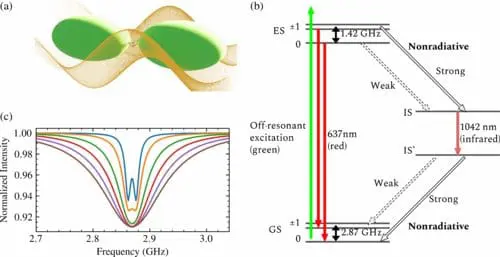
The experiment involved using specialized nano-diamonds containing nitrogen-vacancy centers, which act as quantum sensors. These defects behave like tiny magnets and can detect magnetic fields. The team placed their quantum sensor on the tip of a thin glass fiber and positioned it between two grapes. By shining green laser light through the fiber, they could make these atoms glow red, revealing the strength of the microwave field around the grapes. The results showed that the magnetic field of the microwave radiation becomes twice as strong when grapes are added.
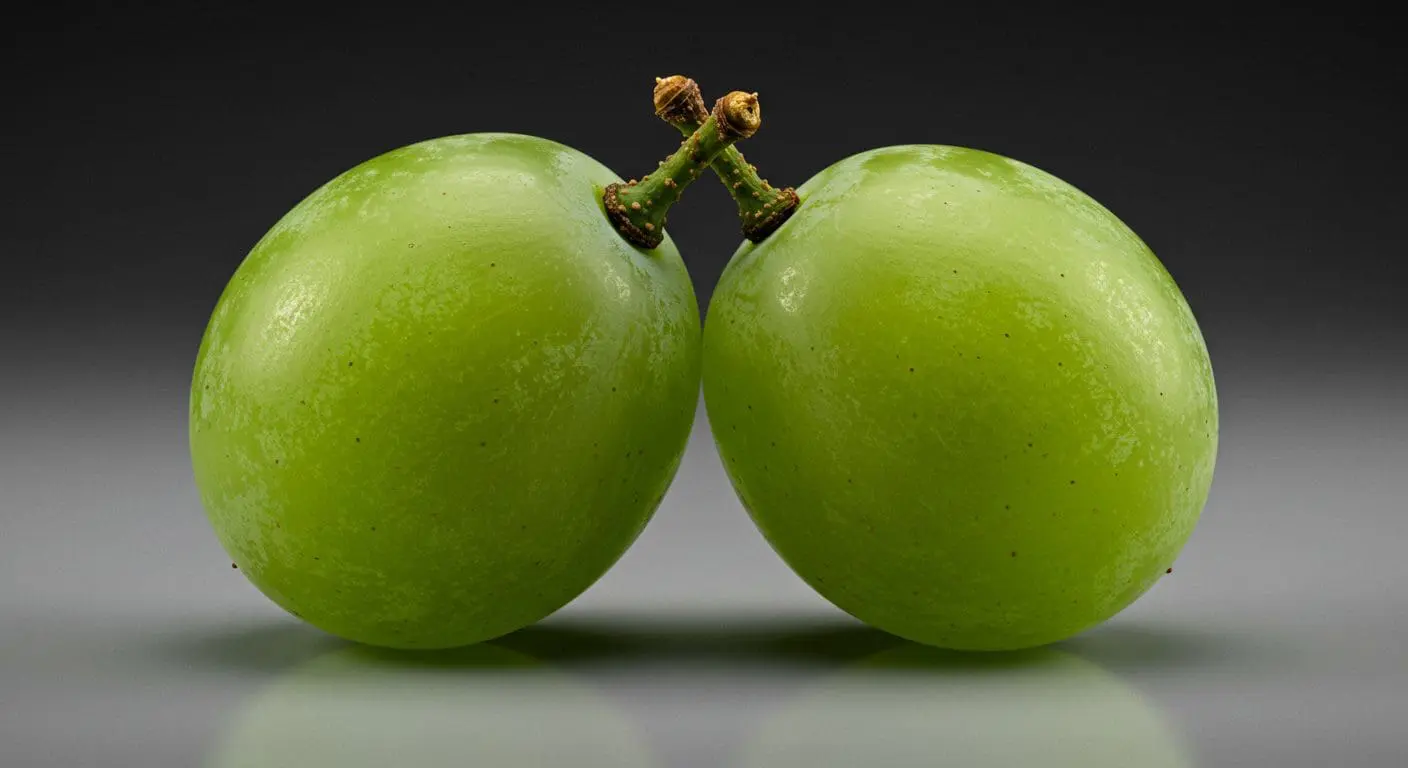
The use of grapes in this experiment may seem unusual, but it is based on the fact that water is better than sapphire at concentrating microwave energy. Grapes, being mostly water enclosed in a thin skin, provided an ideal test subject for this theory. The size and shape of the grapes proved crucial to the experiment’s success, with precisely sized grapes (approximately 27 millimeters long) needed to concentrate microwave energy at approximately the right frequency of the diamond quantum sensor.
The implications of this research are significant, as it could lead to the development of more efficient quantum sensing devices. Quantum sensing devices traditionally use sapphire for concentrating microwave energy, but the Macquarie team’s findings suggest that water-based materials could be a better alternative. However, water is less stable and loses more energy in the process, which is a challenge that needs to be addressed.
The Science Behind Quantum Sensing
Quantum sensing relies on the principles of quantum mechanics, particularly the behavior of atomic-scale defects in materials such as diamonds. Nitrogen-vacancy centers are one type of defect that can be used for quantum sensing. These defects behave like tiny magnets and can detect magnetic fields, making them ideal for applications such as magnetic field sensing and imaging.
The process of creating these defects involves introducing impurities into the diamond lattice structure. In the case of nitrogen-vacancy centers, a nitrogen atom replaces a carbon atom in the lattice, creating a defect that behaves like a tiny magnet. These defects can be manipulated using laser light, which allows researchers to control their behavior and use them for sensing applications.
The use of nano-diamonds containing nitrogen-vacancy centers is particularly useful for quantum sensing applications. These diamonds are extremely small, typically measuring only a few nanometers in diameter, which makes them ideal for detecting minute changes in magnetic fields. The fact that they can be manipulated using laser light also allows researchers to control their behavior and use them for a variety of sensing applications.
The science behind the grape experiment is based on the concept of microwave resonance. When microwaves are applied to a material, they can cause the material’s electrons to oscillate at a specific frequency. In the case of the grape experiment, the microwaves caused the water molecules in the grapes to oscillate, creating a localized magnetic field hotspot. This hotspot was then detected using the nano-diamond containing nitrogen-vacancy centers.
Experimental Setup and Results
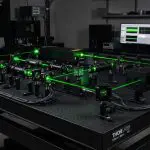
The experimental setup used in the grape study involved a specialized apparatus designed to couple microwaves to the nitrogen-vacancy centers in the nano-diamond. The apparatus consisted of a stripped optical fiber with nitrogen-vacancy spins, cantilevered from a rod, which was positioned between two grapes. The grapes were placed on a platform and aligned precisely to ensure that they were at the correct distance from each other.
The results of the experiment showed that the magnetic field of the microwave radiation becomes twice as strong when grapes are added. This is because the water molecules in the grapes oscillate at a specific frequency, creating a localized magnetic field hotspot. The nano-diamond containing nitrogen-vacancy centers was able to detect this hotspot, allowing the researchers to measure the strength of the magnetic field.
The experiment also demonstrated the importance of the size and shape of the grapes in concentrating microwave energy. The researchers found that precisely sized grapes (approximately 27 millimeters long) were needed to concentrate microwave energy at approximately the right frequency of the diamond quantum sensor. This suggests that the use of water-based materials for concentrating microwave energy could be a viable alternative to traditional materials such as sapphire.
Potential Applications and Future Research
The findings of the grape study have significant implications for the development of more efficient quantum sensing devices. Quantum sensing devices traditionally use sapphire for concentrating microwave energy, but the Macquarie team’s findings suggest that water-based materials could be a better alternative. However, water is less stable and loses more energy in the process, which is a challenge that needs to be addressed.
One potential application of this research is in the development of more compact and efficient quantum sensing devices. These devices could be used for a variety of applications, including magnetic field sensing and imaging, navigation, and materials science research. The use of water-based materials could also lead to the development of more cost-effective and widely available quantum sensing devices.
Future research will focus on developing more reliable materials that can harness the unique properties of water for concentrating microwave energy. This could involve the development of new materials that are more stable and efficient than water, or the use of advanced technologies such as metamaterials to enhance the performance of water-based materials.
The Australian Research Council Centre of Excellence for Engineered Quantum Systems supported the work, which highlights the importance of interdisciplinary research in advancing our understanding of quantum mechanics and its applications. The collaboration between researchers from different fields, including physics, materials science, and engineering, was crucial to the success of the experiment and the development of new ideas and technologies.
Conclusion
In conclusion, the grape study demonstrates the potential of using water-based materials for concentrating microwave energy in quantum sensing devices. The findings of this research have significant implications for the development of more efficient and cost-effective quantum sensing devices, which could be used for a variety of applications. Future research will focus on developing more reliable materials that can harness the unique properties of water, leading to the development of more compact and efficient quantum sensing devices.
The use of grapes in this experiment may seem unusual, but it highlights the importance of thinking outside the box and exploring new ideas and technologies. The collaboration between researchers from different fields was crucial to the success of the experiment, demonstrating the value of interdisciplinary research in advancing our understanding of quantum mechanics and its applications.
Overall, the grape study is an exciting development in the field of quantum sensing, with potential applications in a variety of areas. As researchers continue to explore new ideas and technologies, we can expect to see significant advances in the development of more efficient and cost-effective quantum sensing devices.
DOI: http://dx.doi.org/10.1103/PhysRevApplied.22.064078



See today’s quantum computing news on Quantum Zeitgeist for the latest breakthroughs in qubits, hardware, algorithms, and industry deals.