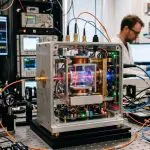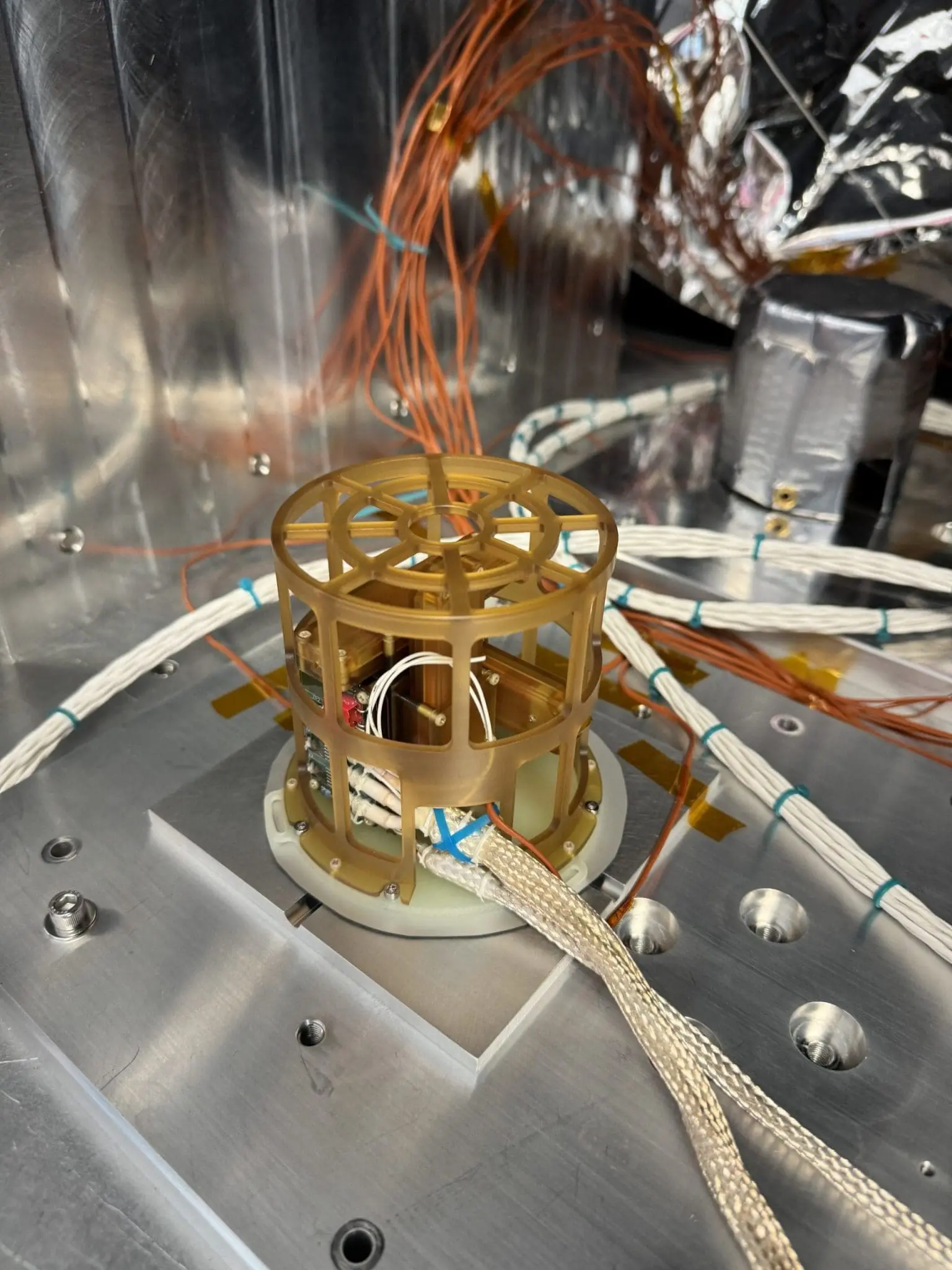
Southwest Research Institute has been awarded a 26 million dollar contract by NASA and the National Oceanic and Atmospheric Administration to develop magnetometers for NOAA’s Space Weather Next program. The magnetometers, known as SW-MAG, will measure the interplanetary magnetic field carried by the solar wind and provide critical data to NOAA’s Space Weather Prediction Center. According to Dr Roy Torbert, principal investigator of the magnetometer, this data will help mitigate space weather impacts on technology such as electrical power grids and satellite-based communication and navigation systems.
The instruments will be deployed on satellites orbiting the Sun at a point known as Lagrange 1, where gravitational forces from the Sun and Earth hold objects in a stable position. With support from NASA’s Goddard Space Flight Center and Kennedy Space Center, Southwest Research Institute will work with the University of New Hampshire to design and develop the magnetometers.
Introduction to Space Weather and Magnetometers
The National Oceanic and Atmospheric Administration (NOAA) has awarded a $26 million contract to the Southwest Research Institute (SwRI) to develop magnetometers for the Space Weather Next (SW Next) program. This program aims to improve our understanding of space weather, which refers to the variable conditions on the Sun and in space that can influence the performance of technology used on Earth, such as electrical power grids, and disrupt satellite-based communication and navigation systems. The magnetometers will be deployed on satellites that will orbit the Sun at approximately 1.5 million kilometers from the Earth at a point known as Lagrange 1 (L1), where gravitational forces from the Sun and the Earth hold objects in a stable position, offering an uninterrupted view of the Sun.
The development of these magnetometers is crucial for NOAA’s Space Weather Prediction Center, which issues forecasts, warnings, and alerts to help mitigate space weather impacts. The instruments will provide critical data about the solar wind as it approaches Earth, making local measurements of the magnetic field conveyed by the solar wind. This data will be available to the science community but are targeted specifically to support the Space Weather Prediction Center’s operations. By understanding the solar wind and its magnetic field, scientists can better predict geomagnetic storms, which can create spectacular auroras but also shut down electrical power grids and disrupt satellite-based communication and navigation systems.
The SW-MAG instrument, developed by SwRI, includes two three-axis magnetometers and associated electronics to measure the vector interplanetary magnetic field. This instrument will provide key data about the solar wind as it approaches Earth, enabling scientists to better understand the processes that transfer energy and particles into the Earth’s magnetosphere. The solar wind magnetic field plays a critical role in controlling these processes, often initiating geomagnetic storms. By studying the solar wind and its magnetic field, scientists can gain insights into the complex interactions between the Sun and the Earth’s magnetic field.
The development of the SW-MAG instrument is a collaborative effort between SwRI and the University of New Hampshire (UNH), with support from NASA‘s Goddard Space Flight Center and Kennedy Space Center. The team will design, develop, fabricate, integrate, calibrate, and evaluate the magnetometer instrument, as well as support launch and on-orbit check-out of the instrument. This collaboration highlights the importance of interdisciplinary research in understanding space weather and its impacts on Earth’s technology and infrastructure.
Space Weather Prediction and Mitigation
Space weather prediction is a critical component of NOAA’s mission to protect life and property from the impacts of severe weather events. The development of magnetometers for the SW Next program is a key step towards improving our ability to predict and mitigate space weather events. By providing accurate and timely data about the solar wind and its magnetic field, these instruments will enable scientists to better understand the complex interactions between the Sun and the Earth’s magnetic field. This knowledge can be used to develop more accurate forecasts of geomagnetic storms, which can have significant impacts on electrical power grids, satellite-based communication and navigation systems, and other critical infrastructure.
The Space Weather Prediction Center uses data from a variety of sources, including magnetometers, to issue forecasts, warnings, and alerts about space weather events. These predictions are used by a range of stakeholders, including electric utilities, satellite operators, and aviation authorities, to take steps to mitigate the impacts of space weather. For example, electric utilities may take steps to reduce the vulnerability of their grids to geomagnetically induced currents (GICs), which can cause widespread power outages. Satellite operators may also take steps to protect their systems from radiation damage caused by solar flares and coronal mass ejections.
The development of more accurate space weather prediction models is an active area of research, with scientists using a range of techniques, including machine learning and data assimilation, to improve the accuracy of their forecasts. The data provided by the SW-MAG instrument will be a critical component of these efforts, enabling scientists to develop more accurate models of the solar wind and its interactions with the Earth’s magnetic field. By improving our ability to predict space weather events, we can reduce the risks associated with these events and protect critical infrastructure from damage.
The Role of Magnetometers in Space Weather Research
Magnetometers play a critical role in space weather research, providing data about the solar wind and its magnetic field that is essential for understanding the complex interactions between the Sun and the Earth’s magnetic field. These instruments measure the strength and direction of the magnetic field in the solar wind, enabling scientists to study the dynamics of the solar wind and its impacts on the Earth’s magnetic field. The data provided by magnetometers can be used to study a range of phenomena, including geomagnetic storms, substorms, and magnetospheric currents.
The SW-MAG instrument is designed to provide high-quality data about the vector interplanetary magnetic field, which is essential for understanding the solar wind and its interactions with the Earth’s magnetic field. The instrument includes two three-axis magnetometers, which provide redundant measurements of the magnetic field, ensuring that the data is accurate and reliable. The instrument also includes associated electronics to measure the magnetic field, enabling scientists to study the dynamics of the solar wind in detail.
The development of magnetometers for space weather research is an active area of research, with scientists using a range of techniques, including advanced materials and sensor technologies, to improve the accuracy and reliability of these instruments. The data provided by magnetometers is also being used to develop new models of the solar wind and its interactions with the Earth’s magnetic field, enabling scientists to better understand the complex dynamics of space weather.
Collaboration and Partnerships in Space Weather Research
The development of the SW-MAG instrument is a collaborative effort between SwRI, UNH, NASA’s Goddard Space Flight Center, and Kennedy Space Center. This collaboration highlights the importance of interdisciplinary research in understanding space weather and its impacts on Earth’s technology and infrastructure. The partnership between NOAA and NASA is also critical to the success of the SW Next program, with NOAA providing the requirements and funding for the program, while NASA develops and builds the instruments and spacecraft.
The collaboration between SwRI and UNH is also an important component of the project, with the two institutions working together to design, develop, fabricate, integrate, calibrate, and evaluate the magnetometer instrument. This partnership enables scientists to draw on a range of expertise, including engineering, physics, and computer science, to develop innovative solutions to the challenges of space weather research.
The development of partnerships between government agencies, academic institutions, and private industry is critical to the success of space weather research. These partnerships enable scientists to leverage resources and expertise from a range of sources, accelerating the development of new technologies and models that can be used to predict and mitigate space weather events. By working together, we can reduce the risks associated with space weather and protect critical infrastructure from damage.
Future Directions in Space Weather Research
The development of the SW-MAG instrument is an important step towards improving our understanding of space weather and its impacts on Earth’s technology and infrastructure. However, there are many challenges that remain to be addressed, including the need for more accurate models of the solar wind and its interactions with the Earth’s magnetic field. The development of new technologies, such as advanced magnetometers and sensor systems, is also critical to improving our ability to predict and mitigate space weather events.
The use of machine learning and data assimilation techniques is also an active area of research, with scientists using these techniques to improve the accuracy of their forecasts. The integration of data from a range of sources, including magnetometers, solar imagers, and radiation detectors, is also critical to developing more accurate models of space weather.
The development of international partnerships and collaborations is also essential to addressing the global challenges posed by space weather. The sharing of data and expertise between countries can help to accelerate the development of new technologies and models, enabling us to better predict and mitigate space weather events. By working together, we can reduce the risks associated with space weather and protect critical infrastructure from damage, ensuring the continued operation of our technological systems and the safety of our citizens.
External Link: Click Here For More

See today’s quantum computing news on Quantum Zeitgeist for the latest breakthroughs in qubits, hardware, algorithms, and industry deals.