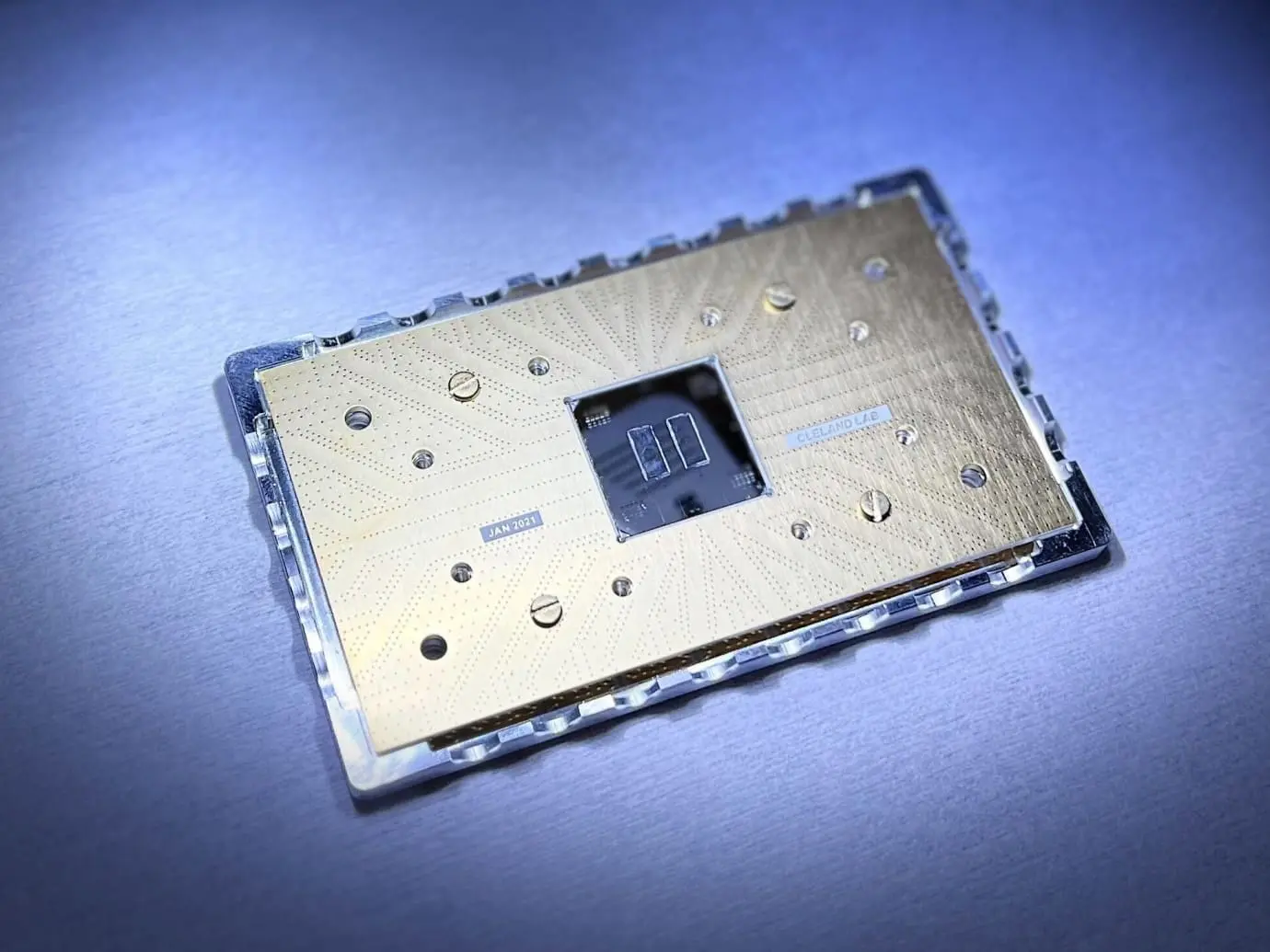
Researchers at the University of Chicago Pritzker School of Molecular Engineering have developed a new design for a superconducting quantum processor that could potentially lead to more robust and scalable quantum computers. Led by Professor Andrew Cleland, the team has created a modular quantum processor with a reconfigurable router that allows any two qubits to connect and entangle, overcoming the limitations of traditional 2D grid designs.
PhD candidate Xuntao Wu is the study’s first author, published in Physical Review X. The new design takes inspiration from classical computers, clustering qubits around a central router, similar to how PCs talk to each other through a central network hub.
This breakthrough could have significant implications for telecommunications, healthcare, and cryptography, with companies like Applied Materials already taking notice. The Army Research Office and the Air Force Office of Scientific Research supported the research.
Introduction to Quantum Chip Architecture
The development of quantum computers has been hindered by the limitations of current quantum chip designs. Typically, these chips feature a 2-D grid layout where qubits are arranged in a planar structure, allowing each qubit to interact with its nearest neighbors. However, this design has several drawbacks, including limited qubit connectivity and scalability issues. To overcome these challenges, researchers at the University of Chicago Pritzker School of Molecular Engineering have proposed a new architecture for superconducting quantum devices. This novel design features a modular quantum processor with a reconfigurable router as its central hub, enabling any two qubits to connect and entangle.
The traditional quantum chip design has limitations that make it difficult to scale up the number of qubits while maintaining high-fidelity quantum gates and generating quantum entanglement. The new design addresses these issues by providing a more flexible and scalable architecture. By allowing different components to be pre-selected and mounted onto the processor motherboard, the modular design creates more complex quantum circuits with improved connectivity.
This approach has the potential to revolutionize fields such as telecommunications, healthcare, clean energy, and cryptography, where quantum computers can solve computational problems that are currently unsolvable with classical computers.
Limitations of Typical Quantum Chip Design
The typical 2-D grid layout of qubits on a planar substrate poses significant challenges for scaling up quantum computing applications. Each qubit can only interact with its nearest neighbors, limiting the classes of quantum dynamics that can be implemented and the extent of parallelism the processor can execute. Furthermore, fabricating all qubits on the same planar substrate makes it difficult to achieve high fabrication yields, as even a small number of failed devices can render the entire processor unusable. To overcome these limitations, researchers have been exploring alternative designs that can provide greater qubit connectivity and scalability.
One of the primary challenges in developing quantum computers is the need for millions or even billions of qubits to be fabricated with high precision. The current design makes it difficult to achieve this goal, as the fabrication yield decreases rapidly as the number of qubits increases. By rethinking the chip design, researchers aim to create a more scalable and flexible architecture that can support the development of large-scale quantum computers. This will require significant advances in materials science, nanotechnology, and quantum engineering, but the potential rewards are substantial.
Modular Quantum Processor Design
The modular quantum processor design proposed by the University of Chicago researchers features a reconfigurable router as its central hub, enabling any two qubits to connect and entangle. This design allows for greater flexibility and scalability than traditional 2-D grid layouts, as different components can be pre-selected and mounted onto the processor motherboard. The team’s next steps include working on ways to scale up the quantum processor to more qubits, finding novel protocols for expanding the processor’s capabilities, and potentially linking router-connected qubit clusters.
The modular design also enables the integration of other technologies with the current setup, which could lead to new breakthroughs in quantum computing. For example, researchers are exploring ways to connect remote qubits over longer distances, which would require the development of new technologies such as quantum repeaters or more advanced quantum error correction techniques. By pushing the boundaries of what is possible with quantum computing, researchers aim to create a new generation of computers that can solve complex problems in fields such as chemistry, materials science, and optimization.
Future Directions and Challenges
The development of modular quantum processors is an exciting area of research that holds great promise for advancing the field of quantum computing. However, there are still significant challenges to be overcome before these devices can be scaled up to thousands or millions of qubits. One of the primary challenges is reducing the noise and error rates in quantum gates, which will require significant advances in materials science and quantum engineering.
Another challenge is developing new protocols for expanding the processor’s capabilities, such as finding ways to link router-connected qubit clusters or integrating other technologies with the current setup. Researchers will also need to develop more advanced quantum error correction techniques to mitigate the effects of noise and errors in large-scale quantum computers. Despite these challenges, the potential rewards of developing modular quantum processors are substantial, and researchers are making rapid progress in this exciting field.
Conclusion
In conclusion, the development of modular quantum processors is a significant step forward in the quest to create scalable and flexible quantum computing architectures. By providing greater qubit connectivity and scalability than traditional 2-D grid layouts, these devices have the potential to revolutionize fields such as telecommunications, healthcare, clean energy, and cryptography. While there are still significant challenges to be overcome, researchers are making rapid progress in this exciting field, and the potential rewards of developing modular quantum processors are substantial. As research continues to advance, we can expect to see new breakthroughs in quantum computing that will enable us to solve complex problems that are currently unsolvable with classical computers.
External Link: Click Here For More



See today’s quantum computing news on Quantum Zeitgeist for the latest breakthroughs in qubits, hardware, algorithms, and industry deals.