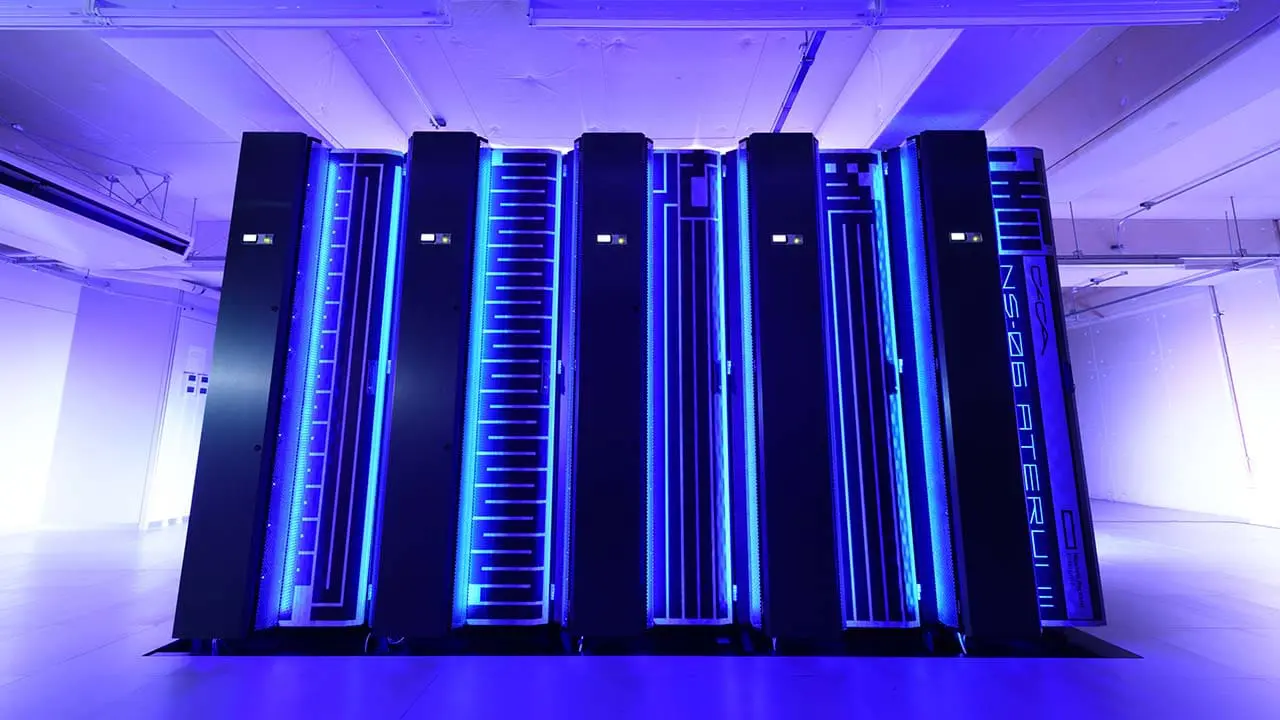
The National Astronomical Observatory of Japan has unveiled its latest supercomputer, ATERUI III, marking a significant milestone in simulation astronomy. This cutting-edge system, built by HPE Cray, boasts a theoretical peak performance of 1.99 petaflops, significantly surpassing its predecessor, ATERUI II.
The new supercomputer is designed to tackle complex astrophysical phenomena through two specialized subsystems: System M, which excels in memory bandwidth, and System P, which prioritizes memory capacity. By harnessing the strengths of these dual systems, ATERUI III is poised to accelerate computation speeds for a wide range of simulations, effectively serving as a “laboratory for theoretical astronomy.” This technological leap forward is expected to benefit significantly researchers at the Center for Computational Astrophysics, enabling them to delve deeper into the mysteries of the universe.
Next-Generation Supercomputing in Astronomy: ATERUI III
The National Astronomical Observatory of Japan (NAOJ) has recently introduced a new supercomputer, dubbed ATERUI III, to replace its predecessor, ATERUI II. This next-generation system is designed to significantly enhance the capabilities of simulation astronomy, enabling researchers to investigate a wide range of astrophysical phenomena with unprecedented precision and speed.
ATERUI III boasts an impressive theoretical peak performance of 1.99 petaflops, making it a powerful tool for simulating complex astronomical events. The system consists of two subsystems: System M, which prioritizes memory bandwidth, and System P, which focuses on memory capacity. By leveraging these two systems, ATERUI III is expected to achieve faster computation speeds than its predecessor for various simulations.
One of the key advantages of ATERUI III is its ability to handle diverse types of calculations efficiently. The system’s architecture allows it to excel in different areas, making it an ideal “laboratory for theoretical astronomy.” This capability will enable researchers to explore a broad range of astrophysical phenomena, from the formation and evolution of galaxies to the behavior of black holes.
The introduction of ATERUI III marks a significant milestone in the field of simulation astronomy. By providing researchers with a powerful tool to simulate complex astronomical events, this supercomputer is poised to revolutionize our understanding of the universe. As a “laboratory for theoretical astronomy,” ATERUI III will play a crucial role in advancing our knowledge of the cosmos and driving new discoveries.
Enhancing Computational Power: The Architecture of ATERUI III
The architecture of ATERUI III is designed to optimize computational power, enabling researchers to simulate complex astronomical events with unprecedented speed and precision. The system consists of two subsystems: System M and System P. System M prioritizes memory bandwidth, boasting an impressive 3.2 TB/s per node, which is 12.5 times that of ATERUI II. This feature enables the system to handle calculations that require high memory bandwidth efficiently.
System P, on the other hand, focuses on memory capacity, with each node featuring 512 GB of memory, which is 1.3 times that of ATERUI II. This subsystem is optimized for calculations that require large amounts of memory. By combining these two subsystems, ATERUI III can handle a wide range of calculations efficiently, making it an ideal tool for simulating complex astronomical events.
The architecture of ATERUI III is designed to provide researchers with a flexible and powerful platform for simulation astronomy. The system’s ability to handle diverse types of calculations efficiently will enable researchers to explore new areas of astrophysical research, driving new discoveries and advancing our understanding of the universe.
Simulation Astronomy: Unlocking the Secrets of the Universe
Simulation astronomy is a rapidly evolving field that leverages advanced computational power to simulate complex astronomical events. By using supercomputers like ATERUI III, researchers can recreate virtual universes, enabling them to study astrophysical phenomena in unprecedented detail. This approach allows researchers to investigate a wide range of topics, from the formation and evolution of galaxies to the behavior of black holes.
One of the key advantages of simulation astronomy is its ability to provide insights into complex astrophysical processes that are difficult or impossible to observe directly. By simulating these events, researchers can gain a deeper understanding of the underlying physics, enabling them to develop new theories and models that describe the behavior of the universe.
The introduction of ATERUI III marks a significant milestone in the field of simulation astronomy. With its enhanced computational power, this supercomputer is poised to revolutionize our understanding of the universe, driving new discoveries and advancing our knowledge of the cosmos.
The Future of Astrophysical Research: Opportunities and Challenges
The introduction of ATERUI III marks a significant milestone in the field of astrophysical research. This next-generation supercomputer is poised to revolutionize our understanding of the universe, enabling researchers to simulate complex astronomical events with unprecedented precision and speed. However, as with any new technology, there are opportunities and challenges that must be addressed.
One of the key opportunities presented by ATERUI III is its ability to drive new discoveries in astrophysical research. By providing researchers with a powerful tool to simulate complex astronomical events, this supercomputer is poised to unlock new insights into the behavior of the universe. However, there are also challenges associated with harnessing the power of ATERUI III, including the need for advanced algorithms and software that can optimize its performance.
As the field of astrophysical research continues to evolve, it is essential to address these opportunities and challenges head-on. By doing so, researchers can unlock the full potential of ATERUI III, driving new discoveries and advancing our understanding of the universe.
External Link: Click Here For More
See today’s quantum computing news on Quantum Zeitgeist for the latest breakthroughs in qubits, hardware, algorithms, and industry deals.