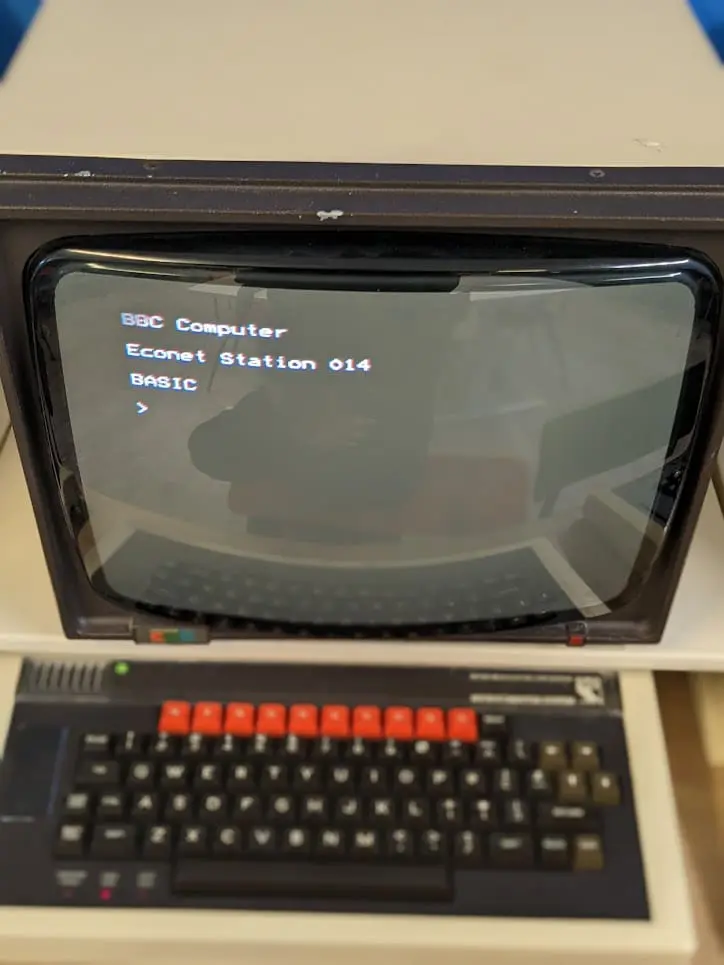
On November 12, 2024, the world of computing lost one of its most transformative figures, Thomas E. Kurtz, at the age of 96. A co-creator of the BASIC programming language, Kurtz was a pioneer in making programming accessible to the masses. His contributions not only shaped the evolution of computing but also inspired a generation of programmers who began their journeys with the simplicity and power of BASIC.
Democratizing Computing
In the early 1960s, Kurtz, alongside John G. Kemeny, envisioned a revolutionary approach to computing: they sought to make computers as accessible as library books. At the time, programming was a specialized skill dominated by scientists and mathematicians. To break down these barriers, Kurtz and Kemeny developed the Dartmouth Time-Sharing System (DTSS) and introduced BASIC (Beginner’s All-purpose Symbolic Instruction Code) in 1964.
BASIC was specifically designed to be an easy-to-learn language for non-experts, offering a gateway for students without a technical background to engage with computing. By leveraging time-sharing technology, DTSS allowed multiple users to write and execute BASIC programs simultaneously, fostering a collaborative and exploratory learning environment.
The Rise of BASIC in Personal Computing
The release of BASIC coincided with the advent of microcomputers in the 1970s and 1980s. Its simplicity and flexibility made it the go-to language for these emerging platforms. From the Apple II to the Commodore 64, nearly every home computer came equipped with a BASIC interpreter, empowering hobbyists and young learners alike to explore programming.
For many, BASIC was their first introduction to writing code. Programs as simple as printing “HELLO WORLD!” on a screen represented an initial spark, igniting curiosity and laying the foundation for deeper exploration. Kurtz’s vision of an accessible programming language opened the door for countless individuals to pursue careers in technology, making BASIC an essential bridge between novice exploration and professional development.
Critiques and Lasting Impact
While BASIC faced criticism from some computer scientists for design limitations, such as the overuse of GOTO statements, which could lead to unstructured and unwieldy code, it was never intended for large-scale software projects. Its primary purpose was accessibility and ease of use, and in this role, it excelled.
Kurtz’s work on BASIC was widely celebrated. He and Kemeny received numerous accolades, including the 1991 IEEE Computer Pioneer Award and recognition as fellows of the Association for Computing Machinery. The impact of BASIC extended beyond its era, with modern programming environments such as Visual Basic and VB.NET continuing its legacy.
A Life Dedicated to Education and Innovation
Born on February 22, 1928, in Oak Park, Illinois, Kurtz demonstrated an early aptitude for mathematics and computing. He earned his PhD from Princeton University in 1956 under the guidance of renowned statistician John Tukey. Shortly thereafter, he joined the faculty at Dartmouth College, where he remained until his retirement in 1993.
Beyond his contributions to programming, Kurtz was instrumental in advancing computing education. He directed Dartmouth’s Kiewit Computation Center and co-founded True BASIC, Inc., in 1983 to modernize the language and adapt it to new computing platforms. His work emphasized simplicity and cross-platform compatibility, ensuring that the spirit of BASIC endured even as technology evolved.
The Legacy of Thomas E. Kurtz
Thomas E. Kurtz’s contributions to computing were rooted in his belief that technology should be inclusive and empowering. His creation of BASIC and his advocacy for time-sharing systems transformed how people interacted with computers, making programming approachable for millions.
Today, BASIC’s influence persists in the ethos of accessible programming languages and the tools designed to lower the barriers to entry in technology. Kurtz’s vision lives on in the countless technologists who credit their first programming experience to his groundbreaking work. His legacy is not just one of innovation but also of education and empowerment, reminding us that technology, at its best, is a tool for everyone.

See today’s quantum computing news on Quantum Zeitgeist for the latest breakthroughs in qubits, hardware, algorithms, and industry deals.