Pacific Northwest National Laboratory (PNNL) scientists have made a crucial breakthrough in preparing test facilities for superconducting qubits, a key step towards practical quantum computing. Led by physicists Brent VanDevender and Ben Loer, the research team has identified sources of interfering ionizing radiation that can cause errors in quantum devices.
They found that cosmic radiation and naturally occurring isotopes are equally responsible for decoherence, a process where qubits lose their quantum state. The team also discovered that electrical connectors and materials used in experimental equipment can be significant radiation sources.
To address this, they developed measures to shield sensitive equipment from radiation exposure, including the use of lead-shielded cryostats and ultra-clean underground facilities. The research, published in PRX Quantum and the Journal of Instrumentation, sets the stage for quantitative studies on errors caused by radiation effects in shielded facilities, paving the way for the next generation of qubit development.
Ensuring Quantum Computing Test Facilities Meet Stringent Radiation Standards
As superconducting qubits approach prime time, test facilities must be prepared to house and conduct experiments with these sensitive devices. Researchers at the Pacific Northwest National Laboratory (PNNL) have emphasized the need for ultra-clean facilities, free from low-level radioactive energy sources that can interfere with quantum coherence.
The Impact of Ionizing Radiation on Quantum Computing
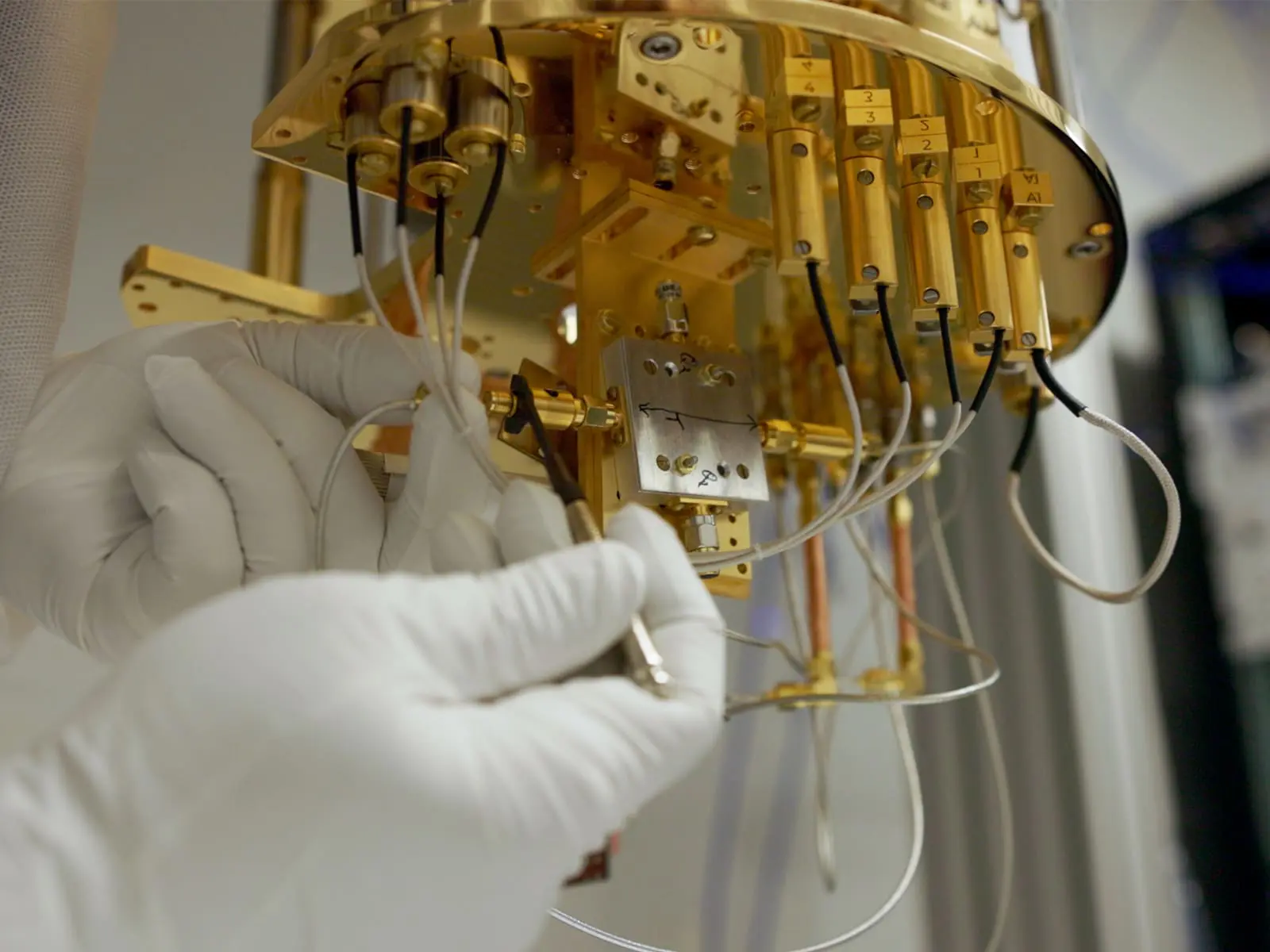
Physicist Brent VanDevender, one of the research team leads, highlighted the importance of addressing the environmental effects of stray radiation. “We knew we needed to systematically and quantitatively identify radiation sources in the environment,” he said. The team’s experience with measuring ultra-low levels of radiation in the laboratory led them to include radiation sources within the experimental units, cryostats, where these qubits are studied.
Their findings revealed that many electrical connectors were “filthy dirty” from a radiation standpoint, emphasizing the need for effective measures to shield sensitive equipment from radiation exposure. The research team’s work demonstrates that certain precautions, such as eliminating natural sources of radiation within materials inside the dilution refrigerator, can significantly reduce error rates and make quantum computing devices viable.
Designing Radiation-Hardened Qubits and Facilities
In their companion study published in PRX Quantum, the research team directly measured ionizing radiation interactions on a superconducting sensor inside a cryocooler. They used simple radiation detection circuits printed on a piece of silicon similar to that used for qubits. The results showed that stray radiation interacting with a silicon circuit board matches well with the predicted rate and energy spectrum.
The team identified two complementary approaches to reducing the sensitivity of superconducting elements to stray radiation: isolating the superconducting elements on crystal “islands” and making the crystal substrate thinner. These findings have significant implications for the design of radiation-hardened qubits and facilities that can minimize the impact of ionizing radiation.
The Low Background Cryogenic Facility: A Model for Future Quantum Computing Testbeds
The research team’s work at PNNL’s Low Background Cryogenic Facility, a shielded underground qubit testbed facility, demonstrates the effectiveness of lead-shielded cryostats in reducing error rates by 20 times compared to typical above-ground facilities. The team’s experience with ultrasensitive detection methods and expertise developed during the design and building of sensitive detectors have been crucial in identifying contaminants in electronic components.
The facility serves as a model for future quantum computing testbeds, highlighting the importance of careful material selection, radiation-hardened designs, and stringent radiation standards to ensure the viability of these sensitive devices. As researchers continue to push the boundaries of quantum computing, developing ultra-clean facilities and radiation-hardened qubits will be crucial in realizing this technology’s full potential.
The Broader Implications of Radiation-Hardened Quantum Computing
The research team’s work has far-reaching implications for various fields, including materials science, detector design, and quantum information science. The development of radiation-hardened qubits and facilities can enable new applications in areas such as quantum sensing, metrology, and computing.
Furthermore, the expertise developed during this research can be transferred to other sensitive detection technologies, such as dark matter detectors and neutrino detectors. As researchers continue to advance our understanding of ionizing radiation and its impact on quantum devices, we can expect significant breakthroughs in various fields that rely on ultra-sensitive detection capabilities.
External Link: Click Here For More



See today’s quantum computing news on Quantum Zeitgeist for the latest breakthroughs in qubits, hardware, algorithms, and industry deals.