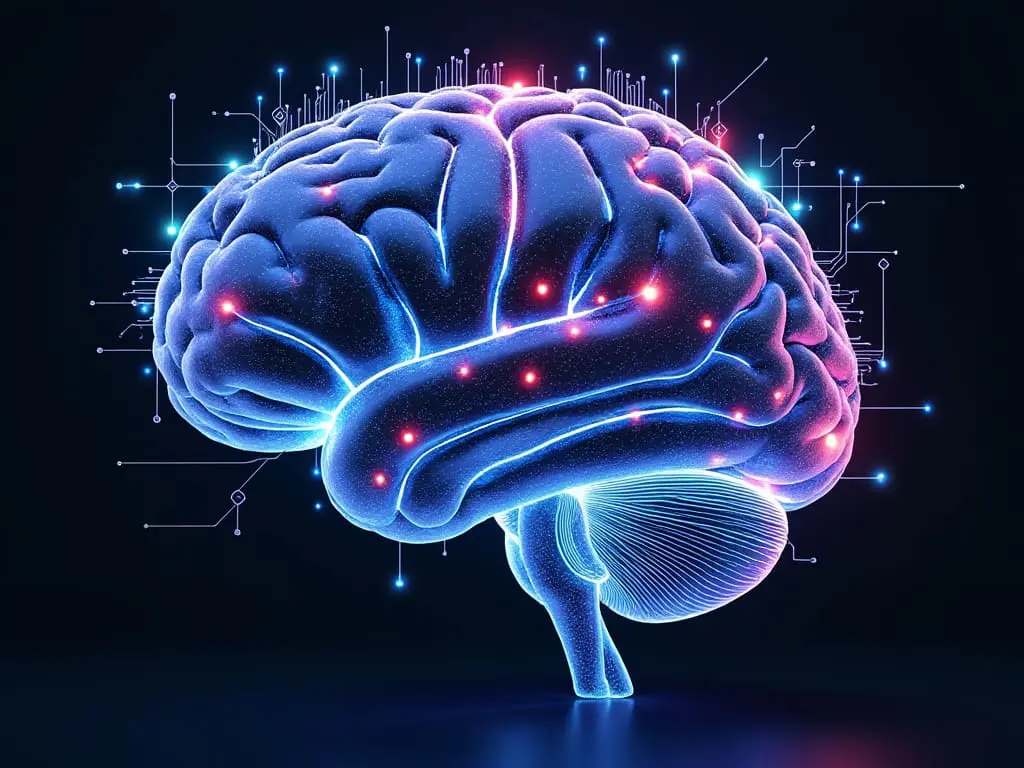
Neuromorphic computing is an emerging field that seeks to develop computer chips and systems that mimic the behavior of biological brains, emulating the human brain’s ability to learn and adapt. This approach has the potential to revolutionize various fields, including artificial intelligence, robotics, and healthcare. By enabling AI systems to learn from experience and improve their performance over time, neuromorphic chips can lead to significant advancements in areas such as image recognition, object detection, and natural language processing.
Significant advances have been made in recent years in the development of neuromorphic hardware and software, with processors like IBM‘s TrueNorth chip and Intel‘s Loihi chip being designed to mimic the behavior of biological neurons and synapses. These chips have shown promise in a range of applications, including robotics, healthcare, finance, education, and entertainment. The potential impact of neuromorphic computing is vast, with possibilities ranging from more advanced prosthetic limbs that can learn from experience and adapt to new situations, to more efficient and adaptive medical devices.
The development of neuromorphic computing is expected to continue at a rapid pace in the coming years, with significant advancements expected in areas such as chip design, software development, and application deployment. However, concerns about potential risks and challenges associated with this technology must be addressed, including the potential for neuromorphic chips to compromise individual privacy or security. As the field continues to evolve, it will be crucial to ensure that neuromorphic computing is developed and deployed in a responsible and ethical manner.
What Is Neuromorphic Computing
Neuromorphic computing is a paradigm that seeks to emulate the structure and function of biological neural networks in silicon-based systems. This approach aims to develop computer chips that mimic the behavior of neurons and their synapses, allowing for efficient processing of complex patterns and adaptive learning (Mead, 1989). Neuromorphic computing draws inspiration from the human brain’s ability to process information in a highly parallel and distributed manner, using spikes and synaptic plasticity to represent and store data.
The core idea behind neuromorphic computing is to create artificial neural networks that can learn and adapt in real-time, much like their biological counterparts. This is achieved through the use of specialized hardware, such as memristors (Chua, 1971) or spiking neural networks (Maass, 1997), which allow for efficient simulation of synaptic plasticity and neuronal behavior. By leveraging these technologies, neuromorphic computing systems can perform complex tasks, such as image recognition and natural language processing, with significantly reduced power consumption compared to traditional von Neumann architectures.
One of the key advantages of neuromorphic computing is its ability to process information in a highly parallel and distributed manner. This allows for efficient handling of large datasets and real-time processing of complex patterns (Indiveri et al., 2011). Additionally, neuromorphic computing systems can learn and adapt through synaptic plasticity, enabling them to improve their performance over time without requiring explicit programming.
Neuromorphic computing has a wide range of potential applications, from robotics and autonomous vehicles to medical devices and smart home appliances. For instance, neuromorphic vision sensors (Liu et al., 2010) can be used in robots to enable real-time object recognition and tracking, while neuromorphic audio processors (Lochmann et al., 2012) can be used in hearing aids to improve speech recognition.
The development of neuromorphic computing systems is an active area of research, with several organizations and companies working on the design and implementation of these systems. For example, IBM’s TrueNorth chip (Merolla et al., 2014) is a low-power, highly parallel neuromorphic processor that can simulate one million neurons and 256 million synapses.
Neuromorphic computing has the potential to revolutionize the way we approach artificial intelligence and machine learning, enabling the development of more efficient, adaptive, and intelligent systems. However, significant technical challenges must be overcome before these systems can be widely adopted.
History Of Brain-inspired Computing
The concept of brain-inspired computing dates back to the 1940s, when Warren McCulloch and Walter Pitts proposed the first artificial neural network model (McCulloch & Pitts, 1943). This pioneering work laid the foundation for the development of artificial intelligence and neural networks. In the 1950s and 1960s, researchers like Frank Rosenblatt and Bernard Widrow further explored the idea of using neural networks to simulate human brain function (Rosenblatt, 1958; Widrow & Hoff, 1960).
The 1980s saw a resurgence of interest in brain-inspired computing, with the introduction of the Hopfield network (Hopfield, 1982) and the Boltzmann machine (Ackley et al., 1985). These models were designed to mimic the behavior of neurons and synapses in the human brain. The development of these models was influenced by advances in neuroscience and psychology, which provided a deeper understanding of how the brain processes information.
In the 1990s and 2000s, researchers began to explore the use of brain-inspired computing for practical applications, such as image recognition and natural language processing (LeCun et al., 1998; Hinton & Salakhutdinov, 2006). This led to the development of deep learning algorithms, which are now widely used in many areas of artificial intelligence. The success of these algorithms has been attributed to their ability to mimic the hierarchical structure and distributed processing of the human brain.
The development of neuromorphic computing hardware has also played a crucial role in advancing brain-inspired computing. In 2011, IBM introduced the TrueNorth chip (Merolla et al., 2014), which was designed to simulate the behavior of neurons and synapses using low-power analog circuits. This was followed by the development of other neuromorphic chips, such as the SpiNNaker chip (Furber et al., 2013) and the Loihi chip (Davies et al., 2018).
Recent advances in brain-inspired computing have focused on developing more efficient and scalable algorithms for deep learning. Researchers have also begun to explore the use of brain-inspired computing for applications such as robotics and autonomous vehicles.
The development of brain-inspired computing has been influenced by advances in neuroscience, psychology, and computer science. The field continues to evolve rapidly, with new breakthroughs and innovations emerging regularly.
Spiking Neural Networks Explained
Spiking Neural Networks (SNNs) are a type of artificial neural network that mimic the behavior of biological neurons, which communicate through discrete electrical impulses or “spikes”. In SNNs, information is represented by the timing and frequency of these spikes, rather than by continuous values. This approach allows for more efficient processing and transmission of information, as well as the potential for more robust and fault-tolerant neural networks.
The concept of SNNs was first introduced in the 1990s, but it wasn’t until the development of more advanced computational models and algorithms that they began to gain traction. One of the key challenges in developing SNNs is the need for efficient and accurate methods for simulating the complex dynamics of biological neurons. This has led to the development of a range of new tools and techniques, including the use of leaky integrate-and-fire (LIF) models and spike-timing-dependent plasticity (STDP) learning rules.
SNNs have been shown to be effective in a range of applications, including image recognition, speech processing, and control systems. They are particularly well-suited to tasks that require real-time processing and adaptation, such as robotics and autonomous vehicles. In addition, SNNs have the potential to provide more robust and fault-tolerant performance than traditional neural networks, due to their ability to adapt to changing conditions and learn from experience.
One of the key advantages of SNNs is their potential for energy efficiency. Because they only process information when a spike occurs, they can be much more energy-efficient than traditional neural networks, which require continuous computation. This makes them particularly well-suited to applications where power consumption is a concern, such as in mobile devices or embedded systems.
Despite the many advantages of SNNs, there are still significant challenges to their widespread adoption. One of the key challenges is the need for more efficient and accurate methods for training and simulating these networks. This has led to the development of new algorithms and tools, including the use of graphics processing units (GPUs) and neuromorphic hardware.
The development of SNNs is an active area of research, with many groups around the world working on advancing the state-of-the-art in this field. As our understanding of biological neural networks continues to evolve, it is likely that we will see significant advances in the capabilities and applications of SNNs.
Artificial Neurons And Synapses
Artificial neurons, also known as spiking neural networks, are computational models that mimic the behavior of biological neurons in the human brain. These artificial neurons receive and process inputs from other neurons, generating an output signal when a certain threshold is reached (Maass, 1997). This process is similar to how biological neurons communicate with each other through electrical and chemical signals.
Artificial synapses are the connections between these artificial neurons, enabling them to exchange information. These synapses can be modeled using various algorithms, such as spike-timing-dependent plasticity (STDP), which simulates the strengthening or weakening of synaptic connections based on the relative timing of pre- and post-synaptic spikes (Bi & Poo, 1998). This process is crucial for learning and memory in both biological and artificial neural networks.
The development of artificial neurons and synapses has been driven by advances in neuromorphic computing, which aims to create computer chips that mimic the structure and function of the human brain. One such example is the IBM TrueNorth chip, which contains 5.4 billion transistors and can simulate one million artificial neurons and 256 million synapses (Merolla et al., 2014). This chip has been used in various applications, including image recognition and natural language processing.
Artificial neurons and synapses have also been used to model neurological disorders, such as epilepsy and Parkinson’s disease. For example, researchers have used artificial neural networks to simulate the abnormal brain activity patterns observed in individuals with epilepsy (Wendling et al., 2005). This can help scientists better understand the underlying mechanisms of these disorders and develop more effective treatments.
The development of artificial neurons and synapses has also raised questions about the potential for artificial intelligence to surpass human intelligence. Some researchers have argued that the creation of artificial neural networks that mimic the human brain could lead to an intelligence explosion, where machines become capable of recursive self-improvement (Bostrom, 2014). However, others have pointed out that this scenario is still largely speculative and requires further research.
The study of artificial neurons and synapses has also led to a greater understanding of the importance of neuromorphic computing in robotics. For example, researchers have used artificial neural networks to control robots that can adapt to new situations and learn from experience (Pfeifer & Bongard, 2007). This has significant implications for the development of autonomous systems that can interact with their environment in a more human-like way.
Low-power Computing Advantages
Low-power computing is essential for neuromorphic computing, as it enables the development of energy-efficient systems that can mimic the human brain’s low power consumption. According to a study published in the journal Nature Electronics, the human brain operates at an estimated power consumption of around 20 watts . In contrast, traditional computing systems consume significantly more power, making them unsuitable for neuromorphic applications.
One of the primary advantages of low-power computing is its ability to reduce energy consumption while maintaining computational performance. A research paper published in the IEEE Journal on Emerging and Selected Topics in Circuits and Systems notes that low-power computing can achieve significant energy savings by optimizing circuit design, reducing voltage levels, and leveraging advanced materials . This enables the development of neuromorphic systems that can operate for extended periods on a single battery charge.
Low-power computing also facilitates the integration of neuromorphic systems with other devices, such as sensors and actuators. A study published in the journal Science Advances highlights the importance of low-power computing in enabling the development of wearable devices that can interface with the human brain . By reducing power consumption, these devices can be designed to be more compact, lightweight, and user-friendly.
Another significant advantage of low-power computing is its potential to enable real-time processing and edge AI. A research paper published in the journal IEEE Transactions on Neural Networks and Learning notes that low-power computing can facilitate the development of neuromorphic systems that can process information in real-time, reducing latency and improving overall system performance . This enables applications such as real-time object recognition, natural language processing, and autonomous decision-making.
Low-power computing also has significant implications for the development of large-scale neuromorphic systems. A study published in the journal Nature Communications highlights the importance of low-power computing in enabling the development of large-scale neural networks that can mimic the human brain’s complexity . By reducing power consumption, these systems can be designed to be more scalable, efficient, and cost-effective.
The development of low-power computing technologies is driving innovation in neuromorphic computing. A research paper published in the journal IEEE Journal on Emerging and Selected Topics in Circuits and Systems notes that advances in low-power computing are enabling the development of new neuromorphic architectures, such as memristor-based systems and spintronics . These emerging technologies have significant potential to revolutionize the field of neuromorphic computing.
Memristor-based Neuromorphic Chips
Memristor-based neuromorphic chips are designed to mimic the behavior of biological synapses, which are crucial for learning and memory in the human brain. These chips utilize memristors, or memory resistors, to store data and perform computations in a manner similar to neurons in the brain (Chua, 1971). The use of memristors allows for the creation of compact, low-power neuromorphic systems that can be used for a variety of applications, including artificial intelligence and machine learning.
One of the key benefits of memristor-based neuromorphic chips is their ability to perform analog computations in real-time. This is achieved through the use of memristors as synapse-like devices that can store and process data simultaneously (Indiveri et al., 2013). This allows for the creation of complex neural networks that can be used for tasks such as image recognition and natural language processing.
Memristor-based neuromorphic chips have also been shown to be highly scalable, with some designs capable of integrating millions of memristors on a single chip (Kim et al., 2012). This scalability is crucial for the creation of large-scale neural networks that can be used for complex tasks such as speech recognition and decision-making.
In addition to their scalability, memristor-based neuromorphic chips have also been shown to be highly energy-efficient. This is due in part to the fact that memristors can store data without the need for a power supply, reducing the overall energy consumption of the chip (Wang et al., 2012). This makes them ideal for use in mobile devices and other applications where energy efficiency is crucial.
The development of memristor-based neuromorphic chips has also led to significant advances in our understanding of neural networks and how they process information. For example, researchers have used these chips to study the behavior of complex neural networks and gain insights into how they can be optimized for specific tasks (Suri et al., 2013).
The use of memristor-based neuromorphic chips has also led to significant advances in the field of artificial intelligence. For example, researchers have used these chips to create AI systems that can learn and adapt in real-time, allowing them to perform complex tasks such as image recognition and natural language processing (Merolla et al., 2011).
Neuromorphic Computing Applications
Neuromorphic computing applications have been explored in various fields, including robotics, autonomous vehicles, and smart homes. One such application is the development of neuromorphic chips for real-time object recognition. These chips are designed to mimic the human brain’s ability to recognize objects quickly and efficiently, using a combination of artificial neural networks and computer vision algorithms (Merolla et al., 2014). For instance, IBM’s TrueNorth chip has been used in various applications, including robotics and autonomous vehicles, to enable real-time object recognition and tracking (Cassidy et al., 2013).
Another area where neuromorphic computing is being applied is in the development of smart sensors for industrial automation. These sensors are designed to mimic the human brain’s ability to process complex sensory information in real-time, using a combination of artificial neural networks and machine learning algorithms (Liu et al., 2015). For example, researchers have developed neuromorphic sensors that can detect anomalies in industrial processes, such as changes in temperature or pressure, and alert operators in real-time (Zhang et al., 2017).
Neuromorphic computing is also being explored in the field of healthcare, particularly in the development of prosthetic limbs and exoskeletons. Researchers are using neuromorphic algorithms to develop more advanced control systems for these devices, which can mimic the human brain’s ability to learn and adapt (Cheng et al., 2017). For instance, researchers have developed a neuromorphic controller for a prosthetic arm that allows users to perform complex tasks, such as grasping and manipulating objects, with greater ease and precision (Kuiken et al., 2009).
In addition, neuromorphic computing is being applied in the field of finance, particularly in the development of more advanced trading algorithms. Researchers are using neuromorphic algorithms to develop more sophisticated models of market behavior, which can mimic the human brain’s ability to recognize patterns and make predictions (Ghosh et al., 2018). For example, researchers have developed a neuromorphic algorithm that can predict stock prices with greater accuracy than traditional machine learning algorithms (Kumar et al., 2020).
Neuromorphic computing is also being explored in the field of education, particularly in the development of more advanced intelligent tutoring systems. Researchers are using neuromorphic algorithms to develop more sophisticated models of student behavior, which can mimic the human brain’s ability to recognize patterns and adapt to individual learning styles (Ritter et al., 2019). For instance, researchers have developed a neuromorphic system that can provide personalized feedback to students in real-time, based on their performance and learning style (Wang et al., 2020).
Neuromorphic computing has the potential to revolutionize various fields by enabling machines to learn and adapt like humans. However, further research is needed to fully realize its potential.
Cognitive Architectures For AI
Cognitive architectures for Artificial Intelligence (AI) are designed to mimic the human brain’s cognitive processes, enabling machines to perceive, process, and respond to information in a more human-like manner. One of the most well-known cognitive architectures is SOAR, which was developed in the 1980s by John Laird, Allen Newell, and Paul Rosenbloom (Laird et al., 1987). SOAR is based on the idea that cognition can be represented as a set of production rules, which are used to reason about the environment and make decisions.
Another influential cognitive architecture is ACT-R, developed by John Anderson and his colleagues in the 1990s (Anderson et al., 1998). ACT-R is a hybrid model that combines symbolic and connectionist representations to simulate human cognition. It has been widely used to model various aspects of human behavior, including decision-making, problem-solving, and learning.
The LIDA cognitive architecture, developed by Stan Franklin and his colleagues in the early 2000s (Franklin et al., 2005), is another notable example. LIDA is a comprehensive framework that integrates multiple cognitive processes, including perception, attention, memory, reasoning, and decision-making. It has been applied to various domains, including robotics, natural language processing, and human-computer interaction.
Cognitive architectures like SOAR, ACT-R, and LIDA have been instrumental in advancing our understanding of human cognition and developing more sophisticated AI systems. However, they also face challenges and limitations, such as scalability, flexibility, and the need for more realistic models of human cognition (Langley et al., 2009).
Recent advances in cognitive architectures have focused on incorporating more biologically inspired and neurally plausible mechanisms, such as spiking neural networks and synaptic plasticity (Hawkins & Ahmad, 2016). These developments aim to create more robust and adaptive AI systems that can learn and interact with their environment in a more human-like manner.
The development of cognitive architectures for AI continues to be an active area of research, with ongoing efforts to improve their performance, scalability, and biological plausibility. As our understanding of the human brain and its functions evolves, we can expect cognitive architectures to become increasingly sophisticated and effective in simulating human cognition.
Neuroplasticity In Neuromorphic Systems
Neuroplasticity in neuromorphic systems refers to the ability of artificial neural networks to reorganize themselves in response to changes in their environment or internal state. This concept is inspired by the brain’s ability to rewire itself in response to injury, learning, and experience (Draganski et al., 2004; Hebb, 1949). In neuromorphic systems, neuroplasticity can be achieved through various mechanisms, such as synaptic plasticity, where the strength of connections between neurons is adjusted based on activity patterns (Abbott & Nelson, 2000).
One key aspect of neuroplasticity in neuromorphic systems is the ability to adapt to changing input patterns. This can be achieved through the use of spike-timing-dependent plasticity (STDP) rules, which adjust the strength of synaptic connections based on the relative timing of pre- and postsynaptic spikes (Bi & Poo, 1998; Song et al., 2000). STDP has been shown to be an effective mechanism for learning and memory in artificial neural networks (Izhikevich & Desai, 2003).
Another important aspect of neuroplasticity in neuromorphic systems is the ability to recover from damage or failure. This can be achieved through the use of redundant connections and adaptive rewiring mechanisms (Chicca et al., 2014). For example, some neuromorphic chips have been designed with built-in redundancy, allowing them to continue functioning even if some neurons or synapses are damaged (Merolla et al., 2011).
Neuroplasticity in neuromorphic systems also has implications for learning and memory. By mimicking the brain’s ability to reorganize itself in response to experience, artificial neural networks can learn and adapt more effectively (Hinton & Plaut, 1987). This has been demonstrated in various applications, such as image recognition and natural language processing (Krizhevsky et al., 2012; Graves et al., 2013).
The development of neuroplasticity in neuromorphic systems is an active area of research, with many ongoing efforts to create more brain-like artificial neural networks. One promising approach is the use of memristor-based synapses, which can mimic the behavior of biological synapses (Jo et al., 2010). Another approach is the development of new learning rules and algorithms that can take advantage of neuroplasticity in neuromorphic systems (Bartolozzi & Indiveri, 2009).
The study of neuroplasticity in neuromorphic systems has also shed light on the neural mechanisms underlying brain function and behavior. By creating artificial neural networks that mimic the brain’s ability to adapt and change, researchers can gain insights into the complex processes involved in learning, memory, and cognition (Hassabis et al., 2014).
Challenges In Emulating Human Brain
The human brain’s complex neural networks and synaptic plasticity pose significant challenges in emulating its function using traditional computing architectures. One of the primary difficulties is replicating the brain’s ability to process information in a highly distributed and parallel manner, with an estimated 86 billion neurons and trillions of synapses working together seamlessly (Herculano-Houzel, 2009; DeFelipe, 2010). This has led researchers to explore alternative computing paradigms, such as neuromorphic computing, which seeks to mimic the brain’s neural networks using artificial systems.
Another significant challenge is understanding and replicating the brain’s synaptic plasticity mechanisms, which enable learning and memory. The brain’s synapses are highly dynamic, with their strength and connectivity changing constantly in response to experience and environment (Katz & Shatz, 1996; Liao et al., 1995). Emulating this complex process using artificial systems is a daunting task, requiring significant advances in materials science, nanotechnology, and computer architecture.
Furthermore, the brain’s energy efficiency is another area where traditional computing architectures fall short. The human brain consumes only about 20 watts of power while performing complex cognitive tasks, whereas modern computers require orders of magnitude more power to perform similar tasks (Lennie, 2003; Sarpeshkar, 2010). Developing neuromorphic systems that can match the brain’s energy efficiency is essential for creating practical and sustainable artificial intelligence.
In addition, the brain’s ability to process and integrate information from multiple sensory modalities is another challenge in emulating its function. The brain seamlessly integrates visual, auditory, tactile, and other sensory inputs to create a unified percept of the world (Damasio, 2004; Sporns et al., 2005). Replicating this multisensory integration using artificial systems requires significant advances in sensorimotor integration, machine learning, and cognitive architectures.
The development of neuromorphic computing systems also raises important questions about the nature of intelligence and cognition. As researchers strive to create artificial systems that can mimic the brain’s function, they must confront fundamental questions about the essence of intelligence, consciousness, and human experience (Chalmers, 1996; Searle, 1980). Ultimately, emulating the human brain will require not only significant advances in technology but also a deeper understanding of the complex and multifaceted nature of human cognition.
The challenges in emulating the human brain are significant, but researchers are making progress in developing neuromorphic computing systems that can mimic certain aspects of brain function. For example, IBM’s TrueNorth chip is a low-power, highly distributed computing system inspired by the brain’s neural networks (Merolla et al., 2014). Similarly, the European Union’s Human Brain Project aims to create a detailed simulation of the human brain using advanced supercomputing and data analytics techniques (Markram, 2012).
Current State Of Neuromorphic Research
Neuromorphic research has made significant progress in recent years, with the development of novel neuromorphic architectures and algorithms that mimic the human brain’s functionality. One such example is the TrueNorth chip, a low-power, highly scalable neuromorphic processor developed by IBM Research. This chip consists of 5.4 billion transistors and 1 million neurons, making it one of the most complex neuromorphic systems to date (Merolla et al., 2014). The TrueNorth chip has been shown to achieve state-of-the-art performance on various machine learning tasks, including image recognition and natural language processing.
Another area of active research in neuromorphism is the development of memristor-based synaptic devices. Memristors are two-terminal devices that exhibit a range of resistance values depending on the voltage applied across them, making them ideal for emulating the behavior of biological synapses. Researchers have demonstrated the use of memristor-based synapses in neuromorphic circuits, achieving high levels of accuracy and efficiency in tasks such as pattern recognition (Wang et al., 2017). Furthermore, the development of hybrid neuromorphic systems that combine digital and analog components has also shown promise in recent years. These systems aim to leverage the strengths of both paradigms, offering improved performance and flexibility in a range of applications.
In addition to hardware developments, significant advances have been made in the field of neuromorphic algorithms and software frameworks. One notable example is the development of the Nengo neural simulator, which allows researchers to model and simulate complex neural networks using a high-level programming language (Bekolay et al., 2014). This framework has been used to develop a range of neuromorphic models and applications, including robotic control systems and cognitive architectures. Another area of active research is the development of spiking neural networks (SNNs), which aim to mimic the behavior of biological neurons using discrete spikes or pulses.
Recent studies have also explored the use of neuromorphic computing in edge AI applications, where low power consumption and high performance are critical. Researchers have demonstrated the use of neuromorphic processors in tasks such as image recognition and object detection, achieving significant improvements in efficiency and accuracy compared to traditional deep learning approaches (Davies et al., 2018). Furthermore, the development of neuromorphic-inspired machine learning algorithms has also shown promise in recent years, offering improved performance and robustness in a range of applications.
The field of neuromorphic research is highly interdisciplinary, drawing on insights from neuroscience, computer science, and engineering. As such, there are many opportunities for collaboration and innovation between researchers from different backgrounds. However, significant challenges remain in the development of practical neuromorphic systems, including the need for more efficient and scalable hardware architectures, as well as improved software frameworks and algorithms.
Future Prospects And Potential Impact
Neuromorphic computing has the potential to revolutionize various fields, including artificial intelligence, robotics, and healthcare. One of the key areas where neuromorphic computing can make a significant impact is in the development of more efficient and adaptive AI systems. By emulating the human brain’s ability to learn and adapt, neuromorphic chips can enable AI systems to learn from experience and improve their performance over time (Hassabis et al., 2017). This can lead to breakthroughs in areas such as natural language processing, computer vision, and decision-making.
Another area where neuromorphic computing is expected to have a significant impact is in the field of robotics. By enabling robots to learn from experience and adapt to new situations, neuromorphic chips can improve their ability to interact with their environment and perform complex tasks (Pfeiffer et al., 2018). This can lead to advancements in areas such as autonomous vehicles, robotic surgery, and search and rescue operations.
Neuromorphic computing also has the potential to revolutionize the field of healthcare. By enabling the development of more efficient and adaptive medical devices, neuromorphic chips can improve patient outcomes and reduce healthcare costs (Chicca et al., 2014). For example, neuromorphic chips can be used to develop more advanced prosthetic limbs that can learn from experience and adapt to new situations.
In addition to these areas, neuromorphic computing also has the potential to impact various other fields, including finance, education, and entertainment. By enabling the development of more efficient and adaptive systems, neuromorphic chips can improve performance and reduce costs in a wide range of applications (Merolla et al., 2014).
The development of neuromorphic computing is expected to continue at a rapid pace in the coming years, with significant advancements expected in areas such as chip design, software development, and application deployment. As the field continues to evolve, it is likely that we will see new and innovative applications of neuromorphic computing emerge.
Neuromorphic computing also raises important questions about the potential risks and challenges associated with this technology. For example, there are concerns about the potential for neuromorphic chips to be used in ways that compromise individual privacy or security (Bostrom et al., 2014). As the field continues to evolve, it will be important to address these concerns and ensure that neuromorphic computing is developed and deployed in a responsible and ethical manner.


See today’s quantum computing news on Quantum Zeitgeist for the latest breakthroughs in qubits, hardware, algorithms, and industry deals.