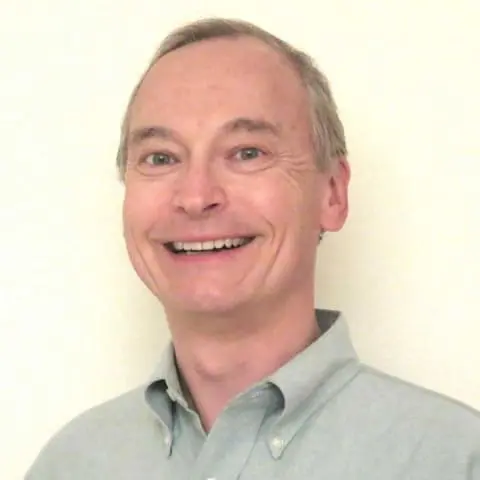
Chris Van de Walle, a distinguished professor of materials at UC Santa Barbara, has been awarded the American Physical Society’s 2025 Aneesur Rahman Prize for Computational Physics, the highest honor APS gives for work in that field.
This prestigious award recognizes Van de Walle’s development and application of first-principles methods for computing the structural, electronic, and optoelectronic properties of point defects and interfaces.
His research has significantly impacted the design of novel heterostructures, transistors, lasers, and qubits. Van de Walle’s work on point defects has been adopted by researchers worldwide in applications ranging from fuel cells to light-emitting diodes. He is an elected National Academy of Engineering member and a fellow of APS, IEEE, AAAS, MRS, and AVS. His research group’s approaches have also contributed to developing cutting-edge quantum sensors and single-photon emitters.
Computational Physics Pioneer Honored with Prestigious Award
Chris Van de Walle, a distinguished professor of materials at UC Santa Barbara, has been awarded the American Physical Society’s 2025 Aneesur Rahman Prize for Computational Physics. This prestigious award is the highest honor APS gives for work in computational physics and recognizes Van de Walle’s significant contributions to the field.
Van de Walle’s research focuses on novel electronic materials, including wide-band-gap semiconductors, transparent conductors, and complex oxides. He uses computational methods to develop a fundamental understanding of the physics and chemistry of materials, aiming to improve existing materials and discover new ones. His work has profoundly impacted the development of devices such as transistors, lasers, and novel qubits.
The APS selected Van de Walle for the Rahman Prize in recognition of his “development and application of first-principles methods for computing the structural, electronic, and optoelectronic properties of point defects and interfaces.” This award is a testament to his ability to identify and help solve critical challenges to technological applications, demonstrating the global impact of his first-principle techniques and computational research.
Throughout his career, Van de Walle has emphasized identifying research areas that would meaningfully impact new technologies. His work on interfaces has assisted generations of semiconductor physicists in designing novel heterostructures, and his methodologies have helped guide the development of devices such as transistors and lasers. Recently, his research group’s approaches in the area of point defects have been adopted by researchers worldwide in a range of applications, from developing better materials for fuel cells to overcoming efficiency limits in light-emitting diodes.
Van de Walle has been recognized for his outstanding contributions to the field, including being named a Highly Cited Researcher by Clarivate Analytics in six of the past seven years. This reflects the sustained impact of his group’s research and demonstrates his ability to drive innovation and progress in computational physics.
Interestingly, the “defects” that used to be viewed as detrimental to materials have recently emerged as functional elements in quantum information science. The techniques developed in Van de Walle’s group are now employed to analyze and design cutting-edge quantum sensors and single-photon emitters. This shift in perspective highlights the importance of fundamental research in driving technological advancements.
Van de Walle’s work has paved the way for new applications in quantum information science, demonstrating the power of computational physics in shaping our understanding of materials and their properties. His contributions have far-reaching implications for the development of novel devices and technologies that will shape the future of computing and communication.
Van de Walle acknowledged the contributions of many people, including mentors, postdocs, and students, to the work recognized by the award. He emphasized the importance of a supportive and stimulating environment for fundamental computational research, highlighting the role of his department, college, and university in enabling his career.
His comments also underscored the significance of maintaining an open door to international talent, essential for the success of the United States as a global leader in science and technology. By recognizing the contributions of individuals from diverse backgrounds, we can foster a culture of collaboration and innovation that drives progress and benefits humanity as a whole.
External Link: Click Here For More




See today’s quantum computing news on Quantum Zeitgeist for the latest breakthroughs in qubits, hardware, algorithms, and industry deals.