

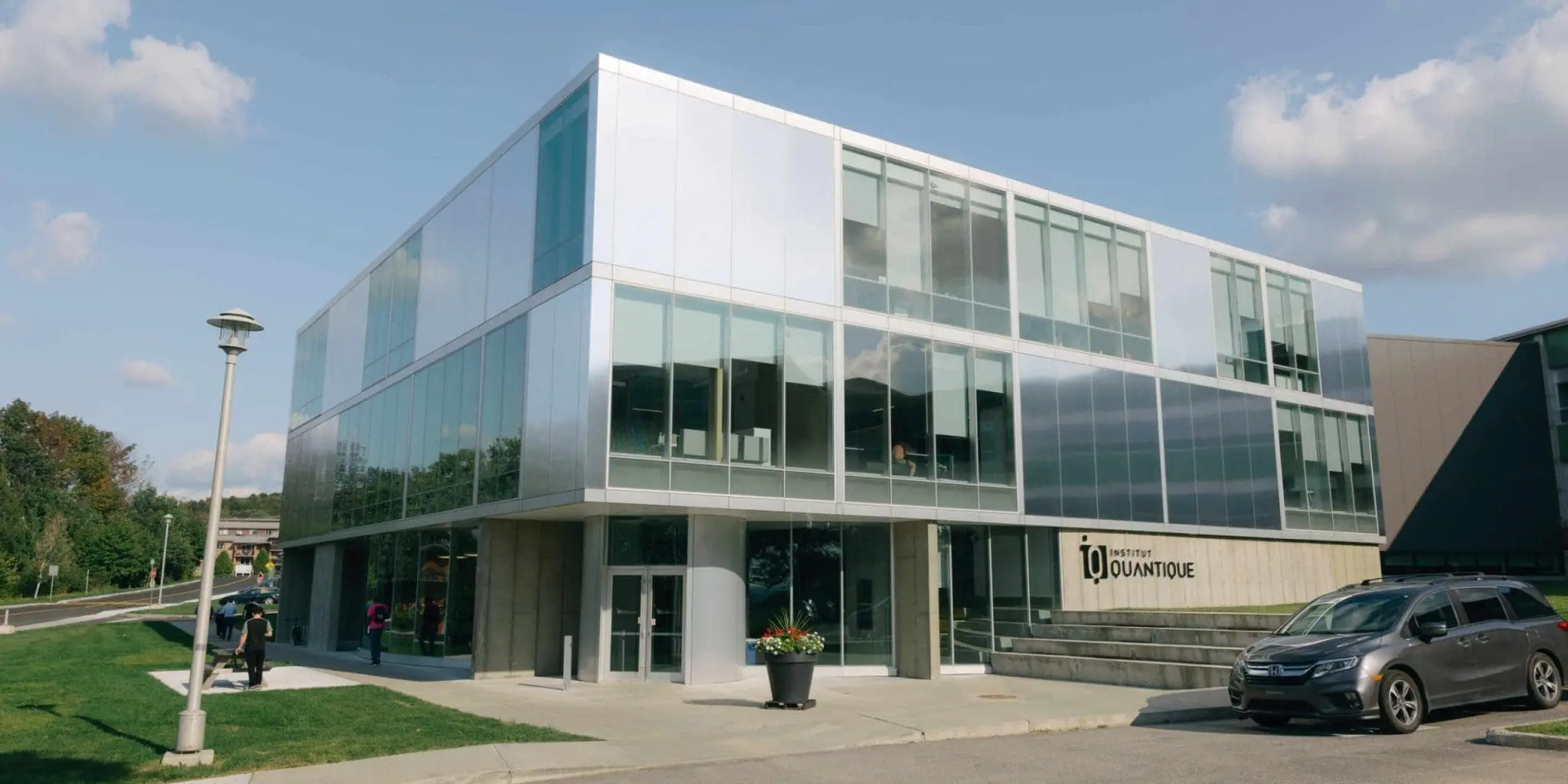
In Sherbrooke, Quebec, a hub for quantum technology is emerging, backed by the provincial government. Two startups, Quandela and Pasqal, are making strides in the field, positioning themselves against American giants. The Canadian team behind Quandela, founded by two former doctoral students of the Quantum Institute, is at the forefront of this technological revolution.
Their work focuses on developing computers that use particles instead of chips, enabling calculations to be performed faster than conventional computers. This breakthrough can potentially transform industries and revolutionize computing as we know it. As Sherbrooke becomes one of the world’s capitals of quantum technology, companies like Quandela and Pasqal lead the charge, paving the way for a future where quantum computers will be the norm.
The Rise of Quantum Computing in Quebec
In the heart of Quebec, Canada, a quiet revolution is taking place in quantum computing. Sherbrooke, a city 150 kilometers east of Montreal, has emerged as one of the world’s capitals of this cutting-edge technology. Supported by the Quebec government, start-ups like Quandela and Pasqal are making significant strides, positioning themselves against American giants in the industry.
The story began in the mid-2010s when two former doctoral students from the Quantum Institute of the Faculty of Science created a beer called India Quantum Ale. This unique brew is not only a nod to the city’s textile industry heritage but also a testament to Sherbrooke’s growing reputation as a hub for quantum physics. The technology has the potential to enable computers that use particles instead of chips, performing calculations at incredibly faster speeds than conventional computers.
The Quebec government’s support has been instrumental in fostering an ecosystem conducive to innovation and entrepreneurship in the field of quantum computing. This has led to the emergence of start-ups like Quandela, which is pushing the boundaries of what is possible with quantum technology. The company’s advancements have allowed it to position itself as a significant player in the industry, rivaling its American counterparts.
The implications of this technological breakthrough are far-reaching, with potential applications in fields such as medicine, finance, and cybersecurity. As the world moves towards an increasingly digital future, the developments taking place in Sherbrooke are poised to have a profound impact on the way we live and work.
The Science Behind Quantum Computing
At its core, quantum computing is based on the principles of quantum mechanics, which describe the behavior of particles at the atomic and subatomic level. In classical computing, information is stored in bits, which can have a value of either 0 or 1. However, in quantum computing, information is stored in qubits (quantum bits), which can exist in multiple states simultaneously.
This property, known as superposition, allows quantum computers to perform calculations at exponentially faster speeds than classical computers. Additionally, qubits are capable of entanglement, where the state of one qubit is directly correlated with the state of another, regardless of the distance between them. This enables quantum computers to process vast amounts of data in parallel, making them particularly suited for complex simulations and optimizations.
The development of quantum computing has required significant advances in materials science, as researchers have had to create materials that can maintain their quantum states long enough to perform calculations. This has led to breakthroughs in the development of superconducting materials, which are capable of conducting electricity with zero resistance at extremely low temperatures.
The Players in Quebec’s Quantum Ecosystem
Quandela and Pasqal are two start-ups that have emerged as key players in Quebec’s quantum ecosystem. Quandela, founded by former doctoral students from the Quantum Institute, has developed a unique approach to quantum computing based on the use of neutral atoms. This approach allows for greater control over the qubits, enabling more accurate calculations.
Pasqal, on the other hand, is focused on developing software solutions for quantum computers. The company’s founders, also former doctoral students from the Quantum Institute, have developed a platform that enables developers to create applications for quantum computers without requiring extensive knowledge of quantum mechanics.
The presence of these start-ups in Sherbrooke has created an ecosystem that fosters innovation and collaboration. Researchers from the University of Sherbrooke and other institutions are working closely with industry partners to develop new technologies and applications, further solidifying Quebec’s position as a leader in the field of quantum computing.
The Future of Quantum Computing
As the technology advances, the potential applications of quantum computing are vast and varied. In medicine, quantum computers could be used to simulate complex molecular interactions, leading to breakthroughs in drug discovery and development. In finance, quantum computers could be used to optimize portfolio management, reducing risk and increasing returns.
The cybersecurity implications of quantum computing are also significant, as the technology has the potential to break certain classical encryption algorithms. However, it also enables the creation of new, quantum-resistant encryption methods, ensuring that sensitive information remains secure in an increasingly digital world.
Quebec’s start-ups continue to push the boundaries of what is possible with quantum technology, and they are poised to profoundly impact the way we live and work. The future of quantum computing holds much promise, and Sherbrooke is at the forefront of this revolution.
External Link: Click Here For More


