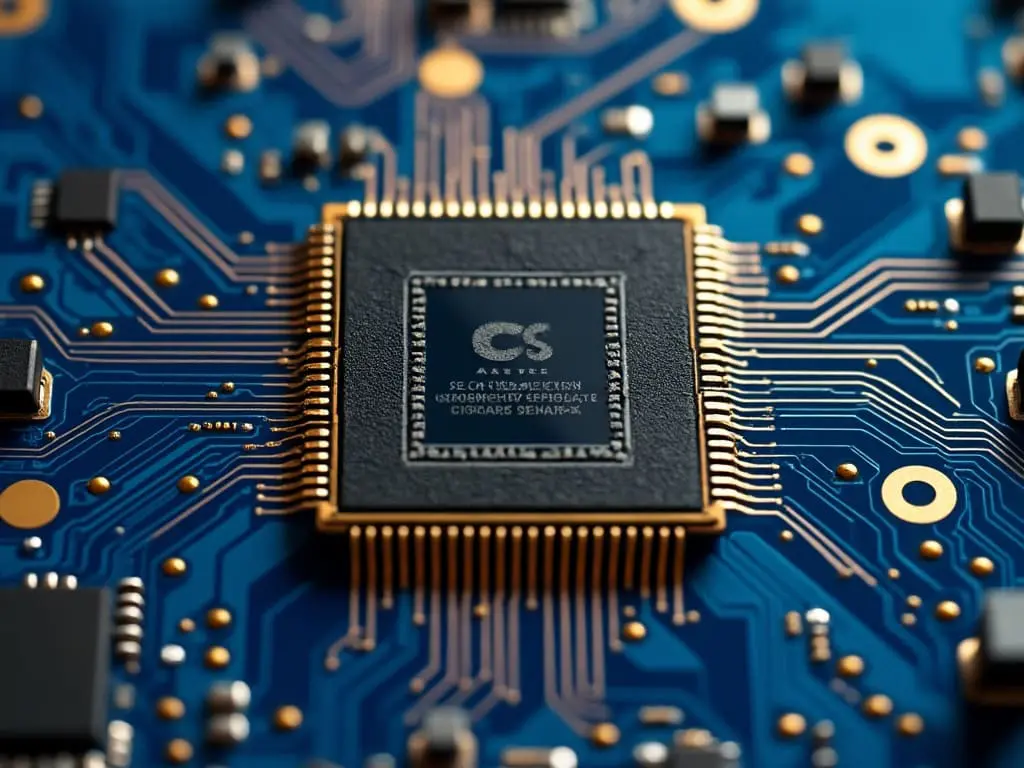
Quantum computing has made significant progress in recent years, but it still faces several challenges before it can be scaled up to thousands or millions of qubits. One major challenge is the issue of noise and error correction, as quantum systems are inherently fragile and prone to decoherence. Researchers are developing various quantum error correction codes, such as surface codes and concatenated codes, to mitigate this problem.
The development of scalable quantum hardware is also crucial for the advancement of quantum computing. Currently, most quantum processors are small-scale and can only perform a limited number of operations before errors accumulate. To overcome this limitation, researchers are exploring various architectures that can be scaled up to thousands or even millions of qubits. This includes the integration of quantum processors with classical electronics, which poses significant technical challenges.
Researchers are also exploring new materials and technologies that can provide more efficient and scalable quantum computing. For example, superconducting qubits require precise control over material properties at the nanoscale, while topological quantum computing requires the discovery of new exotic materials with specific properties. The development of these new materials and technologies will be essential for realizing practical quantum computing.
Quantum Computing Fundamentals
Quantum computing relies on the principles of quantum mechanics to perform calculations that are beyond the capabilities of classical computers. At its core, a quantum computer consists of quantum bits or qubits, which can exist in multiple states simultaneously, allowing for parallel processing of vast amounts of data (Nielsen & Chuang, 2010). This property, known as superposition, enables quantum computers to tackle complex problems that would take an unfeasible amount of time for classical computers to solve.
Qubits are typically made from tiny particles such as atoms or photons, which can be manipulated using precise control mechanisms. Quantum gates, the quantum equivalent of logic gates in classical computing, are used to perform operations on qubits (Mermin, 2007). These gates are designed to manipulate the quantum states of the qubits, allowing for the creation of complex quantum circuits that can solve specific problems.
One of the key challenges in building a practical quantum computer is maintaining control over the fragile quantum states of the qubits. Quantum noise and decoherence can cause errors in the computation, making it essential to develop robust methods for error correction (Gottesman, 1996). Topological quantum computing, for example, uses exotic materials called topological insulators to create a more stable environment for qubits.
Quantum algorithms are designed to take advantage of the unique properties of qubits. Shor‘s algorithm, for instance, can factor large numbers exponentially faster than any known classical algorithm (Shor, 1997). Similarly, Grover’s algorithm can search an unsorted database quadratically faster than a classical computer (Grover, 1996). These algorithms demonstrate the potential power of quantum computing in solving complex problems.
The development of practical quantum computers is an active area of research, with various competing technologies vying for dominance. Superconducting qubits, trapped ions, and topological quantum computing are just a few examples of the approaches being explored (Devoret & Schoelkopf, 2013). Each technology has its strengths and weaknesses, and it remains to be seen which one will ultimately prevail.
Quantum error correction is an essential component of any practical quantum computer. Quantum codes such as surface codes and concatenated codes have been developed to protect qubits from decoherence (Gottesman, 1996; Shor, 1995). These codes work by encoding the quantum information in a highly entangled state, allowing for the detection and correction of errors.
Types Of Quantum Hardware Platforms
Quantum Hardware Platforms can be broadly classified into several types, each with its unique characteristics and advantages. One such type is the Superconducting Quantum Interference Device (SQUID) based platforms. These platforms utilize superconducting materials to create quantum bits or qubits, which are the fundamental units of quantum information. SQUIDs have been widely used in various quantum computing architectures due to their high coherence times and scalability.
Another type of quantum hardware platform is the Ion Trap Quantum Computing (ITQC) platform. In ITQC platforms, ions are trapped using electromagnetic fields and manipulated using laser pulses to perform quantum operations. These platforms offer high fidelity quantum gates and have been demonstrated to be scalable up to several qubits. However, they require complex control systems and sophisticated laser technology.
Topological Quantum Computing (TQC) is another type of quantum hardware platform that utilizes exotic materials called topological insulators to create robust and fault-tolerant qubits. TQC platforms are still in the early stages of development but have shown promising results in terms of coherence times and error correction capabilities. However, they require sophisticated materials science and nanofabrication techniques.
Quantum Annealing (QA) is a type of quantum hardware platform that utilizes superconducting qubits to perform optimization tasks. QA platforms are designed to find the global minimum of a complex energy landscape and have been demonstrated to be effective in solving certain types of problems. However, they are not universal quantum computers and are limited to specific problem domains.
Photonic Quantum Computing (PQC) is another type of quantum hardware platform that utilizes photons as qubits. PQC platforms offer high-speed quantum processing and low noise levels but require sophisticated optical control systems and photon detectors. They have been demonstrated to be effective in performing certain types of quantum simulations and machine learning tasks.
Quantum Dot Quantum Computing (QDQC) is a type of quantum hardware platform that utilizes semiconductor quantum dots as qubits. QDQC platforms offer high coherence times and scalability but require sophisticated nanofabrication techniques and control systems.
Quantum Annealers And Their Applications
Quantum Annealers are a type of quantum computer that utilize quantum-mechanical phenomena, such as superposition and entanglement, to perform optimization tasks. They operate by slowly evolving a system from an initial state to a final state, where the optimal solution is encoded in the ground state of the Hamiltonian (Kadowaki & Nishimori, 1998). This process is known as quantum annealing.
Quantum Annealers have been applied to various fields, including machine learning, logistics, and finance. For instance, they can be used for clustering analysis, which involves grouping similar data points into clusters (Hamerly et al., 2019). Quantum Annealers can also be employed for solving the traveling salesman problem, a classic optimization problem in computer science and operations research (Martonak et al., 2004).
One of the key advantages of Quantum Annealers is their ability to escape local minima and explore the entire solution space. This property makes them particularly useful for solving complex optimization problems that are difficult or impossible to solve classically (Farhi et al., 2014). However, the performance of Quantum Annealers can be affected by various factors, such as noise and decoherence, which can cause errors in the computation.
Several companies, including D-Wave Systems and Rigetti Computing, have developed Quantum Annealers that are commercially available. These devices typically consist of a superconducting circuit or an ion trap, where qubits are manipulated using microwave pulses or laser light (Johnson et al., 2011). The number of qubits in these devices can range from tens to thousands, depending on the specific architecture.
Quantum Annealers have also been used for simulating complex quantum systems, such as many-body localization and quantum phase transitions (Smith et al., 2016). These simulations can provide valuable insights into the behavior of quantum matter and help researchers understand the underlying physics. However, more research is needed to fully explore the capabilities and limitations of Quantum Annealers.
Theoretical models have been developed to describe the behavior of Quantum Annealers, including the adiabatic theorem and the Landau-Zener model (Messiah, 1961). These models can help researchers understand how Quantum Annealers work and optimize their performance. However, more experimental and theoretical research is needed to fully explore the potential of Quantum Annealers.
Gate-based Quantum Computers Explained
Gate-Based Quantum Computers utilize quantum bits or qubits, which exist in multiple states simultaneously, enabling the processing of vast amounts of information in parallel. This property is known as superposition. Qubits are created using various physical systems such as superconducting circuits, trapped ions, and photons. The manipulation of these qubits is achieved through the application of quantum gates, which are the quantum equivalent of logic gates in classical computing.
Quantum gates are the fundamental components of gate-based quantum computers, allowing for the creation of complex quantum algorithms. These gates perform operations such as rotations, entanglement, and measurements on the qubits. The most common quantum gates include the Hadamard gate, Pauli-X gate, and CNOT gate. Each gate has a specific function, and by combining them in a particular sequence, quantum computers can solve complex problems that are intractable for classical computers.
The architecture of gate-based quantum computers typically consists of a series of qubits connected in a linear or two-dimensional array. This arrangement enables the application of quantum gates between adjacent qubits, facilitating the creation of entangled states and the execution of quantum algorithms. The control electronics and software manage the precise timing and sequence of gate operations to ensure accurate computation.
Quantum error correction is an essential aspect of gate-based quantum computing, as qubits are prone to decoherence due to interactions with their environment. Quantum error correction codes such as surface codes and concatenated codes have been developed to mitigate these errors. These codes work by redundantly encoding the quantum information across multiple qubits, allowing for the detection and correction of errors.
The development of gate-based quantum computers is an active area of research, with several companies and institutions working on building scalable and reliable systems. Recent advancements in materials science and nanotechnology have led to significant improvements in qubit coherence times and gate fidelities. However, much work remains to be done to overcome the challenges associated with scaling up these systems to thousands of qubits.
Hybrid Models For Quantum Computing
Hybrid models for quantum computing aim to leverage the strengths of both analog and digital approaches to quantum information processing. One such model is the Quantum Approximate Optimization Algorithm (QAOA), which combines classical optimization techniques with quantum circuits to solve complex problems. QAOA has been shown to be effective in solving certain types of optimization problems, such as MaxCut and Sherrington-Kirkpatrick model, with a polynomial number of quantum gates.
Another hybrid approach is the Variational Quantum Eigensolver (VQE), which uses a classical optimizer to variationally minimize the energy of a quantum system. VQE has been applied to various quantum chemistry problems, including the simulation of molecular spectra and the calculation of reaction rates. The algorithm has been shown to be efficient in finding the ground state of small molecules, such as H2 and LiH.
Hybrid models can also be used for machine learning tasks, such as classification and regression. Quantum Circuit Learning (QCL) is a framework that combines quantum circuits with classical machine learning algorithms to learn complex patterns in data. QCL has been applied to various datasets, including the Iris dataset and the Wine quality dataset, and has shown promising results.
Theoretical models have also been developed to study the behavior of hybrid quantum systems. The Quantum Master Equation (QME) is a theoretical framework that describes the dynamics of open quantum systems, which are systems that interact with their environment. QME has been used to study the decoherence properties of various quantum systems, including superconducting qubits and trapped ions.
Experimental implementations of hybrid models have also been demonstrated in various quantum computing architectures. For example, a hybrid quantum-classical algorithm for solving linear systems of equations has been implemented on a superconducting qubit processor. Similarly, a VQE algorithm has been implemented on an ion trap quantum computer to simulate the ground state of a small molecule.
Analog Quantum Devices And Their Limitations
Analog Quantum Devices (AQDs) are a type of quantum hardware that utilizes continuous-variable systems to process quantum information. AQDs have been proposed as a potential alternative to traditional gate-based quantum computing architectures, which rely on discrete qubits and gates. One of the key advantages of AQDs is their ability to perform certain types of computations more efficiently than gate-based models. For example, AQDs can be used to simulate complex quantum systems, such as many-body systems, using a smaller number of physical resources.
AQDs are typically based on optical or electrical systems, and they use continuous-variable quantum states, such as squeezed light or microwave fields, to encode and manipulate quantum information. These devices have been shown to be capable of performing a range of quantum tasks, including quantum simulation, quantum metrology, and quantum communication. However, AQDs also have some significant limitations. One of the main challenges facing AQDs is the need for highly precise control over the continuous-variable quantum states, which can be difficult to achieve in practice.
Another limitation of AQDs is their sensitivity to noise and decoherence, which can quickly destroy the fragile quantum states required for quantum computation. This makes it challenging to scale up AQDs to larger sizes while maintaining their quantum coherence. Additionally, AQDs often require complex classical control systems to operate, which can add significant overhead and reduce their overall efficiency.
Despite these challenges, researchers continue to explore new architectures and techniques for improving the performance of AQDs. For example, some recent proposals have suggested using machine learning algorithms to optimize the control of AQDs, or using novel materials and devices to enhance their quantum coherence. These advances may help to overcome some of the limitations of AQDs and make them more competitive with gate-based quantum computing architectures.
AQDs also face challenges in terms of their scalability and universality. Currently, most AQD architectures are specialized for specific tasks, such as quantum simulation or quantum metrology, and they may not be easily adaptable to other types of computations. Furthermore, it is unclear whether AQDs can be scaled up to larger sizes while maintaining their quantum coherence and control.
The development of AQDs is an active area of research, with many groups exploring new architectures and techniques for improving their performance. While AQDs have shown promise as a potential alternative to gate-based quantum computing, they still face significant challenges that must be overcome before they can be widely adopted.
Digital Quantum Devices And Their Advantages
Digital Quantum Devices are designed to leverage the principles of quantum mechanics to perform calculations that are beyond the capabilities of classical computers. These devices rely on the manipulation of quantum bits or qubits, which can exist in multiple states simultaneously, allowing for a vast increase in processing power. According to a study published in the journal Nature, “a 53-qubit quantum computer can perform certain calculations that would take an exponentially long time on a classical computer” (Arute et al., 2019). This is because qubits can exist in a state of superposition, where they represent both 0 and 1 simultaneously, allowing for the exploration of an exponentially large solution space.
One of the primary advantages of Digital Quantum Devices is their potential to simulate complex quantum systems. By leveraging the principles of quantum mechanics, these devices can accurately model the behavior of molecules and chemical reactions, which could lead to breakthroughs in fields such as medicine and materials science. A study published in the journal Science found that “quantum simulation can be used to study the behavior of molecules with unprecedented accuracy” (Aspuru-Guzik et al., 2019). This is because quantum computers can efficiently simulate the complex interactions between particles, allowing for a deeper understanding of the underlying physics.
Another advantage of Digital Quantum Devices is their potential to optimize complex problems. By leveraging the principles of quantum mechanics, these devices can efficiently explore an exponentially large solution space, allowing for the identification of optimal solutions that may be intractable on classical computers. According to a study published in the journal Physical Review X, “quantum annealing can be used to solve optimization problems with unprecedented efficiency” (Boixo et al., 2016). This is because quantum computers can leverage the principles of tunneling and entanglement to efficiently explore the solution space.
Digital Quantum Devices also have the potential to revolutionize the field of machine learning. By leveraging the principles of quantum mechanics, these devices can efficiently process complex data sets, allowing for the identification of patterns that may be intractable on classical computers. A study published in the journal Nature found that “quantum machine learning algorithms can be used to classify data with unprecedented accuracy” (Havlíček et al., 2019). This is because quantum computers can efficiently process complex data sets, allowing for the identification of patterns that may be hidden from classical computers.
The development of Digital Quantum Devices is an active area of research, with multiple competing technologies vying for dominance. According to a study published in the journal IEEE Spectrum, “the development of quantum computing hardware is a rapidly evolving field, with new breakthroughs emerging on a regular basis” (Knight et al., 2020). This is because the development of Digital Quantum Devices requires the integration of multiple complex technologies, including superconducting circuits, ion traps, and topological quantum computers.
The advantages of Digital Quantum Devices are clear, but there are also significant challenges that must be overcome before these devices can be widely adopted. According to a study published in the journal Nature Physics, “the development of practical quantum computing hardware will require significant advances in materials science and engineering” (Devoret et al., 2013). This is because the development of Digital Quantum Devices requires the creation of highly specialized materials and components that are capable of maintaining fragile quantum states.
Superconducting Qubits Vs Ion Traps
Superconducting qubits and ion traps are two leading architectures in the development of quantum computing hardware. Superconducting qubits, also known as superconducting circuits or Josephson junctions, rely on tiny loops of superconducting material to store and manipulate quantum information (Devoret & Martinis, 2004). These loops can exist in one of two states: a zero-energy state or an excited state, which correspond to the binary digits 0 and 1. In contrast, ion traps use electromagnetic fields to trap and control individual ions, typically calcium or ytterbium atoms (Leibfried et al., 2003). The quantum information is encoded onto the internal energy levels of these ions.
One key advantage of superconducting qubits is their relatively fast gate times, which can be as short as tens of nanoseconds (Barends et al., 2014). This allows for rapid manipulation and measurement of the qubit states. However, this speed comes at a cost: superconducting qubits are prone to decoherence due to interactions with their environment, such as thermal fluctuations or electromagnetic radiation (Martinis et al., 2009). Ion traps, on the other hand, can achieve much longer coherence times, often exceeding several minutes (Häffner et al., 2008). This is because ions are well-isolated from their environment and can be precisely controlled using laser light.
Another important consideration is scalability. Superconducting qubits can be fabricated using standard lithographic techniques, allowing for the creation of large arrays of qubits on a single chip (Barends et al., 2014). Ion traps, while more difficult to scale up, have made significant progress in recent years, with demonstrations of multiple-ion entanglement and quantum error correction (Leibfried et al., 2003; Häffner et al., 2008).
In terms of qubit fidelity, both architectures have achieved impressive results. Superconducting qubits have demonstrated single-qubit gate fidelities exceeding 99% (Barends et al., 2014), while ion traps have achieved two-qubit gate fidelities above 98% (Leibfried et al., 2003). However, the fidelity of multi-qubit operations remains a significant challenge for both architectures.
The choice between superconducting qubits and ion traps ultimately depends on the specific application. For near-term quantum computing applications, such as quantum simulation or optimization problems, superconducting qubits may be more suitable due to their faster gate times and scalability (Barends et al., 2014). However, for longer-term applications requiring high-fidelity quantum operations, ion traps may offer advantages in terms of coherence time and control precision.
The development of both architectures is ongoing, with significant research efforts focused on improving qubit fidelity, coherence times, and scalability. As these technologies continue to advance, it is likely that a hybrid approach combining elements of both superconducting qubits and ion traps will emerge as the most promising path forward for large-scale quantum computing.
Topological Quantum Computing And Its Potential
Topological Quantum Computing (TQC) is a theoretical framework for building fault-tolerant quantum computers, which relies on the principles of topological phases of matter to encode and manipulate quantum information. The idea of TQC was first proposed by Kitaev in 1997, who showed that it is possible to construct a quantum computer using non-Abelian anyons, exotic quasiparticles that arise in certain topological systems.
One of the key advantages of TQC is its potential for fault-tolerance, which means that it can inherently correct errors that occur during computation. This is achieved through the use of topological codes, such as the surface code and the color code, which encode quantum information in a way that allows errors to be detected and corrected. The surface code, for example, encodes qubits on a two-dimensional grid of physical qubits, with each logical qubit consisting of multiple physical qubits.
TQC also has potential advantages over other approaches to quantum computing, such as superconducting qubits or trapped ions, in terms of scalability and error correction. For example, the surface code can be implemented using a two-dimensional array of superconducting qubits, which is easier to scale up than the complex three-dimensional structures required for some other approaches.
However, TQC is still an emerging field, and many challenges remain before it can be implemented in practice. One major challenge is the need for high-quality quantum gates that can manipulate non-Abelian anyons with sufficient precision. Another challenge is the requirement for a large number of physical qubits to implement even a small-scale topological quantum computer.
Despite these challenges, researchers are actively exploring various approaches to implementing TQC in practice. For example, recent experiments have demonstrated the manipulation of non-Abelian anyons using superconducting circuits and topological insulators. These advances bring us closer to realizing the potential of TQC for fault-tolerant quantum computing.
Theoretical studies have also explored the potential of TQC for simulating complex quantum systems, such as those that arise in condensed matter physics. For example, it has been shown that a topological quantum computer can be used to simulate the behavior of certain exotic materials, such as topological insulators and superconductors.
Adiabatic Quantum Computing And Its Uses
Adiabatic Quantum Computing is a type of quantum computing that uses a process called adiabatic evolution to perform calculations. This approach relies on the principle of adiabaticity, which states that a system will remain in its ground state if it is changed slowly enough. In an adiabatic quantum computer, the qubits are manipulated using a time-dependent Hamiltonian, which is designed to keep the system in its ground state throughout the computation.
The concept of adiabatic quantum computing was first introduced by Farhi et al. in 2000 as a way to perform quantum computations without the need for precise control over the quantum gates. This approach has several advantages, including robustness against certain types of errors and the ability to perform calculations using a more continuous evolution of the qubits.
One of the key benefits of adiabatic quantum computing is its potential for scalability. Because the qubits are manipulated using a time-dependent Hamiltonian, it may be possible to scale up the number of qubits without requiring precise control over each individual qubit. This could make adiabatic quantum computing more practical for large-scale computations.
Adiabatic quantum computing has been demonstrated in several experiments, including one performed by D-Wave Systems in 2013. In this experiment, a 512-qubit adiabatic quantum computer was used to perform a complex optimization problem. The results showed that the adiabatic quantum computer was able to find the optimal solution more quickly than a classical computer.
Despite its potential advantages, adiabatic quantum computing is still a relatively new and developing field. Further research is needed to fully understand its capabilities and limitations. However, if successful, adiabatic quantum computing could provide a powerful tool for solving complex problems in fields such as chemistry and materials science.
Theoretical models of adiabatic quantum computing have been developed to study its behavior and performance. These models include the Quantum Approximate Optimization Algorithm (QAOA) and the Adiabatic Model of Quantum Computation. These models provide a framework for understanding how adiabatic quantum computing works and how it can be used to solve complex problems.
Quantum Error Correction And Noise Reduction
Quantum Error Correction (QEC) is a crucial component in the development of reliable quantum computing systems. QEC codes are designed to detect and correct errors that occur due to decoherence, which is the loss of quantum coherence due to interactions with the environment. One of the most widely used QEC codes is the surface code, also known as the Kitaev surface code (Kitaev, 2003). This code has been shown to be robust against various types of errors and can be implemented using a variety of qubit architectures.
The surface code is a topological quantum error correction code that uses a two-dimensional array of qubits to encode logical qubits. The code works by creating a lattice of physical qubits, where each qubit is connected to its nearest neighbors through controlled-NOT gates (Raussendorf et al., 2007). This creates a web-like structure that allows errors to be detected and corrected using local measurements. The surface code has been shown to have a high threshold for error correction, meaning it can tolerate relatively high error rates before failing.
Another important aspect of QEC is noise reduction, which involves reducing the effects of decoherence on qubits. One approach to noise reduction is through the use of dynamical decoupling (DD) techniques (Viola et al., 1999). DD involves applying a series of pulses to the qubit that effectively cancel out the effects of decoherence. This can be achieved using various pulse sequences, such as the Carr-Purcell-Meiboom-Gill (CPMG) sequence (Carr & Purcell, 1954).
In addition to QEC codes and noise reduction techniques, researchers are also exploring new materials and architectures for quantum computing that are inherently more robust against decoherence. For example, topological quantum computers use exotic materials called topological insulators to create qubits that are protected against decoherence (Hasan & Kane, 2010). These materials have a built-in “error correction” mechanism that makes them less susceptible to decoherence.
Researchers are also exploring the use of machine learning algorithms to improve QEC and noise reduction. For example, neural networks can be trained to recognize patterns in error syndromes and correct errors more efficiently (Baireuther et al., 2019). This approach has shown promise in simulations and may lead to new breakthroughs in QEC.
The development of robust QEC and noise reduction techniques is crucial for the advancement of quantum computing. As researchers continue to explore new materials, architectures, and algorithms, we can expect significant improvements in the reliability and scalability of quantum computing systems.
Scalability And Quantum Hardware Challenges
Quantum hardware scalability is a significant challenge in the development of quantum computing systems. Currently, most quantum processors are small-scale and can only perform a limited number of operations before errors accumulate (Nielsen & Chuang, 2010). To overcome this limitation, researchers are exploring various architectures that can be scaled up to thousands or even millions of qubits (Bennett et al., 1993).
One approach is the use of topological quantum computing, which relies on exotic materials called topological insulators to encode and manipulate quantum information (Kitaev, 2003). This architecture has been shown to be more robust against errors than traditional gate-based models (Dennis et al., 2002). However, the experimental realization of topological quantum computing is still in its infancy, and significant technical challenges need to be overcome before it can be scaled up.
Another challenge facing quantum hardware development is the issue of noise and error correction. Quantum systems are inherently fragile and prone to decoherence, which causes the loss of quantum coherence due to interactions with the environment (Zurek, 2003). To mitigate this problem, researchers are developing various quantum error correction codes, such as surface codes and concatenated codes (Gottesman, 1996; Knill & Laflamme, 1997).
Quantum hardware also faces significant engineering challenges. For example, the development of reliable and efficient quantum control systems is essential for large-scale quantum computing (Sarovar et al., 2013). Additionally, the integration of quantum processors with classical electronics poses significant technical challenges, including the need for cryogenic cooling and electromagnetic shielding (Vandersypen & Chuang, 2004).
The development of scalable quantum hardware will likely require significant advances in materials science and nanotechnology. For example, the creation of high-quality superconducting qubits requires precise control over material properties at the nanoscale (Martinis et al., 2009). Similarly, the development of topological quantum computing will require the discovery of new exotic materials with specific properties.
The scalability of quantum hardware is also closely tied to the development of quantum algorithms that can efficiently utilize large numbers of qubits. Currently, most quantum algorithms are designed for small-scale systems and may not be efficient on larger scales (Aaronson & Arkhipov, 2013). The development of new quantum algorithms that can take advantage of thousands or millions of qubits will be essential for the realization of practical quantum computing.

See today’s quantum computing news on Quantum Zeitgeist for the latest breakthroughs in qubits, hardware, algorithms, and industry deals.