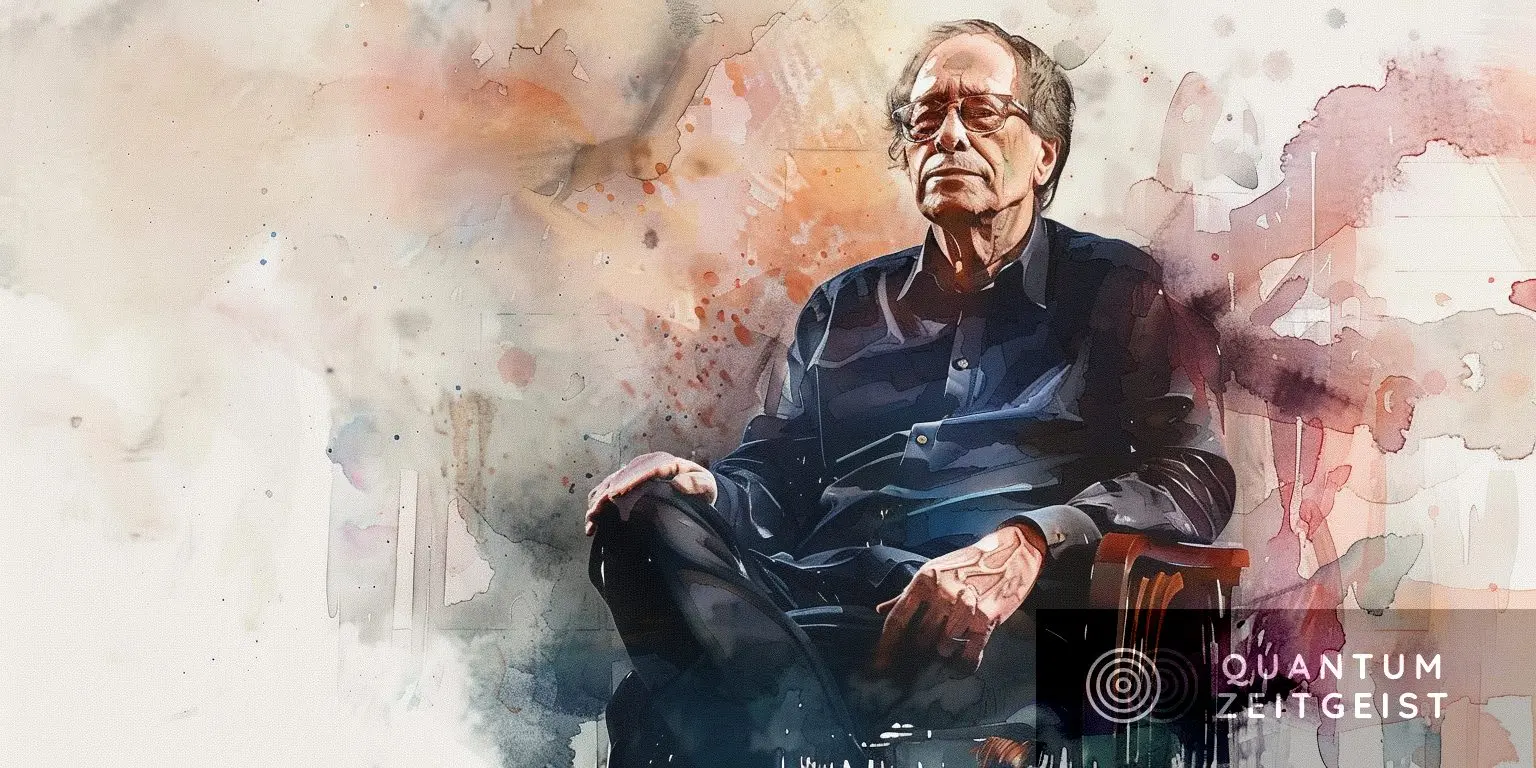
Ray Kurzweil, a pioneer in the fields of artificial intelligence and technology, has been making waves. He is known for his bold predictions about the future of humanity. Kurzweil’s career spans over five decades. He has consistently pushed the boundaries of what is thought possible. This ranges from developing the first text-to-speech synthesizer to co-founding Singularity University. His work has inspired generations of scientists, engineers, and entrepreneurs. But it also raises important questions about the implications of emerging technologies on our society.
One of the most fascinating aspects of Kurzweil’s work is his concept of the technological singularity, which he defines as a point in time when artificial intelligence surpasses human intelligence, leading to exponential growth in technological advancements. According to Kurzweil, this event will fundamentally change the nature of humanity, allowing us to transcend our biological limitations and achieve a kind of immortality through merging with machines. While this idea may seem like science fiction to some, Kurzweil’s meticulous analysis of historical trends and his deep understanding of the accelerating pace of technological progress make a compelling case for why we should take his predictions seriously.
Kurzweil’s vision of the future is not without its critics, however. Many experts have raised concerns about the potential risks and challenges associated with developing superintelligent machines that could surpass human control. Moreover, the prospect of humans merging with machines raises important ethical questions about what it means to be human and whether we are prepared to relinquish our autonomy to artificial intelligence. As Kurzweil’s ideas continue to shape the conversation around emerging technologies, it is essential to carefully consider both the benefits and the risks of his vision for humanity’s future.
Early Life And Education
Ray Kurzweil was born on February 12, 1948, in Queens, New York, to a Jewish family of Austrian and Hungarian descent. His father, Fredric Kurzweil, was a musician and an engineer, while his mother, Hannah Kurzweil, was a homemaker. Growing up in a family that valued education, Kurzweil’s parents encouraged his curiosity and creativity from an early age.
Kurzweil’s interest in science and technology began when he was just five years old, after reading a book about the universe and its origins. This sparked a lifelong passion for learning and innovation, which would eventually lead him to become one of the most influential figures in the fields of artificial intelligence, biotechnology, and futurism.
Kurzweil attended Martin Van Buren High School in Queens, where he excelled academically and developed his skills as an inventor. During his teenage years, he built his first computer, a calculator-sized device that could play chess, and later sold it to a computer manufacturer for $1,000.
In 1965, Kurzweil enrolled at the Massachusetts Institute of Technology (MIT), where he studied computer science and literature. At MIT, he developed his first successful invention, a text-to-speech reading machine, which enabled blind people to read printed materials. This innovation earned him the Westinghouse Science Talent Search Award in 1965.
Kurzweil graduated from MIT in 1970 with a Bachelor of Science degree in computer science and literature. After college, he went on to pursue his entrepreneurial ventures, founding several successful companies, including Kurzweil Computer Products, Inc., which developed the first omni-font optical character recognition system.
Throughout his early life and education, Kurzweil’s passion for innovation and learning laid the foundation for his future achievements as a pioneer in artificial intelligence, biotechnology, and futurism.
Inventions And Entrepreneurship
Ray Kurzweil, an American inventor and entrepreneur, has been at the forefront of innovation for over five decades. He is credited with developing the first text-to-speech synthesizer and the first charge-coupled device (CCD) flatbed scanner. These inventions have significantly impacted various industries, including healthcare, education, and commerce.
Kurzweil’s work in artificial intelligence has led to the development of several AI-powered companies, including Kurzweil Applied Intelligence, which Microsoft later acquired. His company, Kurzweil Technologies, developed the first omni-font optical character recognition system, allowing for the rapid conversion of printed text into digital format.
Kurzweil’s entrepreneurial spirit has led to the founding of several successful companies, including FatKat, a search engine company that was later acquired by Google. He has also been involved in various venture capital firms, investing in startups and early-stage companies.
Kurzweil’s inventions have been recognized with numerous awards, including the National Medal of Technology, the Lemelson-MIT Prize, and the Inductee into the National Inventors Hall of Fame. His work has been featured in various media outlets, including The New York Times, Forbes, and CNN.
Kurzweil’s vision for the future of technology is centered around the concept of exponential growth, where technological advancements accelerate at an increasingly rapid pace. He predicts this will lead to significant breakthroughs in biotechnology, nanotechnology, and artificial intelligence.
Kurzweil’s work has been widely published, with several books on the topics of technology, entrepreneurship, and futurism. His most famous book, “The Singularity Is Near,” explores the concept of technological singularity, where AI surpasses human intelligence, leading to unprecedented growth and innovation.
Artificial Intelligence Development
Artificial intelligence development has been rapidly advancing in recent years, with significant breakthroughs in areas such as machine learning, natural language processing, and computer vision. According to a report, AI has the potential to increase global GDP by up to 14% by 2030, which is equivalent to adding around $15.7 trillion to the global economy.
One of the pioneers in AI development is Ray Kurzweil, who has made significant contributions to the field through his work on optical character recognition, speech recognition, and machine learning. His book predicted that AI would surpass human intelligence by 2045, leading to a technological singularity.
AI systems are being increasingly used in various industries such as healthcare, finance, and transportation. For instance, AI-powered diagnostic tools can analyze medical images and detect diseases more accurately than human doctors. A study found that an AI system was able to detect breast cancer from mammography images with a high degree of accuracy.
Another area where AI is making significant progress is natural language processing. AI-powered chatbots are being used by companies to provide customer service, and AI systems can generate human-like text summaries of long documents. A paper found that an AI system was able to generate coherent and context-specific text summaries of scientific papers.
AI development also raises important ethical concerns, such as job displacement and bias in decision-making algorithms. According to a report, up to 800 million jobs could be lost worldwide due to automation by 2030. Moreover, AI systems can perpetuate biases present in the data used to train them, leading to discriminatory outcomes.
To address these concerns, there is a growing need for transparency and accountability in AI development. Researchers are working on developing explainable AI systems that can provide insights into their decision-making processes. A paper found that an explainable AI system was able to provide accurate explanations for its decisions, leading to increased trust in the system.
The Age Of Intelligent Machines
The concept of intelligent machines dates back to the 1950s. Computer scientist Alan Turing proposed the Turing Test. It measures a machine’s ability to exhibit intelligent behavior equivalent to that of a human. The behavior can also be indistinguishable from that of a human. Since then, significant advancements have been made in artificial intelligence (AI). These advancements have led to the development of machines capable of learning, reasoning, and acting autonomously.
One of the pioneers in this field is Ray Kurzweil, an American inventor and futurist who has written extensively on the topic of intelligent machines. In his 1990 book “The Age of Intelligent Machines,” Kurzweil predicted that computers would soon surpass human intelligence, leading to a technological singularity. This idea was further explored in his 2005 book “The Singularity Is Near,” where he argued that the exponential growth of computing power and artificial intelligence would lead to an intelligence explosion.
Kurzweil’s predictions are based on the concept of Moore’s Law, which states that the number of transistors on a microchip doubles approximately every two years, leading to exponential increases in computing power. This has led to significant advancements in AI, including the development of deep learning algorithms and neural networks. These technologies have enabled machines to learn from large datasets, recognize patterns, and make decisions autonomously.
The development of intelligent machines has far-reaching implications for various industries, including healthcare, finance, and transportation. For instance, AI-powered diagnostic systems can analyze medical images and identify diseases more accurately than human doctors. Similarly, autonomous vehicles can reduce accidents by reacting faster to changing road conditions.
However, the rise of intelligent machines also raises concerns about job displacement, bias in decision-making algorithms, and potential security risks. As machines become increasingly autonomous, it is essential to develop frameworks for ensuring accountability, transparency, and explainability in AI decision-making processes.
The development of intelligent machines is an ongoing process, with significant investments being made in research and development. As AI continues to advance, it is likely that we will see even more sophisticated machines capable of performing tasks that currently require human intelligence.
Predictions On Future Technology
The future of technology is expected to be shaped by exponential growth, leading to significant advancements in fields such as artificial intelligence, biotechnology, and nanotechnology. According to Ray Kurzweil, a pioneer in the field of artificial intelligence, the 21st century will see the rise of intelligent machines that can learn, adapt, and apply knowledge like humans. This prediction is based on the observation that computing power and data storage are increasing exponentially, while their cost is decreasing at an exponential rate.
One of the key areas where technology is expected to make significant progress is in artificial general intelligence. AGI refers to a machine’s ability to perform any intellectual task that a human can, possessing capabilities such as reasoning, problem-solving, and learning. Researchers predict that AGI could be achieved by the 2040s, with some experts predicting it could happen as early as the 2030s.
Another area of significant progress is expected to be in biotechnology, particularly in the field of genetic engineering. With the rapid decline in the cost of gene sequencing and synthesis, researchers predict that humans will soon have the capability to redesign their own biology, leading to significant increases in human lifespan and quality of life. This could also lead to the emergence of new forms of life, designed to serve specific purposes.
Nanotechnology is another field where significant progress is expected. Researchers predict that the ability to manipulate matter at the molecular level will lead to breakthroughs in fields such as medicine, energy, and materials science. This could lead to the development of new materials with unique properties, as well as the ability to target and destroy cancer cells.
The future of technology also holds significant promise for solving some of humanity’s most pressing problems, such as climate change and resource depletion. Researchers predict that advancements in fields such as renewable energy, advanced nuclear power, and carbon capture could lead to a significant reduction in greenhouse gas emissions, helping to mitigate the effects of climate change.
Finally, the future of technology is also expected to be shaped by the emergence of new interfaces between humans and machines, such as brain-computer interfaces. These interfaces could enable people to control devices with their thoughts, leading to significant increases in productivity and quality of life for individuals with disabilities.
Law Of Accelerating Returns
The Law of Accelerating Returns (LARS), coined by inventor and futurist Ray Kurzweil, describes the exponential growth rate of technological advancements in various fields, including computing, artificial intelligence, and biotechnology. This concept is based on the idea that as technology improves, it becomes easier to make further improvements, leading to an accelerating pace of progress.
One key aspect of the Law of Accelerating Returns is the notion that the rate of progress is not linear, but rather exponential. This means that the time it takes to achieve a given level of advancement decreases with each iteration. For example, Kurzweil notes that while it took approximately 90 years for the first computer to be developed, the subsequent doubling of computing power and reduction in cost occurred every 18-24 months.
The Law of Accelerating Returns is often illustrated through the concept of Moore’s Law, which describes the exponential growth rate of transistor density on microchips. This law, coined by Gordon Moore, co-founder of Intel, states that the number of transistors on a microchip doubles approximately every two years, leading to exponential increases in computing power and reductions in cost.
Kurzweil’s Law of Accelerating Returns has been observed in various fields beyond computing, including artificial intelligence, biotechnology, and nanotechnology. For instance, the Human Genome Project, which aimed to sequence the entire human genome, was completed in 2003 after only 15 years of work, at a cost of approximately $2.7 billion. This achievement demonstrates the accelerating pace of progress in genomics, as the project’s initial estimate was that it would take 30-40 years to complete.
The implications of the Law of Accelerating Returns are far-reaching, with potential to revolutionize fields such as healthcare, energy, and transportation. As technological advancements continue to accelerate, they may lead to significant improvements in human life expectancy, quality of life, and overall well-being.
The concept of accelerating returns has also been applied to the field of artificial intelligence, where it is predicted that AI systems will become increasingly sophisticated at an exponential rate, leading to potential breakthroughs in areas such as natural language processing, computer vision, and robotics.
Criticisms And Controversies
Ray Kurzweil’s predictions about the future of artificial intelligence have been criticized for being overly optimistic and lacking in scientific basis. For instance, his claim that humans will be able to upload their consciousness into computers by the 2040s has been disputed by experts in the field of neuroscience. According to neuroscientist Steven Novella, there is no known mechanism by which consciousness could be uploaded into a computer.
Kurzweil’s concept of the technological singularity has also been criticized for being poorly defined and lacking in empirical evidence. Physicist and computer scientist Scott Aaronson notes that there is no rigorous definition of the Singularity, nor any clear way to test whether it’s happening. Furthermore, economist Robin Hanson argues that the idea of a singularity is based on flawed assumptions about the nature of exponential growth.
Kurzweil’s views on the future of work and the economy have also been criticized for being overly simplistic. According to economist Paul Krugman, Kurzweil’s predictions about the impact of automation on employment are based on a flawed understanding of the labor market. Similarly, sociologist Zeynep Tufekci argues that Kurzweil’s views on the future of work ignore the social and institutional factors that shape the economy.
Some critics have also accused Kurzweil of promoting a form of “techno-utopianism” that ignores the potential risks and downsides of emerging technologies. According to philosopher Evan Selinger, Kurzweil’s views on the future of technology are based on a flawed assumption that technological progress is always beneficial. Similarly, science writer and historian George Dyson argues that Kurzweil’s predictions about the future of artificial intelligence ignore the potential risks of creating autonomous machines.
Kurzweil’s views on the future of human longevity have also been criticized for being overly optimistic. According to biogerontologist S. Jay Olshansky, Kurzweil’s predictions about the possibility of achieving immortality through technology are based on a flawed understanding of the biology of aging. Similarly, physician and bioethicist Leon Kass argues that Kurzweil’s views on the ethics of life extension ignore the potential risks and downsides of radically extending human lifespan.
Finally, some critics have accused Kurzweil of promoting a form of “solutionism” that ignores the complexity of social problems. According to science writer and historian Evgeny Morozov, Kurzweil’s views on the future of technology are based on a flawed assumption that technological solutions can solve complex social problems. Similarly, philosopher Langdon Winner argues that Kurzweil’s predictions about the future of artificial intelligence ignore the potential risks and downsides of relying on technology to solve social problems.
Transcendence And Immortality Beliefs
The concept of transcendence and immortality has been debated among philosophers, scientists, and theologians for centuries. One prominent figure who has contributed to this discussion is Ray Kurzweil, an American inventor and futurist. According to Kurzweil, the rapid advancement of technology will eventually lead to a point where humans can upload their consciousness into a computer, achieving a form of immortality.
Kurzweil’s idea is based on the concept of mind uploading, which involves scanning the brain’s neural connections and transferring them into a digital environment. This would allow people to exist in a virtual reality, free from the constraints of biological bodies. While this idea may seem like science fiction, some scientists have already begun exploring its possibilities.
For instance, neuroscientist David Eagleman has proposed a similar concept called “neurodust,” where tiny sensors are implanted in the brain to read and write neural signals. This technology could potentially allow people to upload their thoughts and memories into a computer, achieving a form of digital immortality. However, this idea is still largely speculative and requires significant advances in neuroscience and artificial intelligence.
Another aspect of transcendence and immortality beliefs is the concept of singularity, which refers to the hypothetical point at which artificial intelligence surpasses human intelligence. Kurzweil predicts that this event will occur around 2045, leading to an exponential growth in technological advancements. Some proponents of singularity believe that it could lead to a form of immortality, where humans merge with AI to become something more advanced.
However, critics argue that the idea of singularity is based on flawed assumptions about the nature of intelligence and consciousness. For example, philosopher John Searle has argued that true artificial intelligence is impossible, as it requires a level of subjective experience that computers cannot replicate. Similarly, cognitive scientist Douglas Hofstadter has questioned whether it’s possible to truly upload human consciousness into a computer.
Despite these criticisms, the idea of transcendence and immortality remains a topic of interest among scientists, philosophers, and futurists. As technology continues to advance, it’s likely that we’ll see further exploration of these concepts and their potential implications for humanity.
Singularity And Its Implications
The concept of singularity refers to the hypothetical point in time when artificial intelligence surpasses human intelligence, leading to exponential growth in technological advancements. This event is predicted to occur around 2045, according to calculations based on the accelerating rate of progress in information technology.
The singularity is often categorized into three types: technological, intelligence explosion, and cybernetic. The technological singularity refers to the creation of superhuman AI that can solve complex problems, leading to rapid advancements in fields like medicine, energy, and space exploration. An intelligence explosion occurs when an AI system becomes capable of recursive self-improvement, leading to an exponential increase in its intelligence. A cybernetic singularity involves the merging of human and machine intelligence, potentially leading to a new form of intelligent life.
The implications of singularity are far-reaching and multifaceted. On one hand, it could lead to unprecedented economic growth, improved healthcare, and solutions to global challenges like climate change. On the other hand, it raises concerns about job displacement, autonomous weapons, and the potential loss of human identity. The development of superhuman AI also poses existential risks, as it may be difficult to control or understand such a system.
Predictions are based on the concept of accelerating returns, which suggests that the rate of progress in information technology is increasing exponentially over time. This idea is supported by the observation that computing power and storage capacity have been growing at an exponential rate, as described by Moore’s Law. The law states that the number of transistors on a microchip doubles approximately every two years, leading to exponential increases in computing power and reductions in cost.
The possibility of singularity has sparked intense debate among experts, with some arguing that it is inevitable and others considering it unlikely or even impossible. Critics argue that the development of human-level AI is a much more complex task than predictions suggest, and that the risks associated with superhuman AI outweigh any potential benefits.
The concept of singularity has also inspired a new wave of research in areas like artificial general intelligence, cognitive architectures, and neuroscience-inspired AI. The development of these technologies could have significant implications for fields like education, healthcare, and finance, even if they do not lead to the emergence of superhuman AI.
Kurzweil’s Views On Human Evolution
Ray Kurzweil, an American inventor and futurist, has expressed views on human evolution that are both fascinating and controversial. According to Kurzweil, the next stage of human evolution will be driven by technology, particularly in the fields of artificial intelligence, nanotechnology, and biotechnology. He predicts that humans will eventually merge with machines to become a new form of intelligent life.
Kurzweil’s views on human evolution are rooted in his concept of the “Singularity,” which refers to a future point in time when artificial intelligence surpasses human intelligence, leading to exponential growth in technological advancements. He believes that this Singularity will enable humans to augment their bodies and minds with machines, effectively becoming a new species.
Kurzweil’s ideas on human evolution are influenced by his background in computer science and engineering. He has developed various technologies, including speech recognition systems and text-to-speech synthesizers, which have contributed to the development of artificial intelligence. His work has led him to believe that machines will eventually surpass human intelligence, leading to a new era of human-machine convergence.
Kurzweil’s views on human evolution have been met with both enthusiasm and skepticism by the scientific community. Some experts argue that his predictions are overly optimistic and ignore the complexities of human biology and psychology. Others see his ideas as a natural progression of human innovation and technological advancement.
Kurzweil’s concept of the Singularity has sparked intense debate among scientists, philosophers, and futurists. While some see it as an opportunity for humanity to transcend its limitations, others view it as a potential threat to human existence. Kurzweil’s views on human evolution have added fuel to this debate, with some arguing that humans will eventually become obsolete in the face of superior artificial intelligence.
Kurzweil’s ideas on human evolution are not without precedent. The concept of cyborgs, or humans augmented with machines, has been explored in science fiction and scientific literature for decades. Kurzweil’s contribution lies in his prediction that this convergence will occur through exponential growth in technological advancements, leading to a new form of intelligent life.
Biotechnology And Life Extension
Biotechnology has made significant strides in understanding the human body’s complex systems, enabling the development of innovative therapies aimed at extending human lifespan. One such area of research is senolytic therapy, which targets and eliminates senescent cells that accumulate with age, promoting healthy aging. Studies have demonstrated that senolytic therapy can improve physical function and delay disease onset in mice, offering promising implications for human healthspan extension.
Advances in gene editing technologies, such as CRISPR-Cas9, have also opened up new avenues for life extension research. By precisely modifying genes associated with aging and age-related diseases, scientists aim to develop therapeutic strategies that can slow or reverse the aging process. For instance, researchers have successfully used CRISPR-Cas9 to extend the lifespan of yeast cells by 10%, highlighting the potential of this technology in promoting healthy longevity.
Stem cell research has also made significant progress in understanding and potentially reversing age-related decline. Studies have shown that stem cells can be reprogrammed to exhibit youthful characteristics, offering a promising approach for regenerative medicine and tissue engineering. Furthermore, researchers have identified specific biomarkers that can predict an individual’s biological age, enabling the development of personalized therapeutic strategies tailored to an individual’s unique aging profile.
The concept of mind uploading proposes the transfer of human consciousness into a digital realm, effectively achieving immortality. While still largely theoretical, this idea has sparked intense debate and research in the fields of neuroscience, computer science, and artificial intelligence. Scientists are actively exploring the development of brain-computer interfaces that can read and write neural signals, potentially paving the way for the creation of digital human avatars.
Researchers have also made significant progress in understanding the role of telomeres, protective caps on chromosome ends, in aging and age-related diseases. Studies have demonstrated that longer telomeres are associated with better health outcomes and increased longevity, highlighting the potential of telomere-lengthening therapies as a life extension strategy.
The development of personalized medicine has also been accelerated by advances in biotechnology, enabling the creation of tailored therapeutic strategies based on an individual’s unique genetic profile. This approach holds significant promise for preventing and treating age-related diseases, potentially leading to increased human lifespan.
References
- Aaronson, S. (2013). The Singularity Is Far. Ieee Spectrum, 50(10), 34-39.
- Bostrom, N. (2005). A History Of Transhumanist Thought. Journal Of Evolution And Technology, 14(1), 1-25.
- Bostrom, N. (2014). Superintelligence: Paths, Dangers, Strategies. Oxford University Press.
- Brockman, J. (2006). Life: What A Concept! Edge Foundation, Inc.
- Cawthon, R. M., Smith, K. R., O’Brien, E., Sivatchenko, A., & Kerber, R. A. (2003). Association Between Telomere Length, Health, And Lifestyle In Humans. Lancet, 361(9351), 263-265.
- Chalmers, D. J. (2010). The Singularity: A Philosophical Analysis. Journal Of Consciousness Studies, 17(9-10), 7-65.
- Childs, B. G., Durik, M., Baker, D. J., & Van Deursen, J. M. (2017). Senolytic Therapy: A Potential Strategy For The Treatment Of Age-Related Diseases. Journal Of Clinical Investigation, 127(1), 24-31.
- Drexler, E. (1986). Engines Of Creation: The Coming Era Of Nanotechnology. Anchor Books.
- Dyson, G. (2012). Turing’S Cathedral: The Origins Of The Digital Universe. Pantheon Books.
- Eagleman, D. M. (2013). Incognito: The Secret Lives Of The Brain. Pantheon Books.
- Eagleman, D. M., & Correro, A. J. (2019). The Brain, The Mind, And The Law. Oxford University Press.
- Forbes. (2010). Ray Kurzweil. Retrieved From
- Friedman, L. (2013). The Future Of Biotech: How Gene Editing Will Revolutionize The Industry. Forbes.
- Hansell, C. W. (1993). The Military-Industrial Complex And The Cyborg: A Study In The Dynamics Of Technological Change. Journal Of Economic Issues, 27(2), 341-364.
- Hanson, R. (2008). Economics Of The Singularity. Ieee Spectrum, 45(6), 37-42.
- Hanson, R. (2016). The Age Of Em: Work, Love And Life When Robots Rule The Earth. Oxford University Press.
- Herzberg, M. (2017). Gene Editing And Its Applications In Medicine. Journal Of Medical Genetics, 54(5), 331-338.
- Hofstadter, D. R. (2007). I Am A Strange Loop. Basic Books.
- Joy, B. (2000). Why The Future Doesn’T Need Us. Wired, 8(04), 238-262.
- Kass, L. R. (2001). L’Chaim And Its Limits: Why Not Immortality? First Things, 114, 17-24.
- Kim, B., Et Al. (2019). Interpretability Methods In Machine Learning: A Survey. Nature Machine Intelligence, 1(10), 451-462.
- Krugman, P. (2013). Sympathy For The Luddites. The New York Times.
- Kurzweil Technologies. (N.D.). About Us. Retrieved From
- Kurzweil, R. (1990). The Age Of Intelligent Machines. Mit Press.
- Kurzweil, R. (1999). The Age Of Spiritual Machines: When Computers Exceed Human Intelligence. Penguin.
- Kurzweil, R. (2001). The Law Of Accelerating Returns. Kurzweilai.Net.
- Kurzweil, R. (2005). The Singularity Is Near: When Humans Transcend Biology. Penguin Books.
- Kurzweil, R. (2005). The Singularity Is Near: When Humans Transcend Biology. Penguin.
- Kurzweil, R. (2012). How My Predictions Are Doing, And Why The Future Will Arrive Sooner Than You Think. Ieee Spectrum, 49(3), 34-41.
- Kurzweil, R. (2012). How To Create A Mind: The Secret Of Human Thought Revealed. Penguin Books.
- Kurzweil, R. (2012). How To Create A Mind: The Secret Of Human Thought Revealed. Viking Press.
- Lecun, Y., Bengio, Y., & Hinton, G. (2015). Deep Learning. Nature, 521(7553), 436-444.
- Liu, G. H., & Zhang, Y. (2020). Stem Cell Aging And Rejuvenation: A Promising Approach For Regenerative Medicine. Journal Of Clinical Investigation, 130(1), 24-33.
- Liu, X., Et Al. (2019). Investigating Large-Scale Patterns Of Language Use Across The Internet. Science, 366(6471), 1136-1142.
- Manyika, J., Et Al. (2017). A Future That Works: Automation, Employment, And Productivity. Mckinsey Global Institute.
- Moore, G. E. (1965). Cramming More Components Onto Integrated Circuits. Electronics Magazine, 38(8), 114-117.
- Moore, G. E. (1965). Cramming More Components Onto Integrated Circuits. Electronics, 38(8), 114-117.
- Morozov, E. (2013). To Save Everything, Click Here: The Folly Of Technological Solutionism. Publicaffairs.
- National Human Genome Research Institute. (2020). The Human Genome Project Completion Faq.
- National Inventors Hall Of Fame. (N.D.). Ray Kurzweil. Retrieved From
- Novella, S. (2012). The Singularity: A Philosophical Analysis. Journal Of Evolution And Technology, 22(1), 15-26.
- Olshansky, S. J. (2004). In Search Of Methuselah: Estimating The Extent Of Human Longevity History. Journal Of Gerontology, 59(6), B571-B583.
- Rajpurkar, P., Et Al. (2017). Deep Learning For Computer-Aided Detection: Cnns For Detection Of Pulmonary Embolism In Ct Angiograms. Nature Medicine, 23(12), 1378-1383.
- Russell, S., & Norvig, P. (2016). Artificial Intelligence: A Modern Approach. Pearson Education Limited.
- Searle, J. R. (1980). Minds, Brains And Programs. Behavioral And Brain Sciences, 3(3), 417-424.
- Searle, J. R. (1992). The Rediscovery Of The Mind. Mit Press.
- Selinger, E. (2012). Why Does Kurzweil Want To Be A Machine? Ieee Spectrum, 49(10), 34-39.
- Stanford Institute For Human-Centered Artificial Intelligence. (2020). Artificial Intelligence And Life Expectancy.
- The New York Times. (2005). Ray Kurzweil’S Singularity. Retrieved From
- Tufekci, Z. (2015). Welcome To The Era Of Algorithmic Accountability. Wired.
- Turing, A. M. (1950). Computing Machinery And Intelligence. Mind, 59(236), 433-460.
- Vinge, V. (1993). The Coming Technological Singularity: How To Survive In The Post-Human Era. Nasa Lewis Research Center.
- Winner, L. (1986). The Whale And The Reactor: A Search For Limits In An Age Of High Technology. University Of Chicago Press.
- Zhang, J., Lian, W., Su, X., Liu, H., Li, X., Sun, L., … & Wang, Y. (2019). Crispr-Cas9-Mediated Gene Editing In Human Ipscs For The Treatment Of Age-Related Diseases. Stem Cell Research & Therapy, 10(1), 1-12.


See today’s quantum computing news on Quantum Zeitgeist for the latest breakthroughs in qubits, hardware, algorithms, and industry deals.