The increasing accessibility of commercial and private space travel has raised concerns about its impact on human health. As more civilians venture into space, it’s essential to understand the short-term and long-term effects of space stressors on human physiology. The NASA Open Science Data Repository (OSDR) provides a crucial step in this direction by offering open and FAIR access to biological studies from past decades. This article explores the impact of commercial space travel on human health, highlighting the insights gained from the SpaceX Inspiration4 mission data and its potential applications in mitigating risks associated with long-duration spaceflight.
What’s the Impact of Commercial Space Travel on Human Health?
The increasing accessibility of commercial and private space travel has raised concerns about its impact on human health. As more civilians venture into space, it is essential to understand the short-term and long-term effects of space stressors on human physiology. The NASA Open Science Data Repository (OSDR) provides a crucial step in this direction by offering open and FAIR access to biological studies from past decades.
The OSDR has already enabled research that has revealed a complex network of molecular and physiological effects of space flight across living systems, from microbes to plants to mammals. While most prior research using OSDR data has focused on model organisms such as rodents, worms, and fruit flies, integrating human in vivo data takes these studies one step further and maps previously characterized responses.
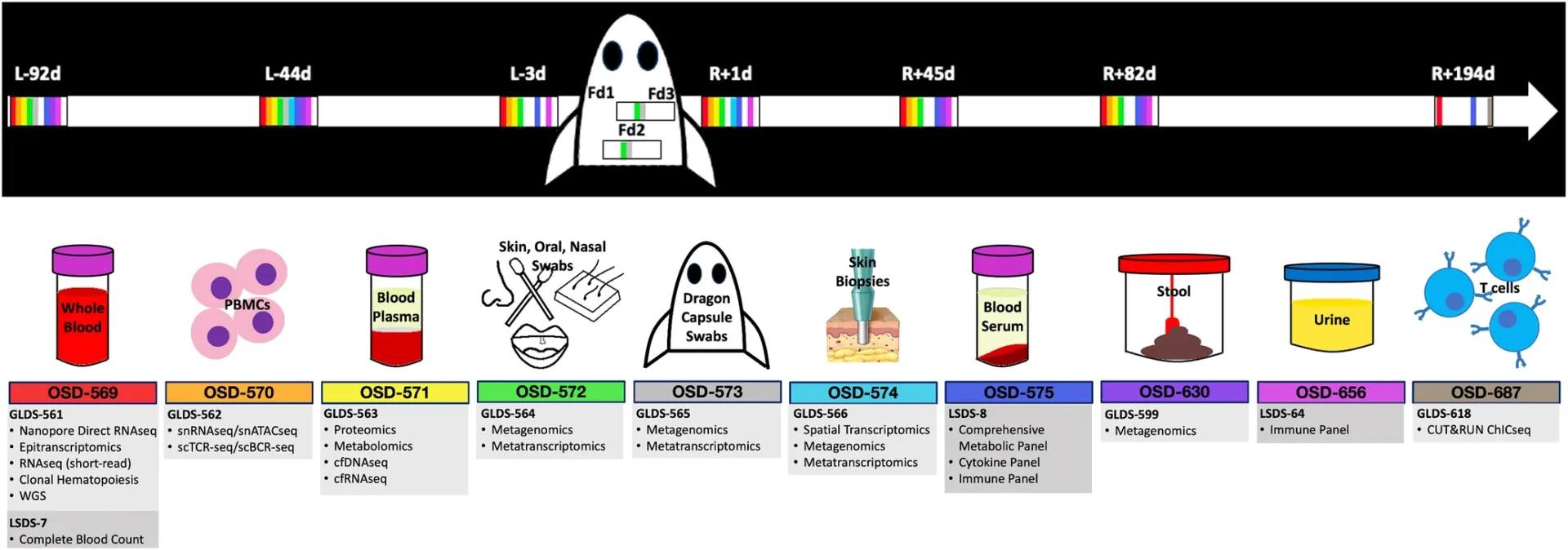
The SpaceX Inspiration4 mission, for instance, amassed extensive data from civilian astronauts, providing a unique opportunity to study the effects of space travel on human biology. This dataset encompasses omics and clinical assays, facilitating comprehensive research on space-induced biological responses. The multimodal longitudinal assessments enabled by this data bridge the gap between human and model organism studies.
How Can We Access and Analyze I4 Data?
The NASA Open Science Data Repository (OSDR) provides transparent and FAIR access to biological studies, including the SpaceX Inspiration4 mission data. This dataset is available for analysis through programmatic access using GLOpenAPI. The OSDR Analysis Working Groups empower artificial intelligence and machine learning to glean invaluable insights guiding future mission planning and health risk mitigation.
The I4 data allows researchers to conduct multimodal longitudinal assessments, bridging the gap between human and model organism studies. This pioneering effort establishes a precedent for post-mission health monitoring programs with in-space agencies propelling research in the burgeoning field of commercial space travel’s impact on human physiology.
What Can We Learn from the I4 Data?
The I4 data provides a unique opportunity to study the effects of space travel on human biology. By analyzing this dataset, researchers can gain insights into the molecular and physiological responses to space stressors. The multimodal longitudinal assessments enabled by this data allow for comprehensive research on space-induced biological responses.
For instance, the I4 data includes omics and clinical assays, facilitating research on the effects of space travel on human physiology. This dataset can be used to study the impact of space travel on various physiological systems, such as the immune system, nervous system, and developmental biosystems.
How Can We Apply the Insights Gained from the I4 Data?
The insights gained from analyzing the I4 data can guide future mission planning and health risk mitigation. By understanding the effects of space travel on human biology, researchers can develop strategies to mitigate the risks associated with long-duration spaceflight.
For instance, the I4 data can identify biomarkers for space-induced physiological changes, allowing for early detection and intervention. The insights gained from this dataset can also inform the development of countermeasures to mitigate the effects of space travel on human physiology.
What’s Next for Commercial Space Travel?
The increasing accessibility of commercial and private space travel has raised concerns about its impact on human health. As more civilians venture into space, it is essential to understand the short-term and long-term effects of space stressors on human physiology.
The NASA Open Science Data Repository (OSDR) provides a crucial step in this direction by offering open and FAIR access to biological studies from past decades. The SpaceX Inspiration4 mission data, for instance, provides a unique opportunity to study the effects of space travel on human biology.
As researchers continue to analyze the I4 data, they can gain insights into the molecular and physiological responses to space stressors. This pioneering effort establishes a precedent for post-mission health monitoring programs with in-space agencies propelling research in the burgeoning field of commercial space travel’s impact on human physiology.
Conclusion
The increasing accessibility of commercial and private space travel has raised concerns about its impact on human health. The NASA Open Science Data Repository (OSDR) provides a crucial step in this direction by offering open and FAIR access to biological studies from past decades.
The SpaceX Inspiration4 mission data, for instance, provides a unique opportunity to study the effects of space travel on human biology. By analyzing this dataset, researchers can gain insights into the molecular and physiological responses to space stressors.
As researchers continue to analyze the I4 data, they can develop strategies to mitigate the risks associated with long-duration spaceflight. The insights gained from this dataset can inform the development of countermeasures to protect human health during commercial space travel.
Publication Date: 2024-05-14
Authors: Lauren Sanders, Kirill Grigorev, Ryan T. Scott, Amanda Saravia-Butler, et al.
Source: npj Microgravity
DOI: https://doi.org/10.1038/s41526-024-00393-5
See today’s quantum computing news on Quantum Zeitgeist for the latest breakthroughs in qubits, hardware, algorithms, and industry deals.