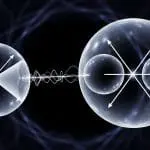
Scientists have developed a new method to simulate complex quantum systems, allowing for more accurate predictions of their behavior over long periods of time. This breakthrough could lead to advancements in fields such as materials science and chemistry.
The new approach uses “scrambling transforms” to simplify the representation of highly entangled systems, making them easier to simulate. This technique is combined with a “flow-based method” that can accurately predict the behavior of interacting fermionic quantum many-body systems over intermediate and long times.
This development has significant implications for our understanding of quantum matter and could lead to new technologies in fields such as energy storage and superconductivity. Companies such as IBM and Google are already working on developing quantum computers, which could benefit from this research.
The study’s findings have been published in the journal Nature Physics, and experts believe that this breakthrough could pave the way for further innovations in the field of quantum simulation.
Simulating the dynamics of quantum many-body systems is a notoriously difficult task, especially when dealing with interacting fermions. The complexity arises from the exponential growth of the Hilbert space with system size, making it challenging to accurately capture the behavior of these systems over long timescales.
The authors propose a flow-based method that incorporates
The authors propose a flow-based method that incorporates scrambling transforms to efficiently simulate the dynamics of interacting fermionic quantum many-body systems. This approach allows for accurate simulations over intermediate and long timescales, even in the presence of disorder or quasi-disorder.
Key Findings:
- Scrambling Transforms: The authors introduce a novel concept of scrambling transforms, which enable the transformation of highly entangled systems into simpler representations that are easier to simulate.
- Flow-Based Method: By combining the scrambling transforms with a flow-based approach, the authors can accurately capture the dynamics of interacting fermionic quantum many-body systems over long timescales.
- Improved Accuracy: The method allows for systematic improvement in accuracy by incorporating additional higher-order terms into the truncated Hamiltonian, enabling simulations to even longer timescales.
- Computational Efficiency: The computational cost remains polynomial in system size, making this approach more efficient than traditional methods.
This research has significant implications for our understanding of quantum many-body systems and their behavior over long timescales. The ability to accurately simulate these systems can lead to breakthroughs in various fields, including:
- Quantum Computing: This work can inform the development of dynamical quantum simulators, which aim to probe non-equilibrium properties of quantum matter beyond the reach of classical computers.
- Condensed Matter Physics: The method can be applied to study the behavior of interacting fermionic systems in condensed matter physics, potentially leading to new insights into phenomena such as superconductivity and magnetism.
- Quantum Information Science: The scrambling transforms and flow-based approach can be used to develop more efficient quantum algorithms and improve our understanding of quantum information processing.
The authors suggest several avenues for future research,
The authors suggest several avenues for future research, including: Merging with Tensor Network Methods: Combining the ideas introduced here with tensor network techniques could lead to even more powerful simulation tools. Also suggested is Applying Scrambling Transforms to Other Systems: Exploring the application of scrambling transforms to other physical systems, such as driven or dissipative systems, could reveal new insights and opportunities.
This research presents a significant breakthrough in simulating interacting fermionic quantum many-body systems over long timescales. The implications are far-reaching, with potential applications in various fields of physics and beyond. As we continue to push the boundaries of our understanding of quantum systems, this work is a testament to the power of innovative thinking and interdisciplinary approaches.
External Link: Click Here For More