NVIDIA has unveiled the Blackwell platform, which promises to enhance AI and scientific computing applications. The platform is expected to deliver generative AI on large language models at a significantly reduced cost and energy consumption compared to the NVIDIA Hopper architecture. The Cadence SpectreX simulator, an analog circuit design solver, is projected to run 13 times faster on the Blackwell platform. The platform also accelerates computational fluid dynamics simulations and digital twin software. Sandia National Laboratories is using the platform to build an AI copilot for parallel programming. The NVIDIA CUDA-Q platform, part of the Blackwell architecture, is speeding up simulations in various scientific fields.
NVIDIA’s Blackwell Platform: A New Era for Scientific Computing
NVIDIA’s Blackwell platform, unveiled at the GTC in March, is set to revolutionize scientific computing and physics-based simulations. The platform promises to deliver generative AI on trillion-parameter large language models (LLMs) at a fraction of the cost and energy consumption of the NVIDIA Hopper architecture. This development has significant implications for AI workloads and can facilitate discoveries across a wide range of scientific computing applications, including traditional numerical simulation.
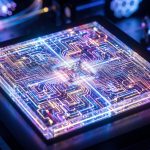
The Blackwell GPUs deliver 30% more FP64 and FP32 FMA (fused multiply-add) performance than Hopper, making them ideal for scientific computing and physics-based simulation. These simulations are crucial to product design and development, saving researchers and developers billions of dollars. For instance, the Cadence SpectreX simulator, an analog circuit design solver, is projected to run 13x quicker on a GB200 Grace Blackwell Superchip than on a traditional CPU.
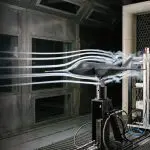
Moreover, GPU-accelerated computational fluid dynamics (CFD) has become a key tool for engineers and equipment designers. Cadence Fidelity runs CFD simulations projected to run as much as 22x faster on GB200 systems than on traditional CPU-powered systems. With parallel scalability and 30TB of memory per GB200 NVL72 rack, it’s possible to capture flow details like never before.
AI and High-Performance Computing
The NVIDIA GB200 ushers in a new era for high-performance computing (HPC). Its architecture features a second-generation transformer engine optimized to accelerate inference workloads for LLMs. This delivers a 30x speedup on resource-intensive applications like the 1.8-trillion-parameter GPT-MoE model compared to the H100 generation, unlocking new possibilities for HPC. By enabling LLMs to process and decipher vast amounts of scientific data, HPC applications can sooner reach valuable insights that can accelerate scientific discovery.
Sandia National Laboratories is building an LLM copilot for parallel programming. Sandia researchers are tackling this issue head-on with an ambitious project, automatically generating parallel code in Kokkos, a specialized programming language designed by multiple national labs for running tasks across tens of thousands of processors in the world’s most powerful supercomputers.
Quantum Computing and the Blackwell Architecture
Quantum computing holds the potential to revolutionize fields such as fusion energy, climate research, and drug discovery. Researchers are simulating future quantum computers on NVIDIA GPU-based systems and software to develop and test quantum algorithms faster than ever. The NVIDIA CUDA-Q platform enables both simulation of quantum computers and hybrid application development with a unified programming model for CPUs, GPUs, and QPUs (quantum processing units) working together.
The Blackwell architecture will help drive quantum simulations to new heights. Utilizing the latest NVIDIA NVLink multi-node interconnect technology helps shuttle data faster for speedup benefits to quantum simulations.
Accelerating Data Analytics with Blackwell
Data processing with RAPIDS is popular for scientific computing. Blackwell introduces a hardware decompression engine to decompress compressed data and speed up analytics in RAPIDS. The decompression engine provides performance improvements up to 800GB/s and enables Grace Blackwell to perform 18x faster than CPUs, on Sapphire Rapids, and 6x faster than NVIDIA H100 Tensor Core GPUs for query benchmarks.
NVIDIA Networking for Scientific Computing
The NVIDIA Quantum-X800 InfiniBand networking platform offers the highest throughput for scientific computing infrastructure. It includes NVIDIA Quantum Q3400 and Q3200 switches and the NVIDIA ConnectX-8 SuperNIC, together hitting twice the bandwidth of the prior generation. The Q3400 platform offers 5x higher bandwidth capacity and 14.4Tflops of in-network computing with NVIDIA’s scalable hierarchical aggregation and reduction protocol (SHARPv4), providing a 9x increase compared with the prior generation. The performance leap and power efficiency translates to significant reductions in workload completion time and energy consumption for scientific computing.
External Link: Click Here For More


See today’s quantum computing news on Quantum Zeitgeist for the latest breakthroughs in qubits, hardware, algorithms, and industry deals.