A team led by Caltech scientists, including Katie Bouman and Aviad Levis, has used AI and telescope data to create the first 3D video of flares around Sagittarius A*, the supermassive black hole at the center of the Milky Way. The 3D flare structure is based on data from the Atacama Large Millimeter Array in Chile. The team developed new computational imaging tools to account for the bending of light due to the curvature of space-time around the black hole. The work is described in a paper in Nature Astronomy and is a significant step in understanding black hole physics.
AI and Physics Unveil 3D Structure of Flare Around a Black Hole
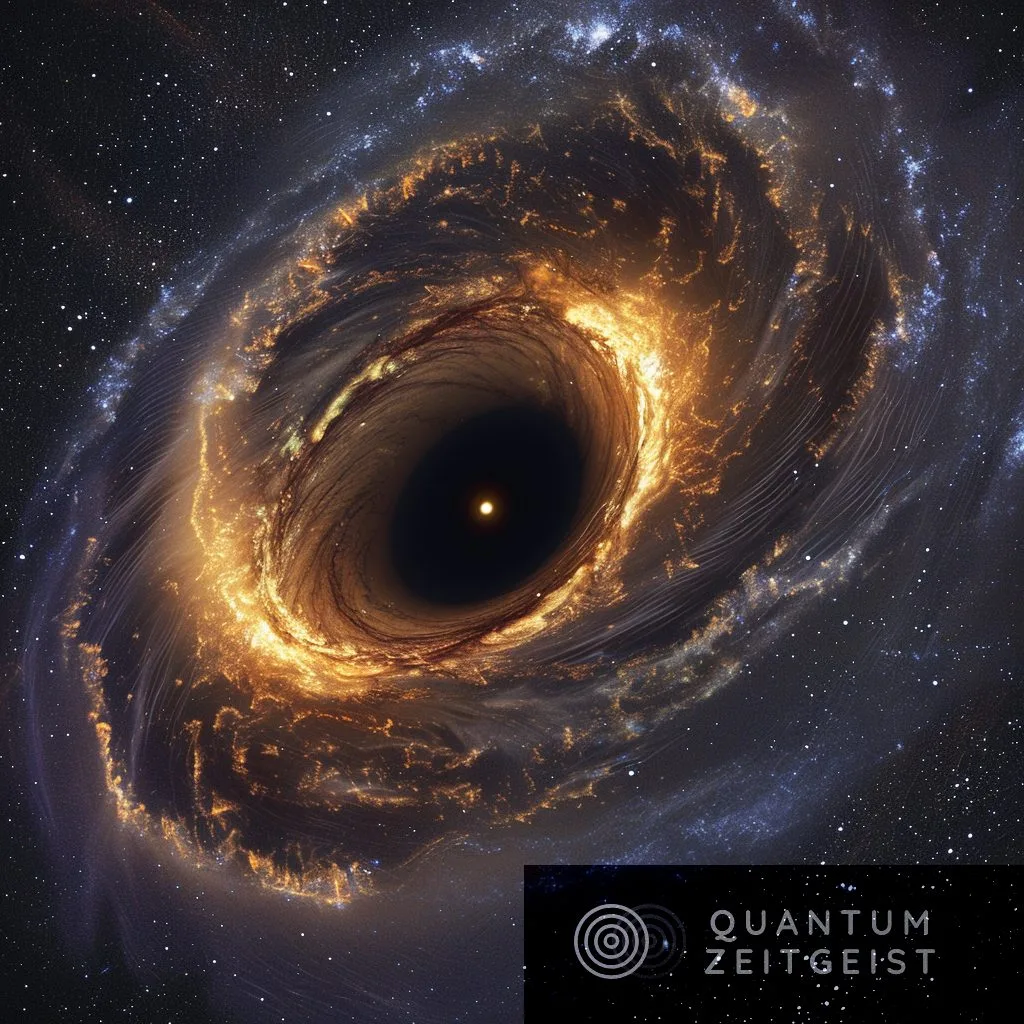
A team of Caltech scientists has utilized artificial intelligence (AI) and telescope data to create the first three-dimensional video of a flare around Sagittarius A* (Sgr A*), the supermassive black hole at the center of our galaxy. The 3D structure of the flare, which features two bright, compact features located about 75 million kilometers from the black hole’s center, is based on data collected by the Atacama Large Millimeter Array (ALMA) in Chile.
The team’s work, led by Katie Bouman, assistant professor of computing and mathematical sciences, electrical engineering, and astronomy at Caltech, is a significant step in understanding the behavior of gas near a black hole. However, Aviad Levis, a postdoctoral scholar in Bouman’s group and lead author on the new paper, cautions that the video is a reconstruction based on models of black hole physics and is not a direct recording of events.
The Role of AI in Reconstructing 3D Structures
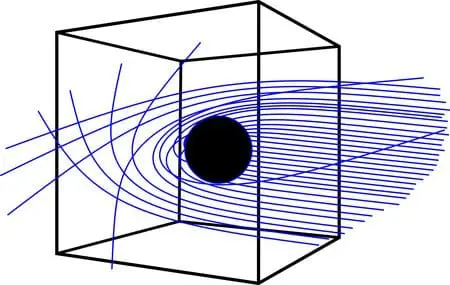
To create the 3D image, the team developed new computational imaging tools that could account for the bending of light due to the curvature of space-time around massive objects like black holes. The team used a technique known as neural radiance fields (NeRF), which uses deep learning to create a 3D representation of a scene based on 2D images. This technique allows for the observation of scenes from different angles, even when only limited views are available.
The team faced a significant challenge: from Earth, we only get a single viewpoint of the black hole. However, they believed they could overcome this problem by leveraging knowledge of how gas moves at different distances from a black hole. This insight led to the development of a version of NeRF that takes into account how gas moves around black holes and how light bends around massive objects, a phenomenon known as gravitational lensing.
The Use of ALMA Data in the Study
The team needed real data to test their model, and they found it in the ALMA data from April 11, 2017, when astronomers detected a sudden brightening in the surroundings of Sgr A*. ALMA, one of the most powerful radio telescopes in the world, measures light curves, essentially videos of a single flickering pixel, created by collecting all of the radio-wavelength light detected by the telescope for each moment of observation.
Recovering a 3D volume from a single-pixel video might seem impossible. However, by leveraging additional information about the physics expected for the disk around black holes, the team was able to get around the lack of spatial information in the ALMA data.
Polarized Light Provides Clues
ALMA records data relating to different polarization states of light, a fundamental property of light that represents the direction of the electric component of a light wave. Recent theoretical studies suggest that hot spots forming within the gas are strongly polarized, meaning the light waves coming from these hot spots have a distinct preferred orientation direction. By gathering the different polarization measurements, the ALMA data gave the scientists information that could help localize where the emission was coming from in 3D space.
Introducing Orbital Polarimetric Tomography
The team developed an updated version of its method that incorporated the physics of light bending, dynamics around a black hole, and the polarized emission expected in hot spots orbiting a black hole. This technique, called Orbital Polarimetric Tomography, allowed the researchers to computationally progress the initial 3D structure of a hotspot over time as it orbits the black hole to create a whole light curve. They could then solve for the best initial 3D structure that, when progressed in time according to black hole physics, matched the ALMA observations.
The result is a video showing the clockwise movement of two compact bright regions that trace a path around the black hole. The team believes this is just the beginning for this exciting technology and hopes that astronomers could use it on other rich time-series data to shed light on complex dynamics of other such events and to draw new conclusions.
External Link: Click Here For More


See today’s quantum computing news on Quantum Zeitgeist for the latest breakthroughs in qubits, hardware, algorithms, and industry deals.