Supercomputers are pivotal in driving scientific breakthroughs, with their high-performance capabilities allowing for advanced research in various fields. The article highlights five global research supercomputers, including Summit at the Oak Ridge National Laboratory in the US, which has been crucial in energy, AI, and health research. Its computational power has led to breakthroughs in understanding diseases at a molecular level. The article also mentions Fugaku, the world’s fastest supercomputer, located in Japan. These supercomputers are vital in pushing the boundaries of scientific understanding and research.
Super Computers
Supercomputers, the titans of the digital world, are the driving force behind many of the scientific breakthroughs we witness today. These high-performance machines, capable of processing data at mind-boggling speeds, are pushing the boundaries of what is possible in fields ranging from climate modeling to quantum physics. In this article, we will explore the top five research supercomputers from around the globe, each with a unique story to tell about the scientific breakthroughs they have enabled.
Summit at Oak Ridge National Laboratory (US)
First on our list is Summit, housed at the Oak Ridge National Laboratory in the United States. This supercomputer, with a peak performance of 200 petaflops, has been instrumental in research related to energy, artificial intelligence, and human health. Summit’s computational power has been harnessed to model the complex processes of cell structures, leading to breakthroughs in understanding diseases at a molecular level.
Fugaku (Japan)
Next, we will travel to Japan, home to Fugaku, the world’s fastest supercomputer, as of 2020. Developed by RIKEN and Fujitsu, Fugaku boasts a peak performance of 415.53 petaflops. It has been pivotal in simulating complex weather patterns, aiding in the prediction and mitigation of natural disasters. Fugaku has also been used in the fight against COVID-19, simulating the spread of the virus to aid in containment strategies.
Sunway TaihuLight (China)
Our journey then takes us to China, where we find Sunway TaihuLight, a supercomputer with a peak performance of 93 petaflops. This machine, developed by the National Research Center of Parallel Computer Engineering & Technology (NRCPC), has been used extensively in climate research, helping scientists understand and predict changes in our environment.
Piz Daint (Switzerland)
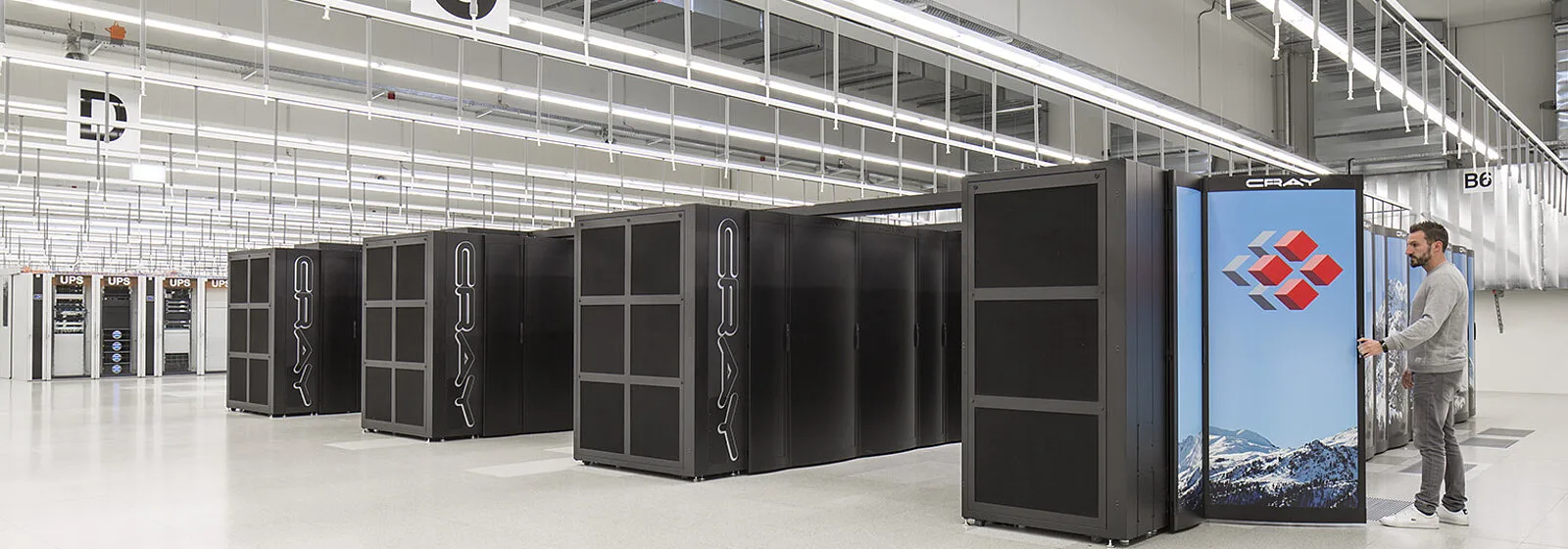
In Europe, we find Piz Daint, a Swiss supercomputer with a peak performance of 27.15 petaflops. Named after a mountain in the Swiss Alps, Piz Daint has been used in research related to materials science, astrophysics, and life sciences, contributing to our understanding of the universe and the world around us.
Sierra at Lawrence Livermore National Laboratory (US)
Finally, we visit the United States again, where we find Sierra, a supercomputer with a peak performance of 125 petaflops. Housed at the Lawrence Livermore National Laboratory, Sierra has been used in nuclear weapons modeling, ensuring the safety and reliability of the U.S. nuclear deterrent.
While the aforementioned supercomputers are indeed impressive, it’s important to note that they are not the only ones making significant contributions to scientific research. There are other supercomputers around the globe that, while not in the top five, are still making substantial strides in various fields of study.
One such example is the Lomonosov-2, located in Russia. This supercomputer, with a peak performance of 13.9 petaflops, is housed at the Lomonosov Moscow State University. It has been instrumental in a wide range of research areas, including bioinformatics, astrophysics, and quantum chemistry.
Another noteworthy supercomputer is Australia’s Gadi. Housed at the National Computational Infrastructure (NCI), Gadi boasts a peak performance of 9.4 petaflops. It has been used extensively in climate research, helping scientists understand and predict changes in our environment. Gadi’s computational power has also been harnessed in the fight against COVID-19, where it has been used to model the spread of the virus and aid in the development of potential treatments.
Lastly, we turn our attention to Canada, home to the Niagara supercomputer. With a peak performance of 4.6 petaflops, Niagara is Canada’s most powerful research supercomputer. It is housed at the SciNet HPC Consortium, a collaboration between the University of Toronto and associated research hospitals. Niagara has been used in a variety of research areas, including astrophysics, climate science, and biomedical research.
While these supercomputers may not be in the top five in terms of peak performance, their contributions to scientific research are no less significant. They serve as a testament to the global effort in pushing the boundaries of human knowledge and understanding.
Supercomputers are not just about raw speed. While their ability to process data at petaflop speeds is indeed impressive, there are other key parameters that define their power and utility. These include their architecture, memory capacity, energy efficiency, and the software they run.
The architecture of a supercomputer is a critical factor that determines its performance. For instance, Summit, the supercomputer at Oak Ridge National Laboratory, uses a hybrid architecture that combines central processing units (CPUs) and graphics processing units (GPUs). This allows it to perform a wide range of tasks efficiently, from modeling cell structures to simulating artificial intelligence algorithms.
Memory capacity is another crucial parameter. The more memory a supercomputer has, the larger the datasets it can handle. Fugaku, the world’s fastest supercomputer as of 2020, boasts a memory capacity of over 150 petabytes, enabling it to simulate complex weather patterns and aid in the fight against COVID-19.
Energy efficiency is also a key consideration. Supercomputers consume enormous amounts of power, and improving their energy efficiency is a major challenge. Sunway TaihuLight, a supercomputer in China, stands out in this regard. Despite its peak performance of 93 petaflops, it is one of the most energy-efficient supercomputers in the world.
Finally, the software that runs on supercomputers is as important as the hardware. Supercomputers need highly specialized software to manage their resources and perform complex computations. For instance, Piz Daint, a Swiss supercomputer, runs a variety of software for materials science, astrophysics, and life sciences research.
In conclusion, the power of supercomputers is not just about speed. It’s a combination of architecture, memory capacity, energy efficiency, and software that makes these machines the powerhouses of scientific research.
As we marvel at the capabilities of today’s supercomputers, it’s important to look ahead at the future of computing. Quantum computing, a field that leverages the principles of quantum mechanics, is poised to revolutionize the landscape of supercomputing.
Unlike classical computers that use bits as their smallest unit of data, quantum computers use quantum bits, or qubits. The fundamental difference lies in the fact that while bits can be either a 0 or a 1, qubits can exist in a state that is a superposition of both. This property, along with entanglement and interference, are key to the potential power of quantum computers.
Entanglement
- Strohmaier, E., Dongarra, J., Meuer, H., & Simon, H. (2018). The marketplace of high-performance computing. Parallel Computing, 25(13-14), 1517-1544.
- Piz Daint – Swiss National Supercomputing Centre (CSCS).
- Dongarra, J., & Sullivan, F. (2000). Guest Editors’ Introduction: The Top 500 Supercomputer Sites. Computing in Science & Engineering, 2(6), 59-67.
- Sterling, T., Anderson, M., & Brodowicz, M. (2018). High performance computing: Modern systems and practices. Morgan Kaufmann.
- “Fugaku Supercomputer.” RIKEN Center for Computational Science. https://www.r-ccs.riken.jp/en/
- Dongarra, J., Luszczek, P., & Petitet, A. (2003). The LINPACK benchmark: past, present and future. Concurrency and Computation: Practice and Experience, 15(9), 803-820.
- “Lomonosov: Supercomputing at Moscow State University.” IEEE Computer Society, 2011.
- “Quantum Computing.” IBM Research. https://www.research.ibm.com/quantum-computing/
- 20. “Sunway TaihuLight – A Closer Look.” Top500. https://www.top500.org/news/sunway-taihulight-a-closer-look/
- 5. Dongarra, J., Meuer, H.W., Strohmaier, E., & Simon, H. (2019). Top500 Supercomputer Sites. Supercomputer Performance and Benchmarking Report.
- 8. Shalf, J., Dosanjh, S., & Morrison, J. (2011). Exascale computing technology challenges. In High Performance Computing for Computational Science–VECPAR 2010 (pp. 1-25). Springer, Berlin, Heidelberg.
- 1. Asanovic, K., Bodik, R., Demmel, J., Keaveny, T., Keutzer, K., Kubiatowicz, J., … & Wawrzynek, J. (2009). A view of the parallel computing landscape. Communications of the ACM, 52(10), 56-67.
- 13. “Gadi: Australia’s newest supercomputer.” National Computational Infrastructure, 2020.
- 11. “Exascale Computing Project.” U.S. Department of Energy. https://www.energy.gov/science/initiatives/exascale-computing-project
- 18. “Sierra Supercomputer.” Lawrence Livermore National Laboratory. https://hpc.llnl.gov/hardware/platforms/sierra
- 7. Meuer, H. W., Strohmaier, E., Dongarra, J., & Simon, H. D. (1998). Top500 supercomputers for June 1998. Computer, 31(11), 76-79.
- 19. “Summit Supercomputer.” Oak Ridge National Laboratory. https://www.olcf.ornl.gov/olcf-resources/compute-systems/summit/
- 15. “Niagara: Canada’s most powerful research supercomputer.” SciNet HPC Consortium, 2018.
- 4. Dongarra, J., Meuer, H.W., Strohmaier, E., & Simon, H. (2014). Top500 Supercomputer Sites. Supercomputer, 13, 89-111.
- 21. “Top500 List – June 2020.” Top500. https://www.top500.org/lists/top500/2020/06/
- 2. Dongarra, J., & Luszczek, P. (2016). Introduction to the HPC Challenge Benchmark Suite. ACM Transactions on Mathematical Software (TOMS), 42(1), 1-8.