
Yong Yi Huang from Xian Jiaotong University, China, has proposed a new type of qubits composed of electric dipolar molecules. Based on graphene, these qubits have a long mean lifetime, making them potentially scalable for quantum computing. The qubits’ quantum states act as the states of a qubit, and their excited states have a controlled mean lifetime of several seconds. The study also introduces the Rydberg blockade and CNOT quantum gate, crucial for operating these new qubits. This research provides a new perspective in quantum computing, potentially leading to more efficient and scalable quantum computers.
What are the New Qubits Composed of Electric Dipolar Molecules?
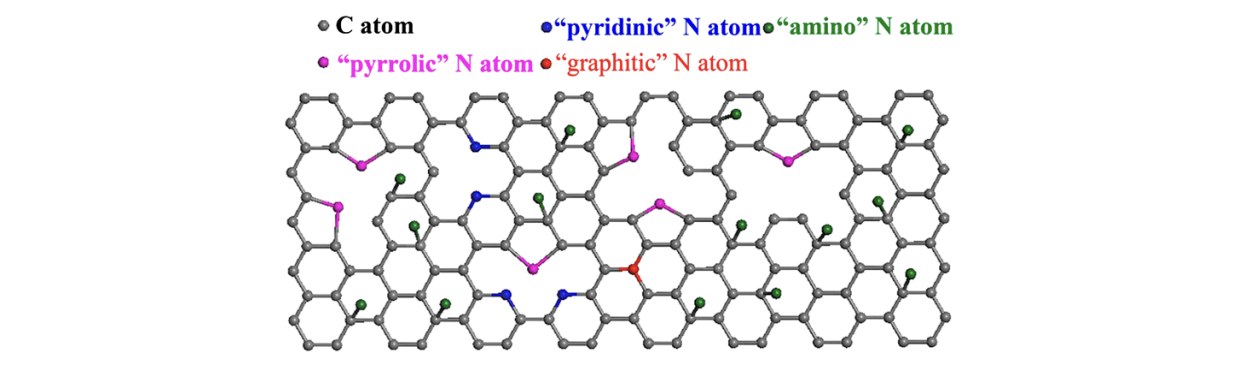
A new type of qubits composed of electric dipolar molecules has been proposed by Yong Yi Huang from the MOE Key Laboratory for Nonequilibrium Synthesis and Modulation of Condensed Matter and Department of Optoelectronic Information Science and Engineering School of Physics, Xian Jiaotong University, Xian, China. These qubits are based on graphene and have a long mean lifetime, making them potentially scalable. The electric dipolar molecules in an external electric field will take simple harmonic oscillations, and their quantum states belonging to the two lowest energy levels act as the states of a qubit. The qubits’ excited states have a very long controlled mean lifetime of about several seconds.
The qubits of electric dipolar molecules can be manipulated just like those of neutral atoms for quantum computations. When the qubits are used for quantum computations, the dipolar moments’ orientations will harmonically oscillate along an external electric field, and they will not change the directions along or against the electric field. This means that the qubits can be large-scale manufactured in graphene systems. The radius of Rydberg blockade is about 100 nm.
How is the Mean Lifetime of the Qubit Evaluated?
The mean lifetime of the qubit is evaluated in the thermal reservoir. The master equation for the qubit in the interaction picture with respect to the qubit and the reservoir is used. The qubit decay rate can be derived by the Weisskopf-Wigner theory and it is equal to the Einstein’s spontaneous emission coefficient.
The qubit’s mean lifetime is controlled and is very long, about several seconds. This long mean lifetime is beneficial for quantum computations as it allows for high-fidelity state-dependent readout, a means to deterministically and controllably entangle individual qubits without decoherence, and the ability to transfer entanglement remotely.
What is the Rydberg Blockade and CNOT Quantum Gate?
The Rydberg blockade and CNOT quantum gate are presented in the study. The Rydberg blockade is a phenomenon in which an excited atom can block the excitation of nearby atoms. This blockade effect can be used to create interactions between atoms, which are necessary for quantum computing. The CNOT quantum gate, or controlled NOT gate, is a two-qubit gate which flips the second qubit (the target qubit) if and only if the first qubit (the control qubit) is |1⟩.
These two concepts are crucial in the operation of the new qubits composed of electric dipolar molecules. The Rydberg blockade ensures that the qubits can be large-scale manufactured in graphene systems, while the CNOT quantum gate allows for the manipulation of the qubits for quantum computations.
How are Scalable Qubits Realized Based on Graphene System?
The physical realization of scalable qubits is proposed based on the graphene system. Graphene, a single layer of carbon atoms arranged in a two-dimensional honeycomb lattice, has unique properties that make it suitable for quantum computing. The electric dipolar molecules in an external electric field will take simple harmonic oscillations, and their quantum states belonging to the two lowest energy levels act as the states of a qubit.
The qubits can be large-scale manufactured in graphene systems, making them potentially scalable. This scalability is a central challenge in quantum computing, and the use of electric dipolar moments in the current quantum devices may be employed in quantum computing.
What are the Conclusions of the Study?
The study concludes that a new kind of qubits composed of electric dipolar molecules can be used for quantum computations. These qubits have a long mean lifetime, making them potentially scalable. The qubits can be manipulated just like those of neutral atoms, and they can be large-scale manufactured in graphene systems.
The study also presents the Rydberg blockade and CNOT quantum gate, which are crucial in the operation of the new qubits. The physical realization of scalable qubits is proposed based on the graphene system. The study provides a new perspective in the field of quantum computing, opening up possibilities for the development of more efficient and scalable quantum computers.
Publication Date: 2024-02-12
Authors: and Yong-Yi Huang
Source: EPJ Quantum Technology
DOI: https://doi.org/10.1140/epjqt/s40507-024-00219-z