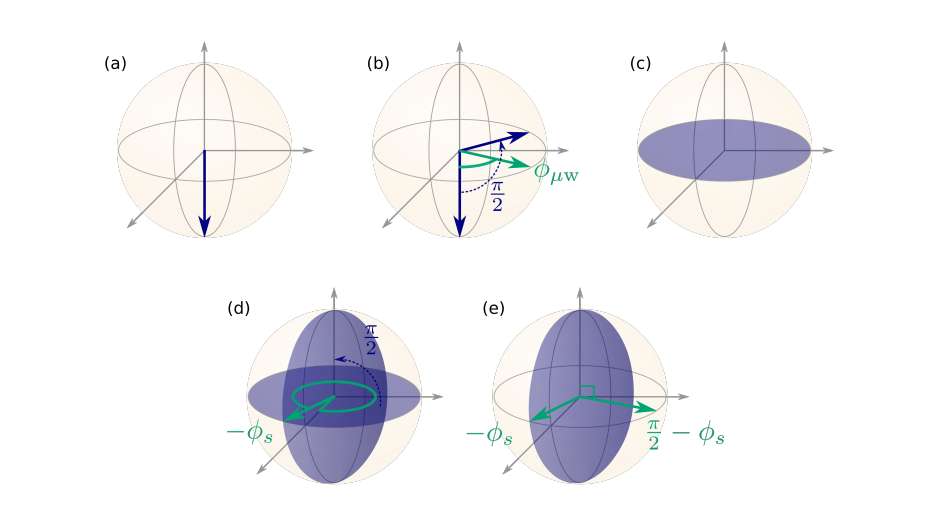
Quantum computers require precise control of interacting quantum bits, or qubits, to perform calculations, and achieving this control relies on effective two-qubit gates. V. M. Schäfer, A. C. Hughes, and O. Bazavan, alongside colleagues including K. Thirumalai, G. Pagano, and C. J. Ballance, investigate the performance of two leading methods for creating these essential gates, laser-based light-shift and Moelmer-Soerensen approaches. This research directly addresses a key challenge in building scalable quantum computers, specifically when using mixed species of ions as qubits, which have differing sensitivities to external magnetic fields. The team successfully implements these gates on and ions, achieving high fidelities of 99. 7% and 99. 3% respectively, and demonstrates a detailed comparison of the strengths and weaknesses of each method for robust quantum computation.
Scientists have investigated the experimentally relevant differences and commonalities of laser-based light-shift and Mølmer-Sørensen gates, focusing on the stability of experimental control fields, particularly when using mixed-species qubits. The team successfully implemented these gates on qubits encoded in calcium and strontium ions, which exhibit very different sensitivities to magnetic fields, achieving fidelities of 99. 8% for the light-shift gate and 99. 6% for the Mølmer-Sørensen gate. Trapped ions are a cornerstone of atomic physics, with applications extending beyond quantum computing.
Trapped Ion Quantum Computing
Research in trapped ion quantum computing details a vast amount of work in the field, demonstrating its maturity and complexity. This work covers key areas including qubit encoding, exploring different ways to represent qubits using ion states and the trade-offs between them, such as robustness and ease of manipulation. A wide range of entangling gate implementations, including Raman, microwave, light-shift, Mølmer-Sørensen, and geometric gates, have also been investigated. Significant focus lies on improving gate fidelity and suppressing errors, with research detailing techniques like pulse shaping, error suppression schemes, and dynamical decoupling to protect qubits from decoherence.
The challenge of scalability is also addressed, exploring methods like ion transport, multi-zone traps, and cryogenic traps to build larger quantum processors. Research into mixed-species trapped ions, utilizing different ion species to enhance performance, is also prominent. This work covers control and measurement techniques, theoretical tools and simulations, and specific improvements to gate designs and trap architectures. Observations reveal a strong emphasis on achieving high fidelity, a diversity of approaches to building trapped ion quantum computers, and increasing complexity as researchers tackle more challenging problems. Experiments reveal gate fidelities of 99. 7% for the light-shift gate and 99. 3% for the Mølmer-Sørensen gate, representing a significant advancement in quantum information processing. These results confirm the feasibility of implementing complex quantum circuits with high accuracy, essential for scalable quantum computation.
The research team investigated mixed-species gates, utilizing qubits encoded in calcium and strontium ions with differing sensitivities to magnetic fields. A key finding is that variations in the total acquired two-qubit phase, arising from laser power discrepancies, can be accurately calibrated by analyzing the symmetry of gate dynamics. Importantly, single-qubit phase variations do not compromise entanglement quality, allowing for robust gate operation even with imperfect control. For phase-insensitive Mølmer-Sørensen gates, fluctuations in single-qubit phases on certain timescales pose no issue, simplifying experimental requirements.
The team successfully addressed the absence of a common magnetic field at which both species exhibit clock transitions unaffected by magnetic field fluctuations by utilizing clock transitions for the Mølmer-Sørensen gate. They mitigated potential light shifts caused by gate lasers on the unintended species by synchronizing gate operations and maintaining a fixed ion order within the trap. By employing a single laser to simultaneously drive gates on both calcium and strontium, utilizing transitions at 397nm and 408nm respectively, scientists minimized error sources associated with separate laser systems. This approach, leveraging a Raman detuning of approximately 10THz, suppresses Raman scattering errors, a common limitation in trapped-ion laser gates.
Hybrid Qubit Entanglement Exceeds 80 Percent
This research demonstrates the successful implementation of high-fidelity two-qubit gates between different ion species, utilising both light-shift and Mølmer-Sørensen mechanisms. The team achieved Bell-state fidelities exceeding 90% for light-shift gates between strontium and calcium qubits, and 80% for a Mølmer-Sørensen gate utilising a calcium clock qubit. These results represent a significant advance in the development of hybrid quantum computing architectures, enabling entanglement between qubits with differing properties and advantages. The study highlights the trade-offs between the two gate methods; light-shift gates offer experimental simplicity and inherent robustness to qubit frequency errors, while Mølmer-Sørensen gates can be directly applied to clock qubits. The authors acknowledge that the performance of Mølmer-Sørensen gates is currently limited by drifts in external magnetic fields and sensitivity to optical path length fluctuations, but suggest that dynamical decoupling techniques and careful phase compensation could improve stability. Future work could explore the application of multiple driving tones to enhance resilience against errors, or investigate laser-free gate methods as an alternative approach to achieving high-fidelity entanglement in mixed-species systems.
🗞 Comparison of trapped-ion entangling gate mechanisms for mixed species
🧠 ArXiv: https://arxiv.org/abs/2509.17893