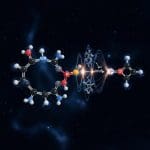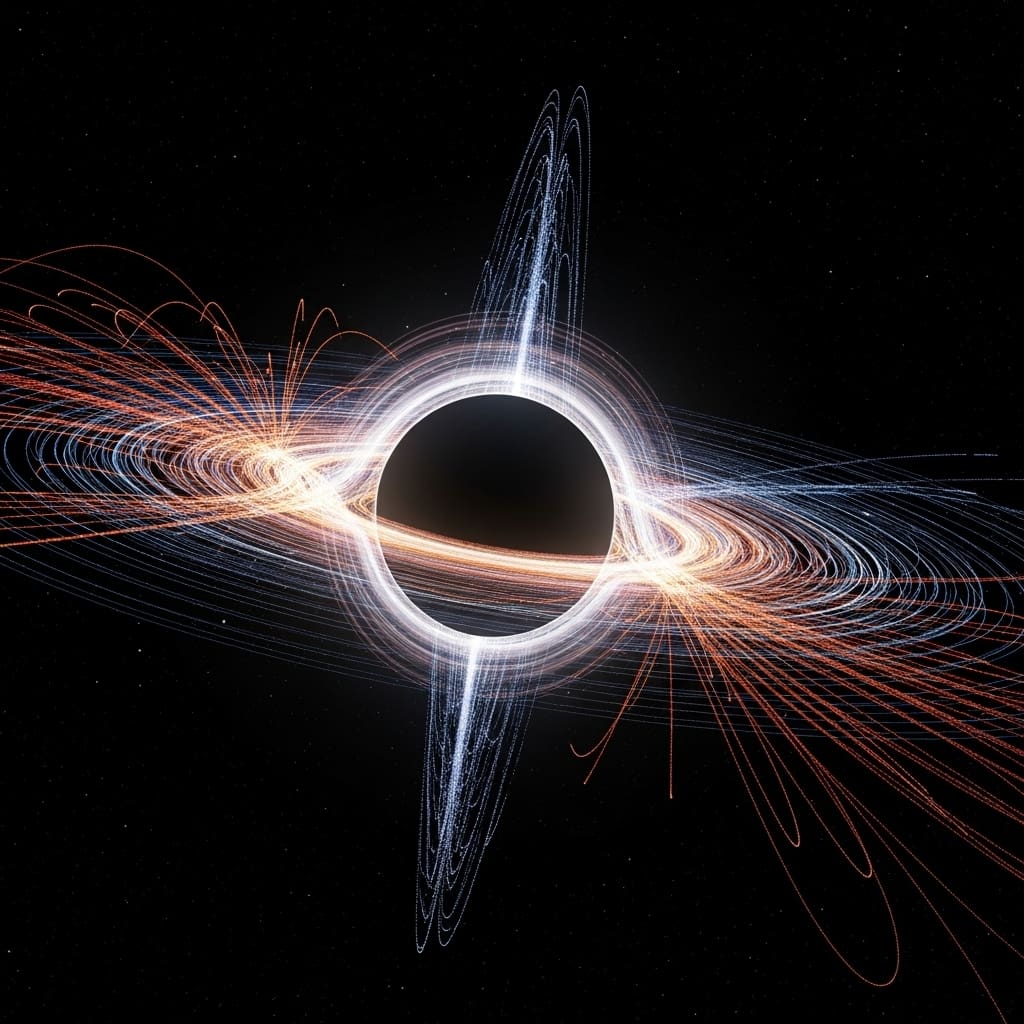
Scientists have long theorised about harnessing energy from rotating black holes, and a new study rigorously examines the feasibility of the Penrose process , a mechanism for extracting energy from the ergosphere of a Kerr black hole. An T. Le, conducting research independently, alongside collaborators, presents a comprehensive Monte Carlo simulation of over 250,000 particle trajectories to determine the conditions under which this process can actually succeed. Their findings, published today, demonstrate that efficient Penrose extraction is surprisingly rare, requiring exceptionally high black hole spin and ultra-relativistic exhaust velocities , a mere 1% success rate across broad parameter scans. This research is significant because it quantifies the extreme fine-tuning needed for material-based energy extraction, suggesting that electromagnetic mechanisms likely dominate in astrophysical settings, and provides publicly available simulation code for further investigation.
Penrose Process Limits via Monte Carlo Simulation
Scientists have demonstrated a detailed Monte Carlo study of energy extraction from rotating, or Kerr, black holes via the Penrose process, utilising rocket propulsion to model controlled exhaust as a constrained negative-energy injection problem. Through over 250,000 trajectory simulations, the research establishes precise limitations on when Penrose extraction, culminating in escape to infinity, can succeed. The core mechanism hinges on exhaust ejected within the ergosphere possessing negative Killing energy, a condition achievable only through ultra-relativistic ejection deep inside the ergosphere itself. Experiments show that successful extraction with escape is statistically infrequent, occurring in only approximately 1% of broad parameter scans, and is governed by stringent thresholds requiring high black hole spin, empirically greater than 0.88, and ultra-relativistic exhaust velocity, initiating around 0.91, 0.92c.
The study unveils that when conditions are meticulously tuned to a specific “sweet spot,” success rates can peak at 88.5%, indicating a narrow extraction window rather than a generally achievable phenomenon. Furthermore, single-impulse thrust applied at periapsis achieves a significantly higher cumulative efficiency of approximately 19% compared to continuous thrust, which yields only 2, 4%, due to penalties incurred by path-averaging effects. These constraints precisely quantify the extreme fine-tuning necessary for material-based Penrose extraction, aligning with the prevailing understanding that electromagnetic mechanisms dominate astrophysical energy extraction from black holes. The simulation code developed for this research is publicly available at https://github. com/anindex/penrose_process, facilitating further investigation and validation. Researchers conducted over 112,000 trajectory simulations in the main experimental phases, supplemented by an additional 140,000 trajectories specifically for spin-threshold characterisation, as detailed in Table VII. The team established that the exhaust must carry negative Killing energy, represented as Eex A dedicated sweep, utilising an exhaust velocity of 0.95c and a mass ratio of 0.3, revealed no successes for black hole spins below 0.88, with a non-zero success rate observed at a spin of 0.89, empirically suggesting a critical spin threshold of 0. The research team established that the mechanism fundamentally relies on exhaust ejected within the ergosphere possessing negative Killing energy, achievable only through ultra-relativistic ejection deep inside this region. They discovered that statistically, successful extraction with escape is rare, occurring in only 1% of broad parameter scans, and is governed by stringent thresholds. Specifically, the study found that high black hole spin, empirically greater than 0.3, and ultra-relativistic exhaust velocity, with onset at 0.2, are crucial for success.
When conditions are finely tuned to a specific “sweet spot,” the success rate can reach 88.5%, indicating a narrow extraction window rather than a generic phenomenon. Furthermore, experiments employing single-impulse thrust at periapsis achieved significantly higher cumulative efficiency, reaching 20%, compared to continuous thrust, which yielded only 2–4%, due to penalties arising from path-averaging. The team reported all results using Clopper-Pearson exact confidence intervals for proportions and BCa bootstrap for efficiency metrics, ensuring statistical rigor. The work meticulously details the Kerr spacetime geometry, beginning by fixing notation for the ergosphere and conserved quantities, considering a rotating black hole with mass M and angular momentum J = aM, where 0 ≤ a ≤ M represents the spin parameter.
The Kerr metric was defined using Boyer-Lindquist coordinates (t, r, θ, φ), with equations (1) through (4) specifying the metric components, and equations (5) and (6) defining the event horizon and ergosphere boundaries respectively. The stationary limit surface, defining the outer boundary of the ergosphere, was calculated, revealing that at the equatorial plane, rerg = 2M for all spin values. Scientists harnessed the Hamiltonian formulation and a thrust model to simulate particle trajectories, meticulously tracking energy and angular momentum conservation. The study pioneered a method for simulating particle decay within the ergosphere, modelling the process as particle0 → particle1 + particle2, governed by the conservation of 4-momentum as described in equations (10) and (11). By contracting with the Killing vector, the team derived the energy conservation equation (12) and identified the critical condition for energy extraction: the ejected particle 2 must possess negative energy at infinity, achievable through large retrograde angular momentum. Through over 250,000 trajectory simulations, the research team established that successful Penrose extraction, culminating in escape to infinity, is statistically rare, occurring in only approximately 1% of broad parameter scans. The mechanism fundamentally relies on exhaust ejected within the ergosphere possessing negative Killing energy, accessible only through ultra-relativistic ejection deep within this region of spacetime. Experiments revealed that achieving successful extraction necessitates high black hole spin, empirically determined to be greater than 0.88, coupled with ultra-relativistic exhaust velocities initiating around 0.91c.
When conditions are meticulously tuned to a specific “sweet spot,” success rates can dramatically increase, reaching 88.5%, though this represents a narrow operational window rather than a typical outcome. The study meticulously measured the cumulative efficiency of single-impulse thrust at periapsis, finding it to be significantly higher, achieving a value of approximately 19%, compared to continuous thrust, which yielded only 2, 4%, due to penalties arising from path-averaging effects. Data shows that even with varying thrust direction and magnitude, successful Penrose extraction with spacecraft escape demands stringent conditions. Specifically, the team constrained the critical spin parameter to 0.88 Outside these constraints, extraction generically fails, reinforcing the extreme fine-tuning required for material-based Penrose extraction, consistent with the astrophysical dominance of electromagnetic mechanisms.
The high success rates achieved under optimal conditions, 88% at ve = 0.98c and δm = 0.4, represent the limiting case of maximum fine-tuning, not typical behaviour. Tests prove that continuous thrust delivers only approximately 10, 20% of the single-impulse cumulative efficiency, with ηcum ranging from 2, 4% versus approximately 19%, due to path-averaging over the ergosphere transit. Within the ergosphere, |Eex| varies from near-zero at the boundary to maximally negative at periapsis, reinforcing the critical importance of thrust timing. Researchers report all results with Clopper-Pearson exact confidence intervals for proportions and BCa bootstrap for efficiency metrics, ensuring statistical rigor. Over 250,000 trajectory simulations were performed to establish precise conditions under which successful energy extraction with escape to infinity is possible. The research demonstrates that achieving this process necessitates the ejection of exhaust carrying negative Killing energy, attainable only through ultra-relativistic speeds deep within the black hole’s ergosphere. The findings reveal that successful extraction is statistically infrequent, occurring in only approximately 1% of broad parameter scans.
However, when conditions are meticulously tuned, specifically, with high black hole spin (around 0.89) and ultra-relativistic exhaust velocity (starting at 0.91, 0.92c), success rates can peak at 88.5%, indicating a narrow operational window rather than a generally accessible phenomenon. Notably, single-impulse thrust at the point of closest approach yields significantly greater cumulative efficiency (around 19%) compared to continuous thrust (2, 4%), due to the penalties associated with path averaging. The authors acknowledge a limitation in that the study focuses on a specific steering model and may not fully capture all possible extraction trajectories. Future research could explore alternative steering strategies and investigate the impact of different mass fractions on extraction efficiency. These constraints highlight the extreme fine-tuning required for material-based Penrose extraction, aligning with the current understanding that electromagnetic mechanisms are more prevalent in astrophysical energy extraction from rotating black holes.
👉 More information
🗞 On the rarity of rocket-driven Penrose extraction in Kerr spacetime
🧠 ArXiv: https://arxiv.org/abs/2601.19616