

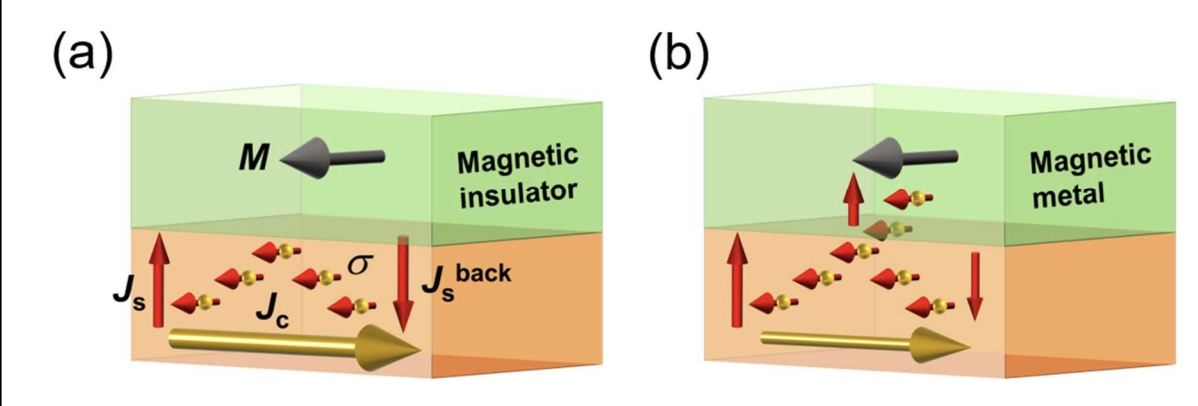
The interplay between magnetism and electrical current generates fascinating phenomena with potential applications in next-generation electronics, and recent research focuses on how materials absorb spin currents within layered structures. Sosuke Hori, Kohei Ueda, and Junichi Shiogai, along with Jobu Matsuno, investigated this effect in bilayers composed of a magnetic material and a highly-resistive non-magnetic layer, specifically cobalt iron boron and strontium iridium oxide. Their work demonstrates that the magnetic layer significantly absorbs spin currents, which dramatically influences the observed spin Hall magnetoresistance, a phenomenon where a change in magnetic orientation alters electrical resistance. This discovery corrects previous estimations of a key material property, the spin Hall angle, by a substantial margin, and highlights the importance of considering spin current absorption when designing and optimising materials for spintronic devices.
Scientists discovered that maximizing the ratio between the resistivity of non-magnetic layers and the ferromagnetic layer enhances spin current transfer efficiency, a principle demonstrated using strontium iridate and cobalt iron boron. This finding applies broadly to other material combinations, suggesting a universal principle for optimizing spin current flow in spintronics. Spin currents, a flow of electron spin, offer a way to carry information without electrical charge. The magnetic insulator generates these currents when electrical current flows nearby, directing them into the ferromagnet to manipulate its magnetic state. By understanding phenomena like the Spin Hall Effect, where charge current generates a transverse spin current, and measuring resistance at different angles with an applied magnetic field, scientists determined the direction of magnetization and spin current flow.
CoFeB and Strontium Iridate Bilayer Magnetoresistance Studies
Scientists explored spin Hall magnetoresistance (SMR) in layered structures of cobalt iron boron (CoFeB) and strontium iridate (SrIrO), a highly resistive material acting as a spin current source. They meticulously examined how the magnetic layer absorbs longitudinal spin current, influencing the SMR effect, and observed a clear SMR signal that enhanced with increasing CoFeB layer thickness, aligning with theoretical predictions. To accurately quantify this effect, scientists corrected the effective spin Hall angle from 0. 07 to 0. 12, representing a substantial 71% increase when accounting for spin current absorption.
This correction underscores the significant role of the magnetic layer in the SMR mechanism, particularly when utilizing highly resistive materials like SrIrO. The resulting spin Hall angle is comparable to values observed in platinum. Characterizing the SrIrO films with atomic force microscopy revealed an atomically flat surface with minimal roughness, minimizing potential scattering effects. Electrical transport measurements confirmed the semimetallic behavior of SrIrO, indicating high film quality and minimal defects, highlighting its potential for sensitive spin current detectors.
Enhanced Spin Hall Magnetoresistance with Strontium Irate
Scientists demonstrated a significant enhancement in spin Hall magnetoresistance (SMR) within layered structures of cobalt iron boron (CoFeB) and strontium iridate (SrIrO₃). Experiments confirmed a clear SMR signal, and the SMR ratio increased with increasing CoFeB layer thickness, aligning with theoretical models that account for spin current absorption. The team achieved a relative correction of approximately 71% to the effective spin Hall angle by considering spin current absorption within the magnetic layer, demonstrating a substantial improvement in understanding the SMR effect. High-quality SrIrO₃ films were grown epitaxially, exhibiting atomically flat surfaces and a resistivity confirming its suitability as a highly resistive spin current source. Results demonstrate a linear relationship between the SMR ratio and the CoFeB layer thickness, extending beyond previously observed saturation points. Specifically, the SMR signal consistently increased with CoFeB thickness up to 6nm, suggesting a significant contribution from thickness-dependent interfacial mixing, paving the way for more efficient spintronic devices.
Spin Current Absorption Boosts Magnetoresistance Ratio
This research investigated spin Hall magnetoresistance (SMR) in bilayers of cobalt iron boron (CoFeB) and strontium iridate (SrIrO₃), focusing on the role of longitudinal spin current absorption within the magnetic layer. Scientists observed a clear SMR signal and found that the SMR ratio increased with increasing CoFeB layer thickness, aligning with a model incorporating spin current absorption. Importantly, the effective spin Hall angle was refined from 0. 07 to 0. 12, representing a substantial 71% increase, demonstrating the significant impact of spin current absorption in this bilayer system. The high resistivity of SrIrO₃ facilitates spin current absorption by the CoFeB layer, crucial for understanding the observed SMR behavior. This work provides valuable insight for developing more practical and sensitive spin current detectors, potentially utilizing highly resistive materials, including topological and two-dimensional materials, for advanced sensor applications.
🗞 Longitudinal spin current absorption in bilayers composed of ferromagnetic and highly-resistive non-magnetic layers
🧠 ArXiv: https://arxiv.org/abs/2509.07390


