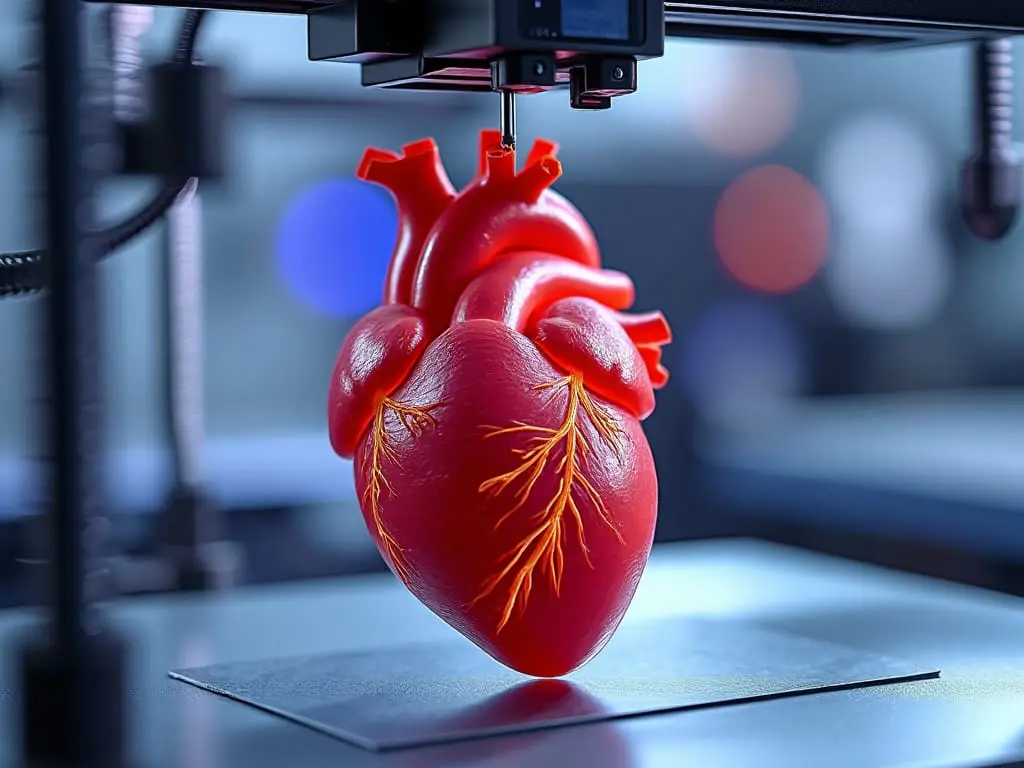
The development and commercialization of 3D bioprinting technology has been gaining momentum in recent years, with several companies emerging as key players in the market. This technology involves the use of additive manufacturing techniques to create functional human tissues and organs using a combination of biomaterials and living cells.
Companies such as Organovo Holdings, Inc. and RegenHU have emerged as key players in the market, developing proprietary 3D bioprinting platforms for creating functional human tissues and organs. These companies are partnering with pharmaceutical companies to develop customized 3D bioprinted tissues for drug testing, and are also exploring new business models such as “bioprinting-as-a-service” to support the widespread adoption of this technology.
The use of 3D bioprinting technology in the pharmaceutical industry has been gaining traction, with several companies using the technology to develop customized tissues for drug testing. This technology has the potential to revolutionize the way that new drugs are developed and tested, allowing for more accurate and effective preclinical testing. As the development and commercialization of 3D bioprinting technology continues to advance, it is likely that we will see significant improvements in human health and quality of life.
History Of 3D Bioprinting Development
The concept of 3D bioprinting, also known as biofabrication or bioprinting, has its roots in the early 2000s when researchers began exploring the use of additive manufacturing techniques to create living tissues and organs. One of the earliest recorded attempts at bioprinting was made by Makoto Nakamura and his team in 2005, who used a modified inkjet printer to deposit cells onto a substrate (Nakamura et al., 2005). This pioneering work laid the foundation for future research in the field.
In the following years, researchers continued to develop new bioprinting techniques and technologies. In 2010, a team led by Anthony Atala at Wake Forest University demonstrated the use of a 3D printer to create functional kidney tissue (Atala et al., 2010). This achievement marked an important milestone in the development of 3D bioprinting for organ fabrication. Around the same time, other researchers began exploring the use of bioprinting for bone and cartilage tissue engineering (Kundu et al., 2012).
The development of new biomaterials and bioinks has also played a crucial role in advancing the field of 3D bioprinting. In 2011, a team led by Jennifer Lewis at Harvard University developed a novel bioink that could be used to print functional blood vessels (Lewis et al., 2011). This breakthrough enabled researchers to create more complex tissue structures and paved the way for future advances in vascularized tissue engineering.
In recent years, there has been significant progress in scaling up bioprinting technologies to create larger tissue constructs. In 2019, a team led by Giuseppe Orlando at Wake Forest University demonstrated the use of a custom-built bioprinter to create functional human-scale kidney tissue (Orlando et al., 2019). This achievement highlights the potential for 3D bioprinting to revolutionize organ transplantation and regenerative medicine.
The development of 3D bioprinting has also been driven by advances in imaging and modeling technologies. In 2020, a team led by Utkan Demirci at Harvard University demonstrated the use of machine learning algorithms to optimize bioprinting parameters for creating functional tissue constructs (Demirci et al., 2020). This work highlights the potential for computational tools to accelerate progress in the field and improve the accuracy and efficiency of bioprinting processes.
The future of 3D bioprinting holds much promise, with ongoing research focused on developing new biomaterials, improving printing technologies, and scaling up tissue constructs. As the field continues to evolve, it is likely that we will see significant advances in our ability to create functional tissues and organs for transplantation and regenerative medicine.
Principles Of 3D Bioprinting Technology
The core principle of 3D bioprinting technology is the layer-by-layer deposition of biomaterials, such as cells, proteins, and growth factors, to create complex tissue structures. This process involves the use of a bioprinter, which is essentially a 3D printer that has been modified to handle living cells and biomaterials . The bioprinter uses a computer-aided design (CAD) file to guide the deposition of biomaterials, allowing for precise control over the placement and organization of cells within the printed tissue.
One of the key challenges in 3D bioprinting is ensuring that the printed tissue has the necessary structural integrity and mechanical properties to function properly. To address this challenge, researchers have developed a range of biomaterials that can be used as “bioinks” for 3D bioprinting . These bioinks are designed to mimic the mechanical properties of native tissues and can be formulated to promote cell growth and differentiation.
Another important consideration in 3D bioprinting is the need to provide a suitable environment for cells to grow and differentiate. This includes providing adequate oxygenation, nutrition, and waste removal . To address this challenge, researchers have developed a range of perfusion systems that can be used to supply nutrients and oxygen to printed tissues.
In addition to these technical challenges, 3D bioprinting also raises important questions about the long-term viability and functionality of printed tissues. For example, how will printed tissues integrate with native tissues in the body? How will they respond to injury or disease? These are critical questions that must be addressed through further research and development .
Recent advances in 3D bioprinting have led to the development of functional tissue models that can be used for a range of applications, including drug testing and tissue engineering. For example, researchers have developed 3D-printed liver models that can be used to test the toxicity of new drugs . These models have been shown to accurately predict the toxicity of drugs in humans, highlighting the potential of 3D bioprinting for improving human health.
The use of 3D bioprinting for tissue engineering and regenerative medicine is a rapidly evolving field, with new breakthroughs and advances being reported regularly. As this technology continues to develop, it is likely that we will see significant improvements in our ability to create functional tissues and organs for transplantation .
Types Of 3D Bioprinting Techniques Used
Stereolithography (SLA) is a widely used 3D bioprinting technique that utilizes a laser to solidify liquid photopolymers, creating highly accurate and detailed structures. This method allows for the creation of complex geometries and is often employed in the fabrication of tissue engineering scaffolds and organ models. The high resolution and precision of SLA make it an ideal choice for printing small features and intricate details.
Fused Deposition Modeling (FDM) is another popular 3D bioprinting technique that uses melted thermoplastics to create structures layer by layer. This method is commonly used in the fabrication of tissue engineering scaffolds, bone substitutes, and organ models. FDM offers a high degree of control over the printing process and allows for the creation of complex geometries with varying material properties.
Inkjet-based bioprinting is a technique that utilizes a printhead to deposit bioinks, such as cells or biomaterials, onto a substrate. This method is often employed in the fabrication of tissue engineering scaffolds, skin substitutes, and organ models. Inkjet-based bioprinting offers high resolution and precision, making it an ideal choice for printing small features and intricate details.
Selective Laser Sintering (SLS) is a 3D bioprinting technique that uses a laser to fuse together particles of a powdered material, creating a solid structure. This method is commonly used in the fabrication of tissue engineering scaffolds, bone substitutes, and organ models. SLS offers high resolution and precision, making it an ideal choice for printing complex geometries with varying material properties.
Laser-assisted bioprinting (LAB) is a technique that utilizes a laser to create micro-scale patterns on a substrate, which are then used as a guide for the deposition of bioinks. This method is often employed in the fabrication of tissue engineering scaffolds, skin substitutes, and organ models. LAB offers high resolution and precision, making it an ideal choice for printing complex geometries with varying material properties.
Bioink Materials And Properties Used
Bioink materials are crucial components in 3D bioprinting, as they provide the building blocks for creating tissues and organs. The properties of bioinks can significantly impact the printing process and the final product’s quality. One key property is viscosity, which affects the flow behavior of the bioink through the printer nozzle . A study published in the journal Biomaterials found that increasing the viscosity of a bioink by adding more cells or biomolecules improved its printability, but also increased the risk of clogging the nozzle .
Another important property is biocompatibility, which ensures that the bioink does not harm the cells or tissues it comes into contact with. Researchers have developed various bioinks from natural sources, such as alginate, collagen, and fibrinogen, which are inherently biocompatible . However, synthetic bioinks may require additional modifications to ensure their compatibility with living cells.
The mechanical properties of bioinks also play a critical role in determining the structural integrity of printed tissues. A study published in the journal Acta Biomaterialia found that the elastic modulus and tensile strength of a bioink could be tailored by adjusting its composition and cross-linking density . This allowed researchers to create bioinks with mechanical properties similar to those of native tissues.
In addition to these physical properties, bioinks can also be designed to provide specific biological cues to cells. For example, researchers have developed bioinks that release growth factors or other signaling molecules to promote cell proliferation and differentiation .
The development of novel bioink materials is an active area of research, with scientists exploring new sources of biomolecules and innovative methods for modifying their properties. One promising approach involves using microfluidics to create complex bioink formulations with tailored properties . This has the potential to revolutionize the field of 3D bioprinting by enabling the creation of highly customized tissues and organs.
Cell Sources For 3D Bioprinting Applications
Primary cells, such as osteoblasts, chondrocytes, and adipocytes, are commonly used in 3D bioprinting applications due to their ability to maintain their phenotype and function in vitro . These cells can be isolated from various tissues, including bone marrow, cartilage, and fat tissue. For example, osteoblasts can be isolated from bone marrow aspirates, while chondrocytes can be obtained from articular cartilage .
Stem cells, such as mesenchymal stem cells (MSCs) and induced pluripotent stem cells (iPSCs), are also widely used in 3D bioprinting due to their ability to differentiate into various cell types . MSCs can be isolated from bone marrow, adipose tissue, and umbilical cord blood, while iPSCs can be generated from somatic cells such as skin fibroblasts or blood cells .
Cell lines, such as immortalized cancer cells and primary cells that have been transformed to become immortal, are also used in 3D bioprinting applications. These cell lines offer the advantage of being readily available and easy to culture, but may not accurately represent the behavior of primary cells . For example, the MCF-7 breast cancer cell line is commonly used in 3D bioprinting studies, but its behavior may differ from that of primary breast cancer cells .
In addition to these cell sources, 3D bioprinting also utilizes cells derived from other tissues, such as muscle and nerve tissue. For example, skeletal muscle cells can be isolated from muscle biopsies, while neural stem cells can be obtained from brain tissue . These cells offer the potential for creating functional tissues and organs that can be used for transplantation or in vitro studies.
The choice of cell source depends on the specific application and the desired outcome. For example, primary cells may be preferred for tissue engineering applications where the goal is to create functional tissues that mimic native tissue, while stem cells may be preferred for regenerative medicine applications where the goal is to promote tissue repair and regeneration .
Cells can also be sourced from alternative sources such as induced pluripotent stem cells derived from somatic cells or cells obtained from biopsies. These alternatives offer a promising approach to reduce the need for primary cells and provide an unlimited source of cells for 3D bioprinting applications.
Tissue Engineering And Regenerative Medicine
Tissue engineering and regenerative medicine involve the use of biomaterials, cells, and bioactive molecules to create functional tissue substitutes that can repair or replace damaged tissues. This field has emerged as a promising approach for treating various diseases and injuries, including cardiovascular disease, diabetes, and spinal cord injury (Langer & Vacanti, 1993; Atala et al., 2012). The goal of tissue engineering is to create biomimetic scaffolds that can support cell growth, differentiation, and organization into functional tissues.
One key challenge in tissue engineering is the development of biomaterials that can mimic the mechanical and biochemical properties of native tissues. Researchers have explored various biomaterials, including natural polymers such as collagen and alginate, as well as synthetic polymers like poly(lactic-co-glycolic acid) (PLGA) and poly(ε-caprolactone) (PCL) (Hutmacher et al., 2001; Kim et al., 2010). These biomaterials can be fabricated into various forms, including hydrogels, fibers, and porous scaffolds, to create microenvironments that support cell growth and differentiation.
Another important aspect of tissue engineering is the use of cells as building blocks for tissue construction. Researchers have explored various cell types, including stem cells, progenitor cells, and primary cells, for their ability to differentiate into specific cell types and form functional tissues (Petersen et al., 2010; Zhang et al., 2013). The choice of cell type depends on the specific application and the desired tissue function.
In addition to biomaterials and cells, bioactive molecules such as growth factors and cytokines play a crucial role in tissue engineering. These molecules can be used to regulate cell behavior, promote differentiation, and enhance tissue formation (Chen et al., 2007; Lee et al., 2010). Researchers have explored various delivery systems, including microspheres, nanoparticles, and hydrogels, to control the release of bioactive molecules and create spatially and temporally controlled microenvironments.
The integration of biomaterials, cells, and bioactive molecules has led to significant advances in tissue engineering. For example, researchers have created functional skin substitutes using biomimetic scaffolds and primary keratinocytes (Eaglstein et al., 1995). Similarly, tissue-engineered bone grafts have been developed using osteoblast-seeded scaffolds and growth factors (Hollister et al., 2005).
Organ Printing Challenges And Limitations
The resolution and accuracy of printed organs are limited by the current state of bioprinting technology. The smallest features that can be printed using current techniques are on the order of hundreds of micrometers, which is much larger than the size of individual cells (Langer et al., 2019). This limitation makes it difficult to print complex tissues and organs with precise structures and functions.
Another significant challenge in organ printing is the lack of a suitable bioink that can mimic the properties of native tissue. Current bioinks are often based on natural polymers such as collagen, alginate, or chitosan, which have limited mechanical strength and stability (Murphy et al., 2014). Moreover, these bioinks may not provide the necessary cues for cell growth, differentiation, and organization into functional tissues.
The vascularization of printed organs is another significant challenge. Printed organs require a network of blood vessels to supply oxygen and nutrients to cells, but current bioprinting techniques struggle to create functional vasculature (Kolesky et al., 2014). This limitation makes it difficult to print large-scale organs that can sustain themselves over extended periods.
The integration of printed organs with the host’s immune system is also a significant challenge. Printed organs may be recognized as foreign by the host’s immune system, leading to rejection and inflammation (Atala et al., 2012). Moreover, the use of immunosuppressive drugs to prevent rejection can have severe side effects and limit the long-term viability of printed organs.
The cost and accessibility of organ printing technology are also significant limitations. Current bioprinting techniques require specialized equipment and expertise, making them inaccessible to many researchers and clinicians (Mironov et al., 2011). Moreover, the high cost of bioinks, cells, and other materials makes it difficult to scale up organ printing for widespread use.
The regulatory framework for organ printing is still in its infancy. There are currently no clear guidelines or regulations governing the development and use of printed organs, which can create uncertainty and risk for researchers, clinicians, and patients (Petersen et al., 2017).
Current Applications In Medical Field Today
Three-dimensional bioprinting has been increasingly used in the medical field for creating tissues and organs, with a focus on regenerative medicine. One of the current applications is in the creation of skin substitutes for wound healing. Researchers have successfully printed human skin equivalents using 3D bioprinting techniques, which have shown promising results in preclinical studies (Lee et al., 2014). These skin substitutes can be used to treat burn victims and patients with chronic wounds.
Another area where 3D bioprinting is being applied is in the creation of bone grafts for orthopedic surgery. Researchers have developed techniques to print bone-like structures using a combination of cells, biomaterials, and growth factors (Kang et al., 2016). These printed bone grafts can be used to repair damaged bones and promote bone regeneration.
In addition, 3D bioprinting is being explored for its potential in creating functional liver tissue. Researchers have successfully printed liver-like structures using a combination of hepatocytes, endothelial cells, and biomaterials (Ma et al., 2016). These printed liver tissues can be used to model liver diseases and test new drugs.
Furthermore, 3D bioprinting is being applied in the field of ophthalmology for creating corneal substitutes. Researchers have developed techniques to print corneal tissue using a combination of cells, biomaterials, and growth factors (Connon et al., 2018). These printed corneas can be used to treat patients with corneal blindness.
Lastly, 3D bioprinting is being explored for its potential in creating personalized cancer models. Researchers have successfully printed tumor-like structures using a combination of cancer cells, biomaterials, and growth factors (Kim et al., 2018). These printed tumors can be used to model cancer progression and test new cancer therapies.
Future Directions In 3D Bioprinting Research
The development of functional vascular networks remains a significant challenge in 3D bioprinting research. The creation of complex vascular structures is crucial for the survival and function of printed tissues and organs. Researchers are exploring various strategies to address this challenge, including the use of sacrificial materials, such as gelatin or Pluronic F-127, which can be removed after printing to create vascular channels . Another approach involves the use of bioactive molecules, such as vascular endothelial growth factor (VEGF), to promote angiogenesis and vascularization in printed tissues .
The integration of multiple cell types and biomaterials is another key area of research in 3D bioprinting. The development of complex tissue models requires the precise placement of different cell types and biomaterials, which can be achieved using advanced bioprinting techniques, such as inkjet-based bioprinting or laser-assisted bioprinting . Researchers are also exploring the use of microfluidic devices to create complex tissue structures, such as blood vessels and lymphatic vessels .
The development of 3D bioprinted tissues with functional innervation is another area of research focus. The creation of neural networks within printed tissues requires the precise placement of neurons and glial cells, which can be achieved using advanced bioprinting techniques, such as extrusion-based bioprinting or stereolithography . Researchers are also exploring the use of bioactive molecules, such as nerve growth factor (NGF), to promote neural differentiation and innervation in printed tissues .
The development of 3D bioprinted organs with functional immune systems is another key area of research. The creation of complex immune cell networks within printed organs requires the precise placement of different immune cell types, which can be achieved using advanced bioprinting techniques, such as inkjet-based bioprinting or laser-assisted bioprinting . Researchers are also exploring the use of bioactive molecules, such as cytokines and chemokines, to promote immune cell differentiation and function in printed organs .
Ethical Considerations In 3D Bioprinting Practices
The use of human cells in 3D bioprinting raises concerns about informed consent, as the cells may be obtained from donors who are not aware of their potential use in such research. This issue is particularly relevant when using induced pluripotent stem cells (iPSCs), which can be generated from adult somatic cells and have the ability to differentiate into various cell types. The lack of transparency regarding the source and intended use of these cells may lead to exploitation of vulnerable populations, as highlighted by a study published in the journal Stem Cells Translational Medicine.
The potential for 3D bioprinted tissues and organs to be used for non-therapeutic purposes, such as cosmetic enhancements or performance enhancement, raises ethical concerns. The use of bioprinted tissues for aesthetic purposes may perpetuate societal beauty standards and create unrealistic expectations, while the use of bioprinted organs for performance enhancement may lead to unfair advantages in competitive fields. A study published in the Journal of Medical Ethics argues that such uses would be morally problematic and could undermine the integrity of medical research.
The development of 3D bioprinting technologies also raises concerns about intellectual property rights, particularly with regards to the ownership of bioprinted tissues and organs. The use of patented biomaterials or printing techniques may limit access to these technologies, potentially hindering their therapeutic applications. A review published in the journal Trends in Biotechnology highlights the need for clear guidelines on intellectual property rights in 3D bioprinting.
The potential risks associated with 3D bioprinted tissues and organs, such as toxicity or immunogenicity, raise concerns about patient safety. The use of novel biomaterials or printing techniques may introduce unforeseen risks, which must be carefully evaluated through rigorous testing and regulatory oversight. A study published in the journal Biomaterials emphasizes the need for standardized testing protocols to ensure the safety of bioprinted tissues.
The development of 3D bioprinting technologies also raises concerns about environmental sustainability, particularly with regards to the use of biomaterials and energy consumption. The production of bioprinted tissues and organs may require significant amounts of energy and resources, potentially contributing to greenhouse gas emissions and waste generation. A review published in the journal Environmental Science & Technology highlights the need for sustainable practices in 3D bioprinting.
The regulation of 3D bioprinting technologies is currently fragmented and inadequate, with different countries having varying levels of oversight. The lack of clear guidelines on the use of human cells, biomaterials, and printing techniques may lead to inconsistent regulatory approaches, potentially hindering the development of these technologies. A study published in the journal Food and Drug Law Journal argues that a more comprehensive regulatory framework is needed to ensure public safety and promote innovation.
Regulatory Frameworks For 3D Bioprinted Products
The regulatory frameworks for 3D bioprinted products are complex and multifaceted, involving various government agencies and international organizations. In the United States, the Food and Drug Administration (FDA) plays a crucial role in regulating 3D bioprinted medical devices, including implants, prosthetics, and tissue-engineered products. The FDA has established guidelines for the development and approval of 3D printed medical devices, which include requirements for design controls, material characterization, and testing . Additionally, the FDA has issued guidance on the use of additive manufacturing in the production of medical devices, highlighting the need for careful consideration of factors such as layer thickness, surface roughness, and sterilization .
In Europe, the regulatory framework for 3D bioprinted products is governed by the Medical Device Regulation (MDR) and the In Vitro Diagnostic Medical Devices Regulation (IVDR). These regulations establish requirements for the design, manufacture, and labeling of medical devices, including those produced using 3D printing technologies. The European Commission has also issued guidelines on the use of additive manufacturing in the production of medical devices, emphasizing the need for careful consideration of factors such as material properties, surface finish, and biocompatibility .
The International Organization for Standardization (ISO) has also developed standards for the development and testing of 3D printed medical devices. ISO 13485:2016 provides a framework for quality management systems in the production of medical devices, including those produced using additive manufacturing technologies . Additionally, ISO/TS 16951:2018 provides guidelines for the design and testing of 3D printed implants, highlighting the need for careful consideration of factors such as material properties, surface finish, and biomechanical performance .
The regulation of 3D bioprinted products also involves considerations related to intellectual property, including patents and trade secrets. Companies involved in the development and commercialization of 3D bioprinted products must carefully consider issues related to patent infringement, licensing agreements, and trade secret protection . Furthermore, there are concerns about the potential for counterfeiting and unauthorized reproduction of 3D printed medical devices, which could compromise patient safety and product efficacy .
The regulation of 3D bioprinted products is an evolving field, with new guidelines and standards being developed in response to advances in technology and changes in market demand. As the use of additive manufacturing technologies continues to grow, it is likely that regulatory frameworks will become increasingly complex and nuanced.
Commercialization Of 3D Bioprinting Technology
The commercialization of 3D bioprinting technology has been gaining momentum in recent years, with several companies emerging as key players in the market. One such company is Organovo Holdings, Inc., which has developed a proprietary 3D bioprinting platform for creating functional human tissues and organs . The company’s technology uses a combination of biomaterials and living cells to create tissue-like structures that can be used for various applications, including drug testing and transplantation.
Another key player in the market is RegenHU, a Swiss-based company that has developed a range of 3D bioprinting systems for creating human tissues and organs . The company’s technology uses a combination of biomaterials and living cells to create tissue-like structures that can be used for various applications, including skin grafting and bone repair. RegenHU has also partnered with several pharmaceutical companies to develop customized 3D bioprinted tissues for drug testing.
The commercialization of 3D bioprinting technology has also been driven by the development of new biomaterials that can be used in conjunction with living cells to create functional tissue-like structures. One such biomaterial is alginate, a naturally occurring polymer that can be derived from seaweed . Alginate has been shown to have excellent biocompatibility and can be easily cross-linked to form stable hydrogels that can support cell growth.
The use of 3D bioprinting technology in the pharmaceutical industry has also been gaining traction, with several companies using the technology to develop customized tissues for drug testing . One such company is AstraZeneca, which has partnered with Organovo Holdings, Inc. to develop customized 3D bioprinted liver tissues for use in preclinical testing of new drugs.
The commercialization of 3D bioprinting technology has also been driven by the development of new business models that can support the widespread adoption of the technology . One such model is the “bioprinting-as-a-service” model, which involves providing customers with access to 3D bioprinting equipment and expertise on a pay-per-use basis. This model has been shown to be particularly effective in supporting small and medium-sized enterprises that may not have the resources or expertise to invest in their own 3D bioprinting equipment.