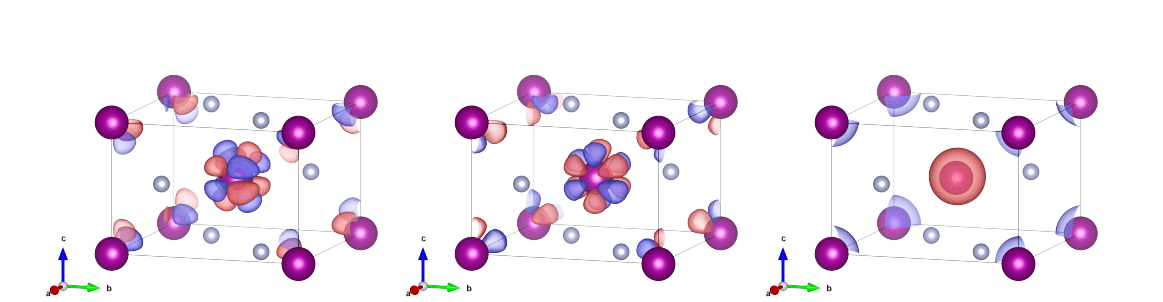
Altermagnets represent a fascinating class of materials exhibiting unusual magnetic behaviour, and scientists are now revealing the complex interplay of magnetic forces within them. Luca Buiarelli from the University of Minnesota, Rafael M. Fernandes from the University of Illinois Urbana-Champaign, and Turan Birol from the University of Minnesota, lead a team that demonstrates how even seemingly simple, aligned magnets possess hidden magnetic complexity. Their work establishes that spin-orbit coupling forces the local spin density to become noncollinear, meaning the magnetic moments do not point in the same direction, and this noncollinear behaviour often provides a clearer picture of the material’s unique altermagnetic properties. Importantly, the team’s calculations reveal the presence of high-order magnetic poles, extending beyond the commonly studied octupoles to include visible 32-poles, and they highlight how subtle changes in crystal structure can drive transitions between different magnetic states in perovskite altermagnets.
Altermagnets host an array of magnetic multipoles, which scientists study to understand their material properties. This work investigates the arrangement of these multipoles in altermagnets, moving beyond simplified models. Researchers demonstrate that noncollinear arrangements arise naturally from material symmetry and lead to unique magnetic textures, including skyrmions and merons, which are remarkably stable due to their topological protection and hold promise for spintronic applications. The team further shows that interactions between different multipoles generate emergent electromagnetic fields, manipulating magnetic moments and contributing to novel transport phenomena. This understanding of noncollinear magnetism provides a pathway towards designing altermagnets with tailored magnetic properties and functionalities.
The distribution of electron spin around atoms determines whether a system is an altermagnet or a conventional antiferromagnet. In this study, researchers investigate these real space multipoles in altermagnets using a combination of first principles calculations and group theory. The method involves calculating the electronic structure of materials from fundamental physical principles to determine the distribution of electron spin. Researchers then employ group theory, a branch of mathematics dealing with symmetry, to analyse the resulting spin patterns and identify the magnetic order. This approach allows for the prediction and understanding of novel magnetic phases beyond traditional antiferromagnetism, offering insights into the behaviour of materials with unusual magnetic properties.
KMnF3 Magnetic and Structural Properties Revealed
This research details a computational investigation of the magnetic and structural properties of KMnF3, a perovskite material. Scientists employ first-principles calculations to predict its behaviour and focus on understanding complex magnetic orderings, including altermagnetism, and how these magnetic states are coupled to the material’s crystal structure. A key goal is to gain a fundamental understanding of the material’s properties and potentially to control its behaviour for applications in multiferroics, materials with coupled magnetic and electric properties. The computational approach relies on the ABINIT code, a widely respected open-source program for electronic structure calculations.
Researchers utilize the Libxc library of exchange-correlation functionals to accurately model electron interactions and the PAW method to efficiently treat core electrons. Careful consideration is given to k-point sampling and convergence criteria to ensure accurate and stable solutions. The use of double crystallographic groups and the Bilbao Crystallographic Server demonstrates a meticulous analysis of material symmetry, crucial for accurately describing its properties. A custom Python code, Prodencer, is used to project electronic densities onto harmonics and representations, allowing for detailed analysis of the electronic structure and symmetry of the wavefunctions.
This research investigates altermagnetism, a relatively new type of magnetism where magnetic moments are canted, leading to a net magnetization. The study also explores hybrid improper ferroelectricity, where ferroelectric polarization arises from a combination of structural distortions and magnetic order. Symmetry analysis, utilizing the Bilbao Crystallographic Server and double crystallographic groups, is central to understanding the material’s properties. The projection of densities onto harmonics and representations classifies the symmetry of the electronic wavefunctions. This work exemplifies the power of computational materials science in predicting and understanding material properties. The research relies on a fundamental, physics-based approach and highlights the crucial role of symmetry in accurately describing material behaviour. The investigation of complex magnetic phenomena and the potential for multiferroic applications demonstrate the significance of this work.
Higher Order Multipoles Drive Altermagnetism
This research provides new insights into the complex magnetic order found in altermagnets. By combining first principles calculations with group theory, scientists have demonstrated that even in materials with seemingly simple magnetic arrangements, the local spin density is inherently noncollinear due to spin-orbit coupling. Importantly, the noncollinear components of the spin density often reveal the altermagnetic multipolar character more clearly than the collinear contributions. The study extends beyond commonly considered magnetic poles, revealing that higher-order multipoles, specifically 32-poles, can significantly contribute to the spin density and macroscopic properties of these materials.
In perovskite altermagnets, researchers observed a strong interplay between these 32-poles and subtle distortions in the crystal structure, suggesting a pathway for controlling transitions between different magnetic phases. The team’s approach, which projects spin density onto multipoles, offers a robust method for characterizing these complex magnetic structures in both existing and novel materials. Future work will likely focus on exploring the relationship between crystal structure, spin-orbit coupling, and the emergence of altermagnetism in a wider range of materials, potentially leading to the design of new functional materials with tailored magnetic properties.
👉 More information
🗞 Noncollinear Magnetic Multipoles in Collinear Altermagnets
🧠 ArXiv: https://arxiv.org/abs/2509.23117