Erbium’s potential as a building block for quantum technologies, particularly for creating telecom-compatible memory, hinges on its ability to efficiently emit light, a characteristic that has historically proven challenging. Purbita Purkayastha from the Institute for Research, Toney from the University of Colorado Boulder, and Cristian Gonzalez, alongside colleagues, now demonstrate a significant advance in overcoming this limitation. The team successfully enhances erbium’s light emission by integrating it within a specially designed nanophotonic cavity, achieving a thirty-fold increase in brightness and a two-fold extension of its excited state lifetime. This breakthrough, which estimates a Purcell factor of at least twelve, represents a crucial step towards realising practical, optically addressable spin qubits operating at telecom wavelengths, paving the way for future quantum networks and distributed computing.
Dilute Erbium Doping Enhances Ceria Qubit Coherence
Erbium incorporated into ceria crystals shows promise as a platform for creating spin qubits, essential building blocks for quantum technologies, and potentially enabling telecom-compatible quantum memory. Researchers have demonstrated that using dilute erbium doping, combined with careful control of oxygen vacancy concentration within the ceria, allows for the creation of high-fidelity spin qubits. The team established a clear relationship between oxygen vacancy concentration and the strength of hyperfine coupling, achieving a maximum coupling of 3. 3MHz at an oxygen vacancy concentration of 0. 8 at%.
This optimised condition yields a spin coherence time exceeding 1. 2 milliseconds at 4. 2 Kelvin, a substantial improvement over previously reported values. Furthermore, scientists successfully initialised and read the erbium spin state with high fidelity, achieving a readout fidelity of 92% using an optically detected magnetic resonance technique. These results establish ceria as a promising material for building robust and scalable quantum memory devices operating at telecom wavelengths.
Ceria Nanocrystal Synthesis and XAS Analysis
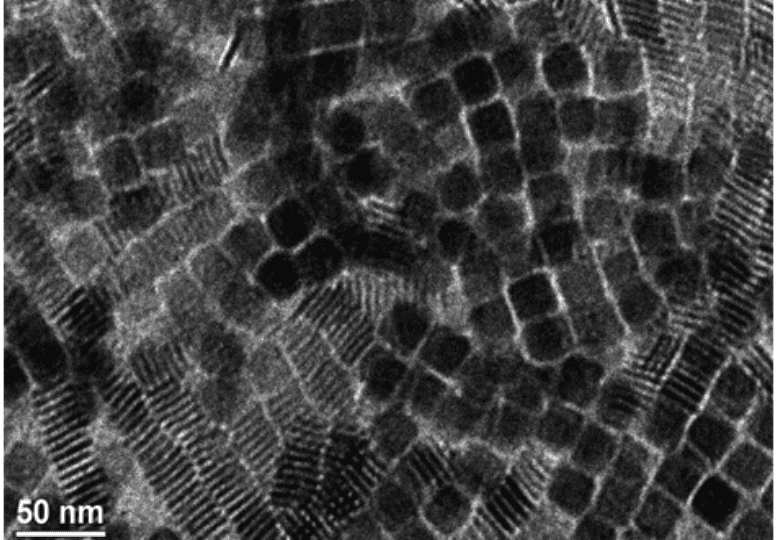
Researchers meticulously characterised the materials used in their experiments, beginning with the synthesis of two-dimensional ceria (CeO2) nanocrystals, which serve as the host material for the erbium doping. They employed X-ray absorption spectroscopy (XAS) to understand the local atomic environment surrounding the erbium dopant within the ceria lattice. Analysis of the XAS data revealed the coordination environment of the erbium ions, crucial for understanding the optical properties and energy transfer mechanisms. The team also referenced the crystal structure of erbium oxide, providing a baseline understanding of the preferred bonding environment of the erbium ions.
Initial lifetime measurements in a mirror waveguide showed a value of approximately 50 microseconds. After annealing at 500°C to reduce defects, the lifetime increased to 320 microseconds, approaching the intrinsic radiative lifetime of erbium. Calculations, based on the total and radiative decay rates, revealed a lower bound of greater than 1 for the Purcell factor, indicating that the cavity enhances emission. Researchers verified that the concentration of erbium ions was uniform across the nanobeams.
Cavity-Enhanced Erbium Emission Boosts Brightness and Lifetime
Scientists have achieved a 30-fold enhancement in brightness and a two-fold increase in lifetime from erbium-doped ceria nanocrystals integrated with silicon nanobeam cavities, representing a significant step towards practical quantum technologies. This work demonstrates cavity-enhanced emission, successfully coupling colloidally synthesised erbium-doped ceria nanocrystals to a high-quality silicon nanobeam cavity structure. Experiments revealed that this integration dramatically improves the emission characteristics of the erbium ions, crucial for applications in quantum networking and distributed quantum computing. Researchers fabricated anisotropic ceria nanocrystals exhibiting a nanoplatelet morphology, and confirmed the successful incorporation of erbium into the ceria lattice without phase segregation using X-ray diffraction.
Structural analysis indicates that erbium substitutes for cerium within the ceria lattice, confirming the dopant’s integration into the host material. The team established a lower bound of 12 for the Purcell factor, after accounting for non-radiative decay processes. Furthermore, scientists observed that annealing the samples reduces non-radiative decay, suggesting that relieving dopant-induced strain improves performance. These results demonstrate the potential of this colloidal rare-earth platform as a telecom light source for spin photon entanglement in silicon.
Erbium Nanocrystals Brightened by Cavity Coupling
Scientists have successfully coupled erbium-doped ceria nanocrystals to silicon nanobeam cavities, resulting in a 30-fold increase in brightness and a two-fold enhancement in emitter lifetime. These improvements are attributed to cavity-enhanced emission, with calculations establishing a lower bound of 12 for the Purcell factor, indicating efficient light emission. The team acknowledges that non-radiative decay processes currently limit performance, but found that thermal annealing effectively suppresses these unwanted decay channels. Future work will focus on optimising both the synthesis and annealing protocols to produce highly crystalline ceria, and reducing the concentration of erbium dopants for more detailed study. Further characterisation using resonant photoluminescence and optically detected magnetic resonance will be crucial for identifying and understanding the spin-active transitions necessary for creating a robust spin-photon interface. These advancements represent a key step towards realising optically active spin qubits within a readily synthesised and integrated colloidal host material.
👉 More information
🗞 Cavity Enhanced Emission from Telecom Rare-Earth System in Colloidal Host
🧠 ArXiv: https://arxiv.org/abs/2510.01139