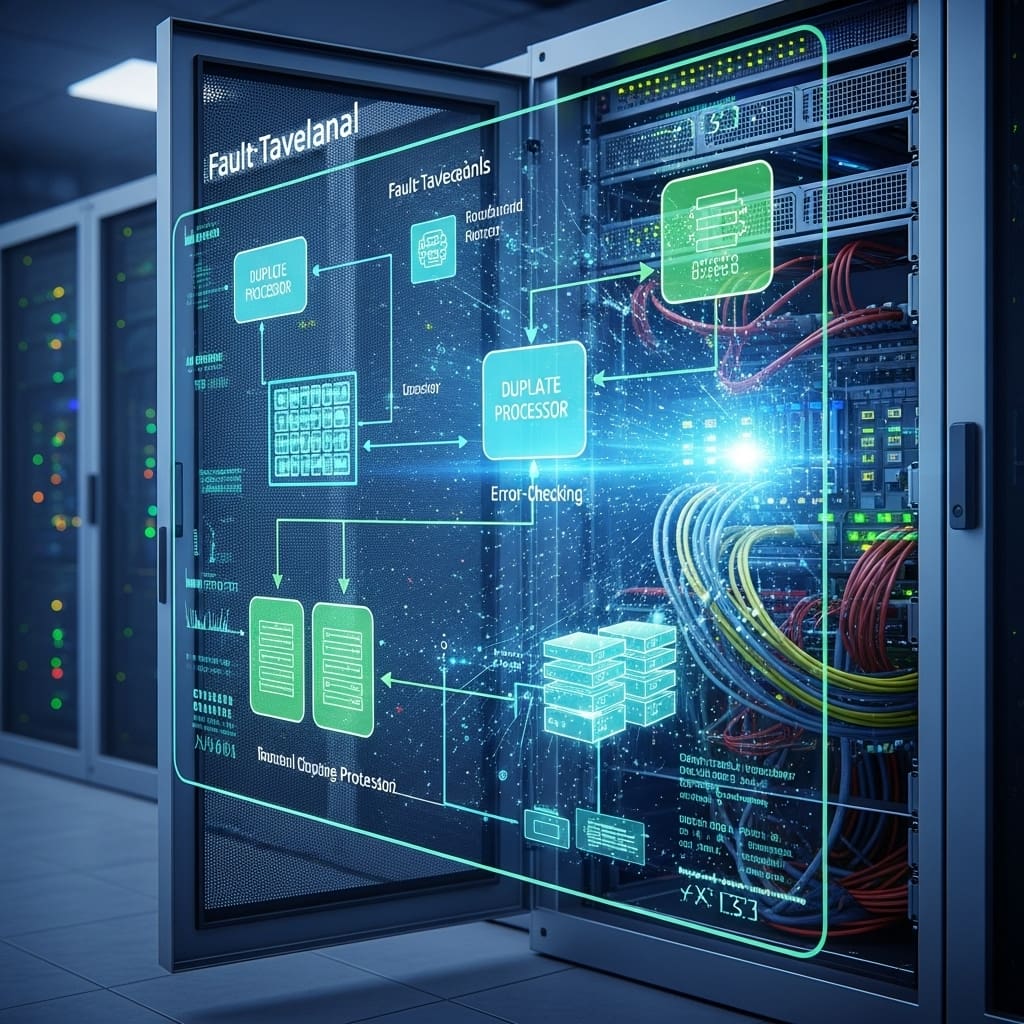
Future space exploration increasingly relies on autonomous systems for critical tasks like guiding spacecraft and landing safely on distant worlds, demanding both high performance and resilience against computational errors. Kyongsik Yun, David Bayard, and Gerik Kubiak, all from the California Institute of Technology, alongside Austin Owens, Andrew Johnson, and Ryan Johnson, present a significant advance in this area by successfully implementing Guidance, Navigation, and Control (GNC) and Lander Vision System (LVS) algorithms on cutting-edge multi-core processors. Their work demonstrates substantial speed improvements, up to fifteen times faster image processing and over two hundred and fifty times faster trajectory optimisation, compared to current spaceflight hardware. Crucially, the team also developed ARBITER, a novel system that actively detects and corrects errors across multiple processor cores, ensuring reliable operation even in the harsh environment of space and paving the way for ambitious future missions such as Mars Sample Return.
Spaceflight Computing For Autonomous Missions
This research details advancements in spaceflight computing, focusing on hardware, software, and validation through testing, to enable more autonomous, resilient, and capable spacecraft for future planetary missions. Future missions demand increased onboard processing for tasks like navigation, landing, and analysing scientific data, but space environments present challenges including radiation, extreme temperatures, limited power, and the need for high reliability. Researchers explored hardware options including the High-Performance Spaceflight Computing processor, Field-Programmable Gate Arrays for reconfigurable acceleration, and the Versal Adaptive SoC, combining processing and adaptability. Software and algorithms developed include vision-based navigation systems and algorithms for safe and precise planetary landings, including hazard detection and avoidance.
The G-FOLD algorithm, a real-time fuel-optimal guidance system, was demonstrated through flight testing, and the potential of machine learning and artificial intelligence for onboard data analysis and autonomous decision-making was explored. Experimental validation involved evaluating the HPSC processor, testing FPGA implementations, and assessing the Versal platform for complex onboard processing. Successful flight tests of the G-FOLD algorithm demonstrated its ability to guide a vehicle to a precise landing location, and the performance of the vision system used on the Perseverance rover was analysed. Advanced processors and reconfigurable hardware significantly improve onboard processing capabilities, and real-time algorithms like G-FOLD are crucial for enabling autonomous landing and hazard avoidance. Machine learning and AI offer the potential to revolutionise onboard data analysis and decision-making, but continued research is needed to address challenges related to radiation hardening, power efficiency, and software reliability.
ARBITER Architecture Achieves Real-Time Spaceflight Computation
To meet the computational demands of future planetary missions, scientists developed a novel computing architecture and fault-tolerance system, rigorously tested on next-generation multi-core processors including HPSC, Snapdragon VOXL2, and Xilinx Versal. This substantial performance gain enables real-time operation for future missions, meeting stringent timing constraints. Central to this advancement is ARBITER, an Asynchronous Redundant Behavior Inspection for Trusted Execution and Recovery system, which implements a Multi-Core Voting mechanism for real-time fault detection and correction.
Researchers validated ARBITER’s effectiveness through static optimization tasks and dynamic closed-loop control scenarios, specifically the Attitude Control System. A comprehensive fault injection study systematically introduced errors to identify vulnerabilities within the Guidance for Fuel-Optimal Large Divert algorithm, revealing that the gradient computation stage is particularly sensitive to bit-level errors. ARBITER’s performance was evaluated by comparing the outputs of redundant cores, identifying discrepancies, and demonstrating the system’s ability to correct errors in real-time. Furthermore, the study employed fault injection techniques, simulating bit-flip errors to assess the robustness of both the algorithms and the ARBITER system. Modern processors, including Snapdragon and Versal, achieve Guidance for Fuel-Optimal Large Divert execution times well within mission goals, with several configurations approaching a stretch goal of 0. 03 seconds.
The performance evaluation involved testing Guidance for Fuel-Optimal Large Divert across various processors with differing solution variable sizes. Results show that legacy hardware barely meets feasibility requirements, while next-generation processors achieve sub-0. 03 second runtimes even for large-scale problems relevant to Europa or Enceladus landers. Specifically, for a Guidance for Fuel-Optimal Large Divert problem with 2200 variables, the team measured a runtime of 30 milliseconds on modern processors, a dramatic improvement from the 7520 milliseconds recorded on legacy hardware. This achievement validates that modern multi-core architectures enable real-time, adaptive trajectory optimization for increasingly complex planetary missions.
To ensure computational reliability, researchers developed ARBITER, a Multi-Core Voting mechanism that performs real-time fault detection and correction across redundant cores. A detailed fault injection study revealed that the gradient computation stage within Guidance for Fuel-Optimal Large Divert is most sensitive to bit-level errors, causing a complete failure rate when a single bit flip is introduced. This motivated the development of selective protection strategies and vector-based output arbitration, prioritizing protection mechanisms for the gradient computation stage. Researchers propose enhancing the multi-core voting mechanism by using vectorized intermediate outputs from all three Guidance for Fuel-Optimal Large Divert stages, initialization, gradient, and final validation, to increase detection granularity and improve reliability in mission-critical applications. This stage-aware approach is essential for ensuring.
👉 More information
🗞 Enhancing Fault-Tolerant Space Computing: Guidance Navigation and Control (GNC) and Landing Vision System (LVS) Implementations on Next-Gen Multi-Core Processors
🧠 ArXiv: https://arxiv.org/abs/2511.04052