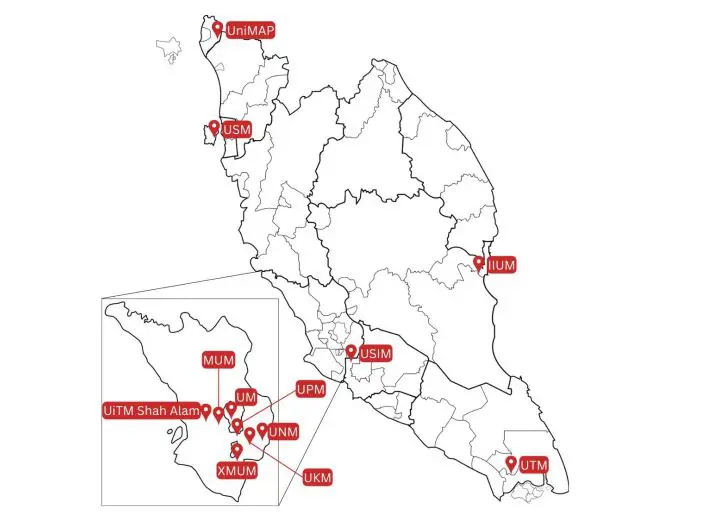
Quantum technologies are rapidly advancing, attracting substantial global investment as nations recognise their potential to transform industries and redefine security landscapes. Pak Shen Choong from the Institute for Mathematical Research, Universiti Putra Malaysia, Nurisya Mohd Shah from the Department of Physics at the same institution, and Yung Szen Yap from the Department of Physics, Faculty of Science, Universiti Teknologi Malaysia, investigate the emerging quantum ecosystem within Southeast Asia, and specifically assess Malaysia’s position within it. Their work arrives at a crucial moment, coinciding with the International Year of Quantum Science and 2025, as multiple countries formulate national quantum strategies and explore regional collaboration. This research provides a vital overview of Malaysia’s quantum capabilities and proposes concrete steps to strengthen the regional ecosystem, offering valuable insights for policymakers and researchers alike as Southeast Asia prepares to participate in the second quantum revolution.
The research demonstrates that Southeast Asia must actively participate in the burgeoning quantum revolution, moving beyond simply consuming technologies developed elsewhere. A collaborative approach is needed to build indigenous capabilities, address potential risks, and leverage quantum technologies for regional benefit, requiring a blend of scientific advancement, responsible innovation, and strategic diplomacy. The paper positions quantum technology as a new arena for international competition and cooperation, emphasizing the need for regional collaboration to avoid being left behind in the global quantum race and advocating for a regional quantum network.
Quantum development must be coupled with careful consideration of societal impacts, ethical concerns, and responsible innovation frameworks, addressing potential risks related to cybersecurity, economic disruption, and social inequality. The study advocates for investment in education, research, and development to build local expertise in quantum science and technology, fostering a skilled workforce and supporting local startups. It highlights the potential of quantum technologies to address key challenges related to climate change, healthcare, agriculture, and other Sustainable Development Goals, championing the use of art and creative approaches to engage the public with quantum concepts and foster broader understanding. Malaysia is presented as a potential leader in the regional quantum ecosystem, with existing initiatives and a growing research base. The paper acknowledges the potential for a quantum divide and calls for efforts to bridge this gap, advocating for a collaborative innovation ecosystem involving academia, industry, government, and the public. This research is a call to action for Southeast Asian nations to proactively shape their quantum future, ensuring that the benefits of this transformative technology are shared broadly and contribute to regional prosperity and security, emphasizing the importance of diplomacy, responsible innovation, and societal impact.
Southeast Asian Quantum Ecosystems, a Landscape Analysis
This work analyzes the emerging quantum landscape in Malaysia and the broader Southeast Asian region, building upon initiatives like the Southeast Asia Quantum Network. The study employed a comprehensive landscape analysis, meticulously mapping quantum research strengths within Malaysia and contextualizing them against regional developments. Researchers systematically reviewed national quantum strategies announced by Singapore, Thailand, and the Philippines, alongside expressions of interest from six other Southeast Asian nations in establishing a collaborative regional quantum ecosystem. The research further incorporated insights from regional workshops and collaborative efforts, notably the formation of the ASEAN Quantum Network, to understand the evolving dynamics of quantum collaboration.
Researchers actively engaged with key stakeholders across the region, including representatives from Thailand, the Philippines, Vietnam, Singapore, and Indonesia, to gather firsthand perspectives on national initiatives and collaborative opportunities. Furthermore, the study leveraged foresight exercises, such as the Science and Technology Foresight Malaysia 2050, to anticipate future trends and potential roadblocks in quantum development. This involved analyzing long-term strategic plans and identifying critical areas for investment and policy intervention. The team also examined international frameworks for responsible quantum technology to inform recommendations for strengthening the regional ecosystem and promoting ethical quantum development, enabling them to formulate four specific recommendations aimed at bolstering Malaysia’s quantum capabilities and fostering greater regional collaboration.
Southeast Asia Advances Regional Quantum Ecosystems
This work details a comprehensive overview of the quantum landscape in Malaysia and the broader Southeast Asian region, highlighting both current progress and future opportunities. Researchers found that six out of eleven Southeast Asian nations have expressed interest in establishing a regional quantum ecosystem with shared goals, demonstrating a growing commitment to this emerging field. The study emphasizes the importance of responsible research and innovation, aligning with UNESCO’s Recommendation on Open Science. The research reveals a critical need to standardize benchmarking initiatives for quantum technologies.
Investigations into graduate employment data revealed that 38. 75% of graduates were either working in jobs unrelated to their field of study or were unemployed, underscoring the urgency of addressing skill gaps. Democratizing quantum education through initiatives like QWorld and collaborative efforts by the International Telecommunication Union is seen as vital to improve quantum literacy and broaden participation beyond physics backgrounds. Hackathons, such as the SEA Quantathon 2025 and QAI GenQ Hackathon 2025, provide opportunities for interdisciplinary collaboration and the development of practical quantum applications. Key findings: 87. The study highlights increasing global investment in quantum technologies, with several Southeast Asian nations formulating national quantum strategies and exploring regional collaboration. Analysis reveals existing strengths in quantum research within Malaysia and identifies opportunities to strengthen the broader regional community. The work proposes four key recommendations to foster a thriving quantum ecosystem: mitigating misinformation and hype surrounding quantum technologies, establishing standardized metrics and benchmarks for evaluation, ensuring equitable access to quantum education, and facilitating market penetration for regional quantum industries.
These recommendations stem from a scientist’s perspective and aim to guide the responsible development and deployment of quantum technologies for the benefit of all. The authors acknowledge that this study primarily considers the perspective of scientists. Future work should include a systematic comparison of national quantum roadmaps across Southeast Asian countries to further refine strategies for regional collaboration and growth.
🗞 Quantum Diplomacy within the Southeast Asia Quantum Ecosystem
🧠 ArXiv: https://arxiv.org/abs/2512.03980