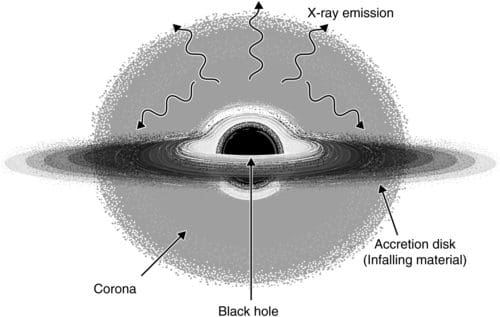
Over the past decade, neutrino astronomy has emerged as a powerful new tool for exploring the most energetic phenomena in the universe, confirming the existence of high-energy cosmic neutrinos and validating the belief that astrophysical sources accelerate particles to incredibly high energies. These detections mark a pivotal moment, opening a new channel for multi-messenger astronomy and providing complementary information to observations made with photons and cosmic rays. Pinpointing the precise sources of these cosmic neutrinos remains a significant challenge for researchers. Current observations reveal a widespread, diffuse flux of neutrinos, suggesting contributions from a variety of sources, or a complex journey through space that obscures their origins.
Identifying these sources requires a detailed understanding of how neutrinos are produced within astrophysical environments and how they interact with matter during their travels. Recent analyses suggest potential connections between the observed neutrino flux and candidate sources like active galactic nuclei and gamma-ray bursts, but these correlations require further investigation with larger datasets and improved observational capabilities. Ultimately, the goal is to establish a definitive link between observed neutrinos and their cosmic origins, unlocking new insights into the universe’s most energetic processes.
Current-generation experiments have detected high-energy neutrinos from beyond our solar system and identified the first potential sources, paving the way for future discoveries. Looking ahead, this perspective identifies seven major open questions in neutrino astrophysics and particle physics that could lead to transformative discoveries over the next 20 years. These multi-messenger observations, combining neutrino data with information from photons and cosmic rays, promise a more complete understanding of the extreme and hidden universe. Identifying the sources of the highest-energy cosmic rays remains a key challenge, and neutrino astronomy offers a complementary approach to pinpoint their origins.
Cosmic Neutrino Sources and Telescope Development
The field of neutrino astronomy is rapidly advancing, driven by a growing understanding of neutrino sources and the development of increasingly sophisticated telescope technologies. Researchers are investigating the origins of cosmic neutrinos, likely originating from astrophysical sources such as active galactic nuclei and gamma-ray bursts, and studying how they interact with matter during their journey across vast distances. Several major neutrino telescopes are currently operational, including IceCube, Baikal-GVD, and KM3NeT, each designed to detect the faint signals produced when neutrinos interact with matter. These detectors primarily rely on the detection of Cherenkov radiation, the faint glow produced when charged particles travel faster than light in a medium like water or ice.
A significant trend is the application of machine learning and artificial intelligence to improve data analysis, enhancing event reconstruction, background rejection, and triggering. Machine learning also aids in extracting meaningful information from the vast amounts of data generated by neutrino telescopes. Researchers are also exploring the potential of performing data processing directly within the detectors themselves, reducing data transmission bandwidth and enabling rapid follow-up observations of transient events. Sophisticated simulations are crucial for modeling neutrino interactions, detector responses, and astrophysical sources, while robust data management systems are needed to handle the massive data streams from neutrino telescopes.
The field is also exploring the potential of quantum computing and quantum-encoded data analysis to further enhance telescope capabilities. These advancements are driving progress in several key areas, including cosmic ray physics, dark matter searches, and studies of neutrino oscillations. Global collaboration is essential for the success of neutrino astronomy, with researchers coordinating observations and data sharing between different telescopes around the world. The planned next-generation telescope, VL VNT, aims for a significantly larger effective volume than current facilities, promising even greater sensitivity and discovery potential. The rise of artificial intelligence, the need for real-time astronomy, and the challenges of managing big data are all defining characteristics of this rapidly evolving field.
Hidden Sources and Neutrino-Gamma Ray Connections
Recent research reinforces our understanding of high-energy neutrino sources and their connection to the production of gamma rays, demonstrating that the gamma rays produced alongside observed neutrinos likely exceed the measured diffuse gamma-ray flux, particularly at higher energies. This suggests that intense neutrino sources are often obscured from view at gamma-ray wavelengths, with pionic gamma rays losing energy within the neutrino-producing environment before reaching detection. Consequently, the observed neutrino flux originates from sources that are largely hidden from gamma-ray telescopes. The findings highlight the importance of multi-messenger astronomy, specifically combining neutrino and gamma-ray observations, to fully understand the production environments of cosmic rays and neutrinos. Researchers predict that future instruments sensitive to sub-GeV gamma rays will reveal correlations with high-energy neutrino sources, offering a complementary view of these obscured regions. While acknowledging the current limitations in fully characterizing galactic neutrino sources, the research emphasizes the potential of observing our own galaxy to answer key questions in neutrino astronomy and cosmic ray origins.
👉 More information
🗞 From the Dawn of Neutrino Astronomy to a New View of the Extreme Universe
🧠 DOI: http://link.aps.org/doi/10.1103/1z9l-kb1d