

The traditional view of the anomalous Hall effect (AHE) in ferromagnets suggests it arises from magnetization aligned with the measurement plane. However, recent experiments challenge this understanding, prompting researchers to investigate the underlying mechanisms at a fundamental level. This work re-examines the origins of the AHE, exploring influences beyond simple magnetization effects and aiming to resolve discrepancies between theory and experiment.
Multipolar Anisotropy Predicts Anomalous Hall Effect
Researchers have discovered that the anomalous Hall effect, a transverse voltage generated by a magnetic field in a material, is strongly influenced by multipolar magnetic anisotropy, not just simple magnetization. This anisotropy arises from symmetry breaking within a material’s crystal structure, influencing how magnetic moments arrange themselves. The team demonstrates that a material’s spin group symmetry powerfully predicts the strength and direction of this multipolar anisotropy, and therefore, the AHE, offering a systematic way to design materials with enhanced effects. This understanding extends beyond traditional ferromagnetic materials, showing that the AHE can be significant even in materials with complex magnetic order, including those with non-collinear structures and compensated antiferromagnets.
The ability to control the AHE through multipolar anisotropy opens possibilities for new spintronic devices, including those for magnetic sensing, data storage, and logic, specifically for detecting and manipulating magnetic order in antiferromagnets. The research relies on first-principles calculations, quantum mechanical simulations based on fundamental physical constants without empirical parameters, ensuring high reliability and broad applicability. Researchers used density functional theory to calculate the electronic structure of materials and employed Wannier functions to analyze the electronic band structure and determine the origin of the AHE. They investigated diverse materials including MnGa and Cr2Ge2Te6, each exhibiting unique magnetic properties.
A crucial concept is spin-group symmetry, which describes the symmetry of the magnetic order within a material. Breaking this symmetry leads to multipolar anisotropy. The AHE is fundamentally related to the Berry curvature in the electronic band structure, and researchers analyzed how multipolar anisotropy affects this curvature. In compensated antiferromagnets, the net magnetization is zero, but the AHE can still be significant due to the interplay of different magnetic moments. Researchers have made their data publicly available, promoting scientific reproducibility. This work provides a significant advance in understanding the anomalous Hall effect, highlighting the importance of multipolar anisotropy and spin-group symmetry, and opening new avenues for designing materials with enhanced effects and developing novel spintronic devices.
Magnetic Order Dictates Anomalous Hall Effect Behaviour
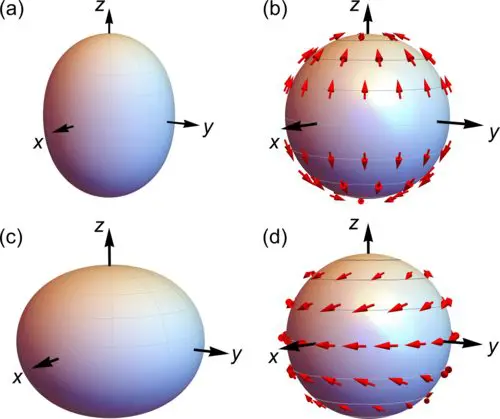
Researchers have uncovered a new understanding of the anomalous Hall effect, detailing how the magnetic order within a material directly dictates its behavior. The team discovered that the effect arises from fundamental dipolar structures within the material’s magnetic order, specifically through two distinct contributions: a symmetric dipole and a toroidal dipole. In cubic systems, the symmetric dipole results in the anomalous Hall conductivity aligning parallel to the magnetization, consistent with established observations. However, in non-cubic systems, this dipole introduces anisotropy, leading to an in-plane anomalous Hall effect where the conductivity is perpendicular to the magnetization.
This anisotropy arises because the symmetric dipole possesses differing strengths along different crystal axes, creating a misalignment between the magnetization and the resulting anomalous Hall conductivity. By analyzing the angular dependence of the anomalous Hall conductivity, researchers can determine the specific properties of the symmetric dipole. Furthermore, the team identified the toroidal dipole as a key contributor, generating an in-plane anomalous Hall effect even when the symmetric dipole is absent. Unlike the symmetric dipole, the toroidal dipole cannot be diagonalized using standard transformations, resulting in a unique configuration where the anomalous Hall conductivity is always perpendicular to the magnetization. The interplay between these two dipolar contributions provides a comprehensive description of the anomalous Hall effect, offering a pathway to control and manipulate this phenomenon in materials, potentially impacting spintronic devices and magnetic sensors.
Symmetry Dictates Anomalous Hall Effect Properties
This research presents a new understanding of the anomalous Hall effect, detailing how the magnetic order within a material dictates its behavior. The team demonstrates that the effect can be comprehensively described using a symmetry-breaking scenario involving spin-orbit coupling. Specifically, they show how the interplay between the crystal structure and the magnetic order dictates the observed properties, revealing a connection between the arrangement of atoms and the resulting voltage. The findings establish a framework for predicting and controlling the anomalous Hall effect by considering the symmetry of the material’s spin-orbit vector, which describes the interaction between electron spin and orbital motion.
This approach allows researchers to analyze the effect in a broad range of materials, extending beyond simple, aligned magnets to more complex systems. The authors acknowledge that their analysis focuses on collinear ferromagnets, where the magnetization points along a single direction, and that extending the model to more complex magnetic textures requires further investigation. Future work could explore the implications of this framework for designing materials with enhanced or novel anomalous Hall effect properties, potentially leading to advancements in spintronic devices and magnetic sensors.
🗞 Multipolar Anisotropy in Anomalous Hall Effect from Spin-Group Symmetry Breaking
🧠 DOI: http://link.aps.org/doi/10.1103/PhysRevX.15.031006


