

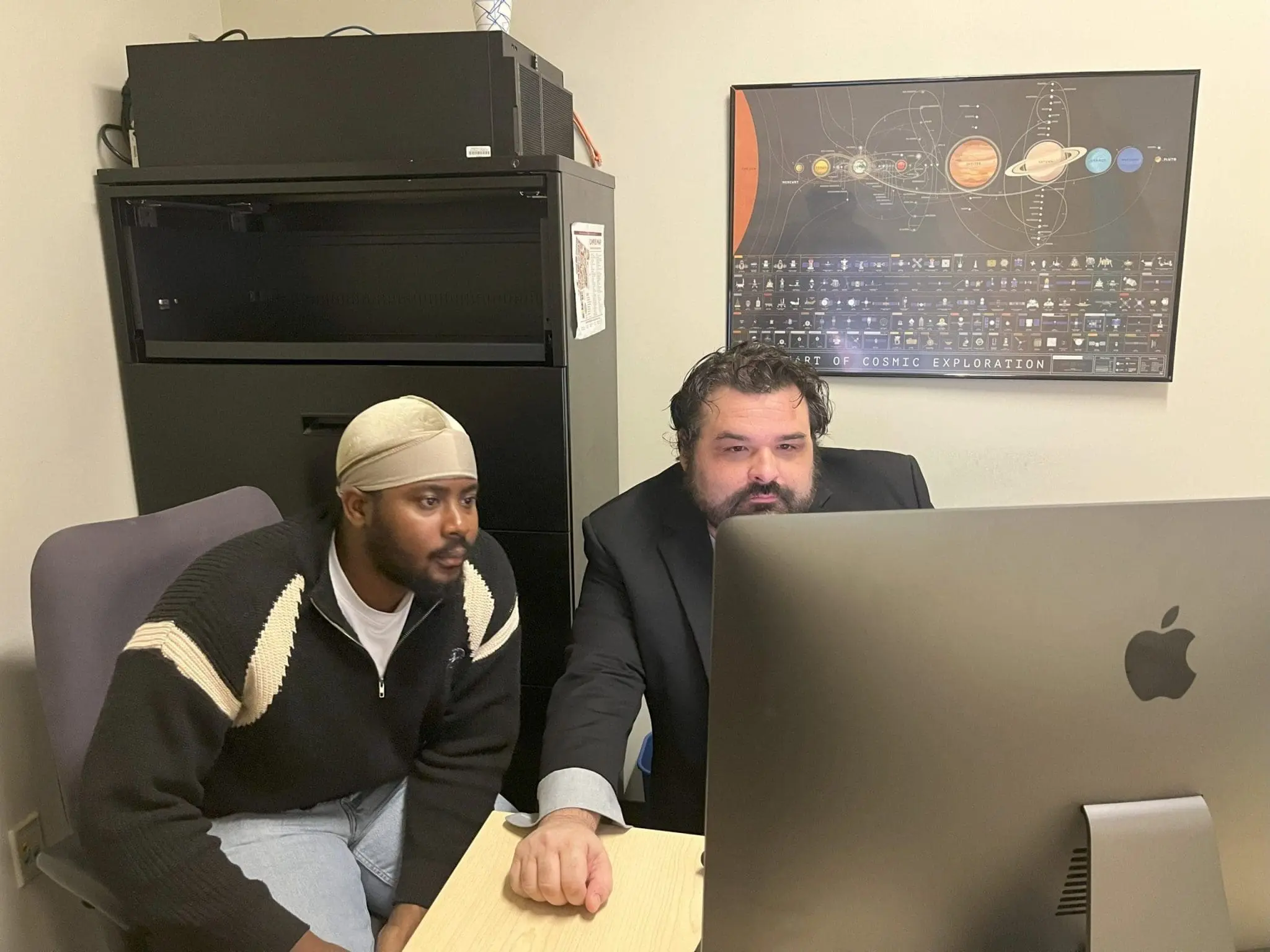
In a move towards advancing quantum optics and photonics research at historically Black colleges and universities (HBCUs), North Carolina Central University’s Patrick Flanigan has been awarded the $100,000 IBM-SPIE HBCU Faculty Accelerator Award. The annual prize, jointly presented by SPIE and the IBM-HBCU Quantum Center, supports research and education in quantum optics and photonics within its member institutions comprising 27 HBCUs.
Flanigan’s project aims to minimize the footprint of future photon-based quantum computing and quantum information systems while exploring new physics that may emerge in chip-scale systems. The project, titled “Triple-resonance micro-ring resonators for on-chip entangled photon generation via spontaneous six-wave mixing (SSWM),” is a core focus of quantum optics and photonics research.
The award aligns with the United Nations-declared International Year of Quantum Science and Technology in 2025, underscoring quantum science’s growing impact. Collaboration across institutions, as exemplified by Flanigan’s project, is crucial to the success of the IBM-HBCU Quantum Center and the quantum industry as a whole.
The authors of this article are Daneet Steffens, Public Relations Manager at SPIE, who can be reached at daneets@spie.org or +1 360 685 5478, and other contributors from Business Wire. For more information about the IBM-SPIE HBCU Faculty Accelerator Award in Quantum Optics and Photonics, please visit the dedicated webpage on SPIE’s website.
Quantum Leap for Historically Black Colleges and Universities: IBM and SPIE Award $100,000 to North Carolina Central University
The quantum industry has been growing at an unprecedented pace, and the impact of this technology is set to expand further. Recognizing this potential, the award coincides with the United Nations-declared International Year of Quantum Science and Technology in 2025. The aim is to support researchers like Dr. Flanigan who are pushing the boundaries of quantum computing and communications.
Dr. Flanigan’s project is a testament to the power of cross-institution collaboration. It involves multiple institutions, including NCCU, State University of New York at Binghamton, and IBM Quantum. This collaborative effort is integral to the success of the IBM-HBCU Quantum Center, which aims to build an ecosystem for underrepresented students and professionals in the quantum industry.
Dr. Flanigan expressed his gratitude for the award, stating that it will allow him and his team to continue their groundbreaking work on the cutting edge of quantum computing and communications research. The physical mechanism underlying this project was experimentally demonstrated only a few months ago, making it a timely and exciting area of study.
The IBM-SPIE HBCU Faculty Accelerator Award plays a crucial role in promoting diversity in the quantum industry. By supporting researchers at historically black colleges and universities, the award is helping to create a more inclusive environment for quantum research.
SPIE, the International Society for optics and photonics, connects engineers, scientists, students, and business professionals to advance light-based science and technology. IBM Quantum, on the other hand, is dedicated to building practical quantum computers that will one day solve problems that are currently beyond the scope of classical machines.
External Link: Click Here For More


