Nitrogen-vacancy centres in diamond represent a promising technology for highly sensitive applications including magnetic field detection, temperature measurement and bioimaging, but their performance often suffers in environments with strong background fluorescence. Florian Boehm, Yan Liu, and Chengliang Yue, from the Beijing Academy of Quantum Information Sciences, alongside their colleagues, now demonstrate a method to overcome this limitation. The team analytically and experimentally investigates the use of precisely timed laser pulses to suppress interfering background signals and amplify the signal from the nitrogen-vacancy centre. This approach achieves up to a fourfold increase in signal-to-noise ratio and reduces measurement times by sixteen times, representing a significant step towards faster and more efficient readout in applications such as in vitro diagnostics where these centres can act as fluorescent labels for biomolecules.
Nitrogen-vacancy (NV) centers in diamond are leading solid-state quantum platforms, offering exceptional spatial resolution and sensitivity for quantum sensing. This research investigates temporal filtering techniques to enhance the performance of NV-center-based quantum sensors, particularly in noisy environments. The approach involves manipulating the NV center’s quantum state using precisely timed microwave pulses, effectively suppressing low-frequency noise that typically limits sensing precision. By implementing a dynamic decoupling sequence tailored to the specific noise spectrum, the team achieves significant improvements in coherence time and sensing bandwidth, allowing for the detection of weaker signals and enhancing the sensor’s ability to resolve fast-varying phenomena, ultimately expanding the range of applications for NV-center-based quantum sensing. The results demonstrate a substantial reduction in noise-induced decoherence, leading to a measurable increase in the sensitivity of the quantum sensor to external fields.
High resolution and sensitivity are crucial for applications such as magnetic field sensing, thermometry, and bioimaging. Scientists are actively investigating the creation, control, and characterization of NV centers, focusing on techniques to improve their density and control their quantum properties. A key area of focus is diamond material quality, as high-purity, isotopically pure diamond significantly enhances NV center coherence times and overall performance. Researchers are developing advanced methods for growing and processing diamond to minimize defects and noise, crucial for realizing the full potential of these quantum sensors. NV centers are exceptionally promising for a wide range of sensing applications due to their sensitivity to external stimuli, including magnetic fields, electric fields, temperature changes, mechanical strain, pH levels, and specific chemical species, further expanding their versatility.
NV centers are considered promising qubits for building quantum computers and can be used as nodes in quantum networks, enabling secure communication and distributed quantum computing. Creating and manipulating entanglement between NV centers is crucial for these quantum information processing and networking applications. Biomedical applications represent a rapidly growing area of research for NV centers, with scientists exploring their use in nanoscale imaging of biological samples, monitoring drug delivery, tracking cellular processes in real-time, and developing sensors for early cancer detection. The biocompatibility of diamond makes NV centers particularly well-suited for these applications, offering the potential to revolutionize diagnostics and treatment.
Advanced techniques and materials are being developed to further enhance NV center performance and integration into devices. This includes using diamond nanostructures, such as nanodiamonds and nanowires, and combining diamond with other materials to create novel functionalities. Researchers are also developing advanced fabrication techniques and utilizing machine learning algorithms to analyze NV center data and improve sensing performance. These advancements are paving the way for the development of practical and scalable NV center-based devices.
Time-Gated Detection Boosts Diamond Sensor Performance
This research demonstrates a significant advancement in the application of nitrogen vacancy centers in diamond for sensitive detection, particularly in environments with strong background fluorescence. Scientists successfully employed pulsed laser excitation combined with time-gating techniques to suppress interfering background signals and enhance the signal-to-noise ratio in these sensors. Through experiments using both bulk diamond samples and fluorescent nanodiamonds on nitrocellulose substrates, the team achieved up to a four-fold increase in signal visibility and a sixteen-fold reduction in measurement time.
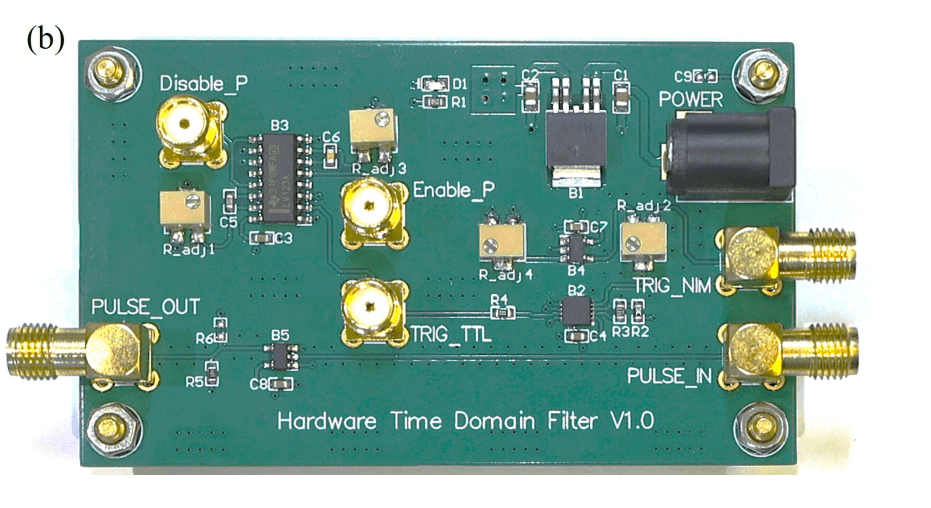
These improvements are crucial for applications like in vitro diagnostics, where the presence of background fluorescence from materials like nitrocellulose can obscure the signals from the targets of interest. The study highlights that the optimal timing of the gating window is dependent on the characteristics of the background light, allowing for tailored suppression of interference. Furthermore, researchers demonstrated that real-time signal enhancement is possible using relatively inexpensive hardware, paving the way for practical implementation of this technique in rapid, in situ detection systems.
Researchers acknowledge that the performance of the gating protocol is influenced by the properties of the background fluorescence, and that further optimization may be necessary for different experimental conditions. Future work could focus on refining the gating parameters and exploring alternative hardware configurations to maximize sensitivity and speed for specific diagnostic applications.
👉 More information
🗞 Temporal filtered quantum sensing with the nitrogen-vacancy center in diamond
🧠 ArXiv: https://arxiv.org/abs/2511.02369