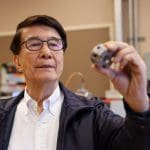
IBM has unveiled the first published quantum-centric supercomputing reference architecture, a new blueprint designed to integrate quantum computing with existing high-performance systems. The architecture details how quantum processors can collaborate with CPUs and GPUs, both locally and via cloud access, to overcome limitations faced by classical computers in fields like chemistry and materials science. This approach combines quantum hardware with classical infrastructure, including powerful CPU and GPU clusters, to support complex algorithms and research. “More than four decades ago, Richard Feynman envisioned computers that could simulate quantum physics,” said Jay Gambetta, Director of IBM Research and IBM Fellow. “At IBM, we’ve spent years turning that vision into reality.” Recent demonstrations, including the simulation of a 303-atom protein and a half-Möbius molecule, showcase the potential of this combined quantum and classical power to accelerate scientific discovery.
Quantum-Centric Architecture Integrates Classical and Quantum Systems
A new architectural blueprint from IBM details a practical integration of quantum computing with existing supercomputing infrastructure, signaling a shift from isolated quantum experiments toward sustained scientific advancement. This isn’t simply about adding quantum capabilities; it’s about building a unified environment where each system complements the other for computationally intensive research. The architecture facilitates coordinated workflows, leveraging open software frameworks like Qiskit to allow researchers to access quantum resources through familiar tools. This accessibility is crucial, as demonstrated by recent successes; scientists are already utilizing this quantum-centric approach to achieve verifiable results in complex simulations. For instance, a collaborative team verified the electronic structure of a novel half-Möbius molecule, publishing their findings in Science. Cleveland Clinic also successfully simulated a 303-atom mini-protein, one of the largest molecular models to date executed on this combined system. IBM points to a RIKEN simulation of iron-sulfur clusters, utilizing data exchange between an IBM Quantum Heron processor and all 152,064 nodes of the Fugaku supercomputer, as evidence of its viability.
Recent advances in quantum computing are extending beyond theoretical possibility and into tangible scientific results, with IBM’s new quantum-centric supercomputing architecture facilitating increasingly complex simulations. Beyond molecular structures, scientists are also leveraging this technology to understand fundamental quantum processes. A team from IBM, RIKEN, and the University of Chicago determined the lowest-energy state of engineered quantum systems, exceeding the performance of classical methods.
More than four decades ago, Richard Feynman envisioned computers that could simulate quantum physics.
Jay Gambetta, Director of IBM Research and IBM Fellow
RIKEN’s Fugaku Supercomputer & IBM Quantum Heron Collaboration
RIKEN’s pursuit of computational advancements recently converged with IBM’s quantum expertise, yielding tangible results in complex molecular simulations. The collaboration extended beyond fundamental physics, tackling challenges in biological chemistry. RIKEN and IBM scientists achieved one of the largest quantum simulations to date of iron-sulfur clusters, molecules crucial to both biology and chemistry, utilizing the combined power of the Heron processor and Fugaku. This complex simulation highlights the potential for quantum computers to model systems previously intractable for even the most powerful classical supercomputers. The architecture facilitates coordinated workflows, allowing researchers to seamlessly integrate quantum processing into existing classical infrastructure and analysis pipelines. IBM and Rensselaer Polytechnic Institute are actively refining methods for scheduling and orchestrating these workflows, ensuring efficient resource allocation across both quantum and high-performance computing environments.
The future lies in quantum-centric supercomputing, where quantum processors work together with classical high-performance computing to solve problems that were previously out of reach.
Jay Gambetta, Director of IBM Research and IBM Fellow